How to Tell If Ovulation Is Over: 6 Signs to Watch
<p>Ovulation is likely over if your basal body temperature rises and stays elevated, cervical mucus becomes dry or sticky, ovulation pain stops, breasts feel less tender, LH test lines fade, and…
- Published
- Written by
- Women In Balance Team
- Reading time
- 12 minutes
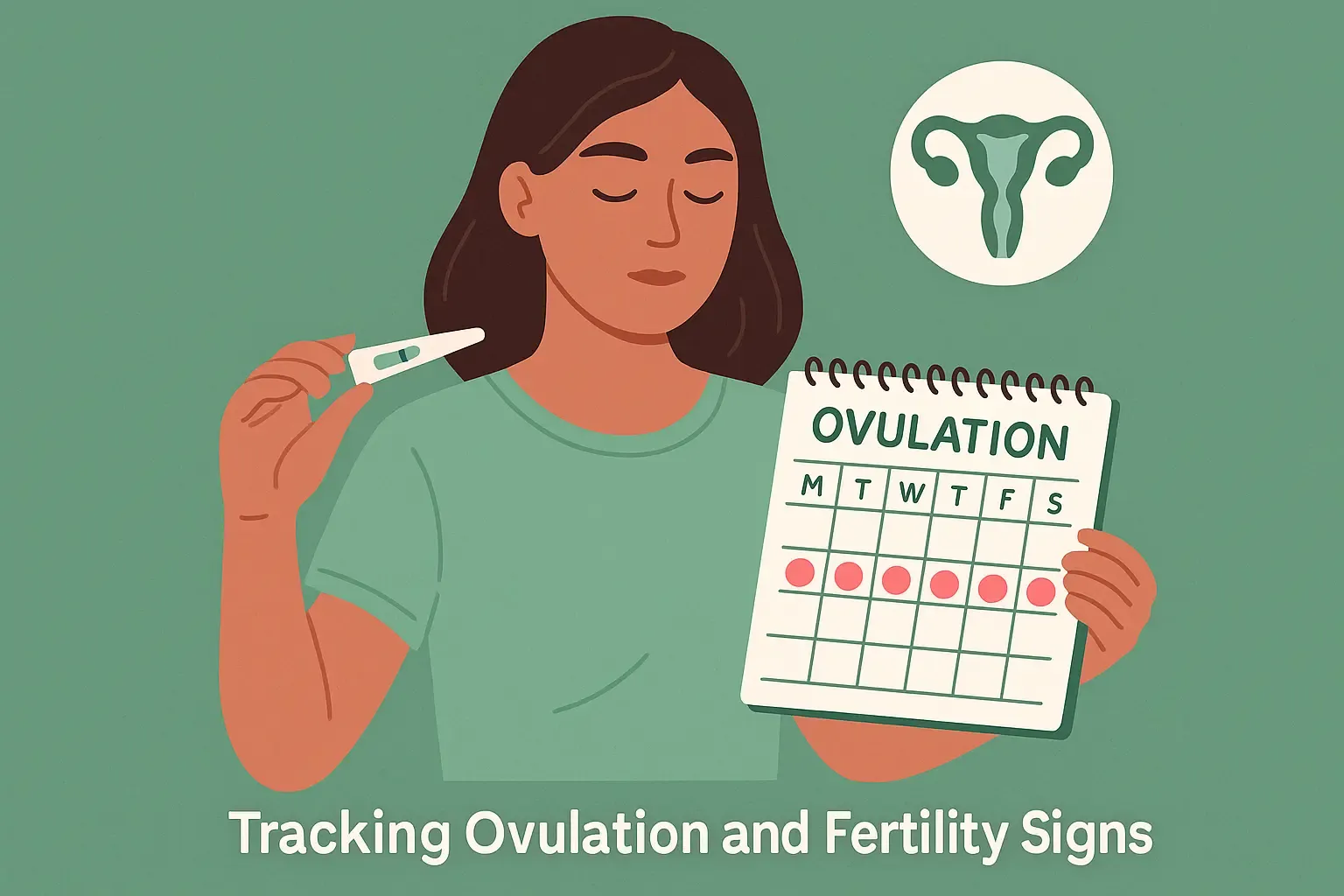
Ovulation is likely over if your basal body temperature rises and stays elevated, cervical mucus becomes dry or sticky, ovulation pain stops, breasts feel less tender, LH test lines fade, and progesterone symptoms like fatigue increase. Tracking these signs consistently helps confirm the end of ovulation.
Key Takeaways
- Your body provides clear signals when ovulation ends, including changes in cervical mucus, basal body temperature, and physical symptoms
- Recognizing these signs helps you understand your fertile window whether you’re trying to conceive or using natural family planning methods
- Tracking multiple indicators together provides the most accurate picture of when your ovulation has concluded and your luteal phase begins
Understanding when ovulation ends is just as important as knowing when it begins. Whether you’re trying to conceive, avoiding pregnancy naturally, or simply want to better understand your menstrual cycle, recognizing the signs ovulation is over gives you valuable insight into your body’s monthly rhythm.
Ovulation typically lasts only 12-24 hours, but identifying exactly when this fertile window closes can be challenging without knowing what to look for. Your body undergoes several noticeable changes as ovulation concludes and progesterone levels begin to rise, signaling the start of the luteal phase. Learning to recognize these signs empowers you to make informed decisions about your reproductive health and timing.
Why It’s Important to Know When Ovulation Ends
Understanding when ovulation concludes serves different purposes depending on your reproductive goals and provides valuable information for overall cycle awareness.
For Those Trying to Conceive: Knowing when ovulation ends helps you understand whether you’ve timed intercourse optimally during your fertile window. While sperm can survive up to 5 days in the reproductive tract, the egg only lives for 12-24 hours after release. Recognizing when ovulation has concluded can help you evaluate your timing and plan for future cycles.
For Natural Family Planning: If you’re using fertility awareness methods for contraception, identifying when ovulation ends is crucial for determining when the fertile period has passed. Most natural family planning methods require waiting until ovulation is confirmed over before considering the infertile phase has begun.
For Cycle Understanding: Recognizing ovulation’s end marks the transition into the luteal phase, helping you anticipate upcoming premenstrual symptoms and understand the hormonal changes affecting your mood, energy, and physical comfort.
The Fertile Window vs. Ovulation: It’s important to distinguish between the fertile window and ovulation itself. The fertile window typically spans about 6 days—the 5 days before ovulation plus the day of ovulation. Ovulation, however, refers specifically to the 12-24 hour period when the egg is released and available for fertilization. Understanding this difference helps you better interpret your body’s signals.
6 Signs Ovulation Is Over
Your body provides several reliable indicators that ovulation has concluded. While not every woman experiences all these signs, tracking multiple indicators provides the clearest picture of your ovulation timing.
1. Cervical Mucus Becomes Thicker or Dry
One of the most reliable signs that ovulation is over is the change in cervical mucus consistency and amount. This change occurs due to shifting hormone levels as estrogen decreases and progesterone rises after ovulation.
During peak fertility (around ovulation):
- Cervical mucus becomes clear and stretchy, resembling raw egg whites
- You can stretch it between your fingers for several inches
- The amount increases significantly
- It feels slippery and wet
After ovulation ends:
- Mucus becomes thicker, stickier, or creamy
- The stretchy quality disappears
- Amount decreases noticeably
- You may experience relative dryness
- Color may become white or yellowish
How to check: Observe mucus throughout the day when using the bathroom, or check by inserting a clean finger into your vagina. The most fertile-quality mucus typically disappears within 1-3 days after ovulation, replaced by thicker, less abundant secretions.
This change happens because estrogen, which promotes the production of fertile cervical mucus, drops after ovulation, while progesterone rises and creates a thicker, less permeable cervical environment.
2. Drop in Sex Drive
Many women notice a decrease in libido after ovulation, which is a natural response to changing hormone levels. This biological shift makes evolutionary sense, as the fertile window has closed.
During ovulation:
- Testosterone and estrogen levels peak, increasing sexual desire
- Many women feel more attractive and confident
- Interest in sex and physical intimacy often increases
After ovulation:
- Testosterone levels decline
- Sexual desire typically decreases
- Some women notice less interest in their appearance or romantic activities
Individual variations: Not all women experience dramatic changes in libido, and factors like stress, relationship dynamics, and overall health can influence sexual desire. However, if you typically notice cyclical changes in sex drive, a decrease often signals that ovulation has concluded.
3. Basal Body Temperature Rises
Basal body temperature (BBT) tracking provides one of the most reliable confirmations that ovulation has occurred and ended. This method requires consistent daily temperature measurement but offers clear, objective data.
Before and during ovulation:
- Temperatures remain in the lower range of your personal baseline
- You may notice a slight dip just before ovulation (not everyone experiences this)
After ovulation:
- Temperature rises by 0.2-0.5°F (0.1-0.3°C) above your pre-ovulation baseline
- The rise typically occurs within 1-3 days after ovulation
- Temperatures remain elevated throughout the luteal phase
- The sustained rise confirms ovulation has occurred
How to track effectively:
- Take your temperature immediately upon waking, before getting out of bed
- Use a basal body thermometer for accuracy
- Track at the same time each day
- Record temperatures on a chart or fertility app
The temperature rise occurs because progesterone has a thermogenic (heat-producing) effect on the body. Once you see three consecutive elevated temperatures, you can be confident that ovulation has concluded.
4. Breast Tenderness or PMS Symptoms Begin
The hormonal shift after ovulation, particularly rising progesterone levels, often triggers early premenstrual symptoms. These changes signal the beginning of the luteal phase.
Common post-ovulation symptoms:
- Breast tenderness or swelling
- Mild bloating or water retention
- Changes in appetite or food cravings
- Slight mood changes or increased emotional sensitivity
- Fatigue or changes in energy levels
- Mild cramping or pelvic discomfort
Timing: These symptoms typically appear within a few days to a week after ovulation, depending on your individual sensitivity to hormonal changes. Some women notice them almost immediately after ovulation, while others don’t experience symptoms until closer to their period.
Why this happens: Progesterone affects multiple body systems, including breast tissue (causing tenderness), fluid balance (leading to bloating), and neurotransmitter activity (influencing mood and energy).
5. LH Tests Turn Negative
Luteinizing hormone (LH) test strips can help confirm when ovulation has ended by showing the decline in LH levels after the pre-ovulation surge.
LH surge pattern:
- LH rises dramatically 24-48 hours before ovulation
- The surge triggers the release of the mature egg
- LH levels drop quickly after ovulation occurs
- Tests return to negative within 1-2 days after ovulation
How to use LH tests for confirmation:
- Continue testing for a few days after your initial positive result
- A return to negative tests suggests ovulation has likely occurred
- Combine with other signs for better accuracy
Limitations: LH tests detect the hormone surge that triggers ovulation but don’t confirm that ovulation actually occurred. Some women may have an LH surge without releasing an egg. Using LH tests alongside other indicators provides better confirmation.
6. Ovulation Pain Stops
Some women experience ovulation pain (mittelschmerz), and the resolution of this discomfort can signal that ovulation has concluded.
Characteristics of ovulation pain:
- Usually felt on one side of the lower abdomen
- Can range from mild cramping to sharp, stabbing sensations
- Typically lasts from minutes to a few hours, occasionally up to 2 days
- Often alternates sides from month to month
When pain indicates ovulation is over:
- Sharp pain that suddenly stops may indicate the moment of egg release
- Gradual decrease in pain suggests the ovulation process is concluding
- Complete resolution of mid-cycle pain typically means ovulation has ended
Important note: Not all women experience ovulation pain, and its absence doesn’t indicate any fertility problems. If you don’t typically feel ovulation pain, focus on the other signs to determine when ovulation has concluded.
What Happens After Ovulation Ends?
Once ovulation concludes, your body enters the luteal phase, which lasts approximately 10-16 days (12-14 days on average). Understanding this phase helps you anticipate what comes next in your cycle.
The Luteal Phase Process:
Corpus Luteum Formation: The follicle that released the egg transforms into a structure called the corpus luteum, which produces progesterone to support a potential pregnancy.
Hormonal Changes:
- Progesterone levels rise significantly
- Estrogen initially drops, then rises moderately mid-luteal phase
- These hormonal shifts cause the physical and emotional changes many women experience
Two Possible Outcomes:
If Pregnancy Occurs:
- The developing embryo produces hCG, which maintains the corpus luteum
- Progesterone levels remain high to support pregnancy
- You won’t experience a menstrual period
If Pregnancy Doesn’t Occur:
- The corpus luteum begins to deteriorate around day 10-12 post-ovulation
- Progesterone and estrogen levels drop dramatically
- This hormonal decline triggers menstruation
- PMS symptoms often intensify in the days before your period
What to Expect During the Luteal Phase:
- Sustained higher body temperature
- Gradual increase in premenstrual symptoms
- Changes in cervical mucus (thicker, less abundant)
- Possible mood changes or emotional sensitivity
- Breast tenderness or other physical symptoms
The luteal phase length is relatively consistent for each individual woman, though it can vary by a day or two from cycle to cycle. A luteal phase shorter than 10 days may indicate luteal phase deficiency, which can affect fertility.
Tracking Ovulation More Accurately
Combining multiple tracking methods provides the most comprehensive understanding of your ovulation timing and when it concludes.
Essential Tracking Tools
Basal Body Temperature Thermometer:
- Provides objective, measurable data
- Confirms ovulation has occurred through temperature shift
- Helps establish your personal patterns over time
Ovulation Predictor Kits (OPKs):
- Detect the LH surge that precedes ovulation
- Help predict when ovulation will occur
- Can confirm when LH levels return to baseline
Fertility Apps:
- Help organize and analyze your tracking data
- Identify patterns across multiple cycles
- Provide predictions based on your personal history
Tracking Consistency Tips
Daily Observations:
- Check cervical mucus throughout the day
- Record physical symptoms and energy changes
- Note any ovulation pain or discomfort
Timing Matters:
- Take temperature at the same time each morning
- Use LH tests at consistent times daily
- Track symptoms at regular intervals
Record Everything:
- Note stress levels, illness, or sleep disruptions that might affect signs
- Track for at least 3-4 cycles to establish patterns
- Include lifestyle factors that might influence your cycle
Interpreting Your Data
Look for Patterns:
- Identify your typical ovulation timing
- Note which signs are most reliable for you
- Recognize your personal symptom patterns
Combine Multiple Indicators:
- Don’t rely on just one sign
- Look for confirmation across different methods
- Consider the overall pattern rather than isolated symptoms
When to See a Doctor
While tracking ovulation is generally straightforward, certain situations warrant professional medical consultation.
Concerning Signs
Irregular Ovulation Patterns:
- Cycles consistently shorter than 21 days or longer than 35 days
- Significant variation in cycle length from month to month
- No clear temperature shifts or other ovulation signs
Absent Ovulation Signs:
- No detectable ovulation signs for several cycles
- Consistently negative LH tests throughout cycles
- No temperature shifts despite regular periods
Severe Symptoms:
- Ovulation pain that’s debilitating or worsening
- Extreme PMS symptoms that interfere with daily life
- Unusual bleeding patterns or spotting
Fertility Concerns
When Trying to Conceive:
- Trying for 12 months without success (6 months if over 35)
- Suspected ovulation disorders
- Very short luteal phases (less than 10 days consistently)
When Using Natural Family Planning:
- Difficulty interpreting signs consistently
- Need for professional guidance on method effectiveness
- Irregular patterns that make natural methods unreliable
Getting Professional Help
Healthcare Providers Who Can Help:
- Gynecologists for general reproductive health
- Reproductive endocrinologists for fertility issues
- Certified fertility awareness instructors for natural family planning
Preparing for Your Appointment:
- Bring several months of tracking data
- List specific concerns or questions
- Note any medications or health conditions that might affect your cycle
Conclusion
Recognizing the signs ovulation is over empowers you to understand your body’s natural rhythms and make informed decisions about your reproductive health. Whether you’re trying to conceive, avoiding pregnancy, or simply want to better understand your menstrual cycle, these six key indicators provide reliable guidance.
The most effective approach combines multiple signs rather than relying on just one indicator. Track cervical mucus changes, monitor your basal body temperature, note any ovulation pain resolution, and pay attention to the onset of luteal phase symptoms. This comprehensive approach gives you the clearest picture of when your fertile window has closed.
Start implementing these tracking methods today by choosing one or two signs that seem most relevant to your situation. Begin with simple daily observations of cervical mucus and note any mid-cycle symptoms you experience. As you become more comfortable with tracking, you can add temperature monitoring or LH testing for additional confirmation.
Remember that every woman’s cycle is unique, and it may take several months of consistent tracking to identify your personal patterns. Be patient with yourself as you learn to recognize your body’s signals, and don’t hesitate to seek professional guidance if you have concerns about your ovulation patterns or reproductive health.
Frequently Asked Questions
How long after ovulation is the fertile window closed?
The fertile window closes approximately 12-24 hours after ovulation occurs, as this is how long the released egg remains viable for fertilization. However, since sperm can survive in the reproductive tract for up to 5 days, the overall fertile period includes the days leading up to ovulation as well.
For natural family planning purposes, most methods recommend waiting until you can confirm ovulation has ended (through temperature rise, cervical mucus changes, and other signs) before considering yourself in the infertile phase. This typically means the fertile window is considered closed 1-3 days after ovulation, depending on which signs you’re tracking and how conservative you want to be with timing.
Can you get pregnant after ovulation ends?
Once ovulation truly ends and the egg is no longer viable (after 12-24 hours), pregnancy cannot occur from that cycle’s ovulation. However, it’s important to note that determining the exact moment ovulation ends can be challenging. Additionally, some women may experience late or multiple ovulations in a single cycle, though this is uncommon.
If you’re using natural family planning for contraception, most methods require waiting several days after confirming ovulation has ended before considering yourself in the safe period, as the timing can sometimes be uncertain. If you’re trying to conceive, the window closes relatively quickly after ovulation, which is why timing intercourse before and during ovulation is more effective than waiting until after.
Do you still have discharge after ovulation?
Yes, you typically continue to have vaginal discharge after ovulation, but its characteristics change significantly. After ovulation ends, cervical mucus becomes thicker, stickier, and less abundant due to rising progesterone levels. Instead of the clear, stretchy, egg-white consistency seen during peak fertility, post-ovulation discharge is usually white or yellowish, creamy or sticky in texture, and much less noticeable.
Some women experience relative dryness after ovulation. This change in discharge quality is actually one of the reliable signs that ovulation has concluded. The amount and consistency can vary throughout the luteal phase, but it generally remains thicker and less fertile-quality until your next period begins.
Is cramping normal after ovulation?
Mild cramping after ovulation can be normal and may occur for several reasons. Some women experience brief cramping as the ovulation process concludes, particularly if they felt ovulation pain during egg release. Additionally, as progesterone levels rise after ovulation, some women notice mild cramping or pelvic discomfort as their body transitions into the luteal phase.
However, severe or persistent cramping after ovulation isn’t typical and could indicate other issues such as ovarian cysts, endometriosis, or other conditions. If you experience severe pain, cramping that interferes with daily activities, or cramping accompanied by other concerning symptoms like fever or heavy bleeding, it’s important to consult with a healthcare provider. Light, occasional cramping that resolves on its own is generally not cause for concern.