How Stress Affects Your Sex Life (and What You Can Do About It)
<p>Stress doesn’t knock before it barges in. One moment, you’re breezing through the day, and the next, you’re snapping at your partner, ignoring your own needs, or wondering when you last felt…
- Published
- Written by
- Women In Balance Team
- Reading time
- 5 minutes
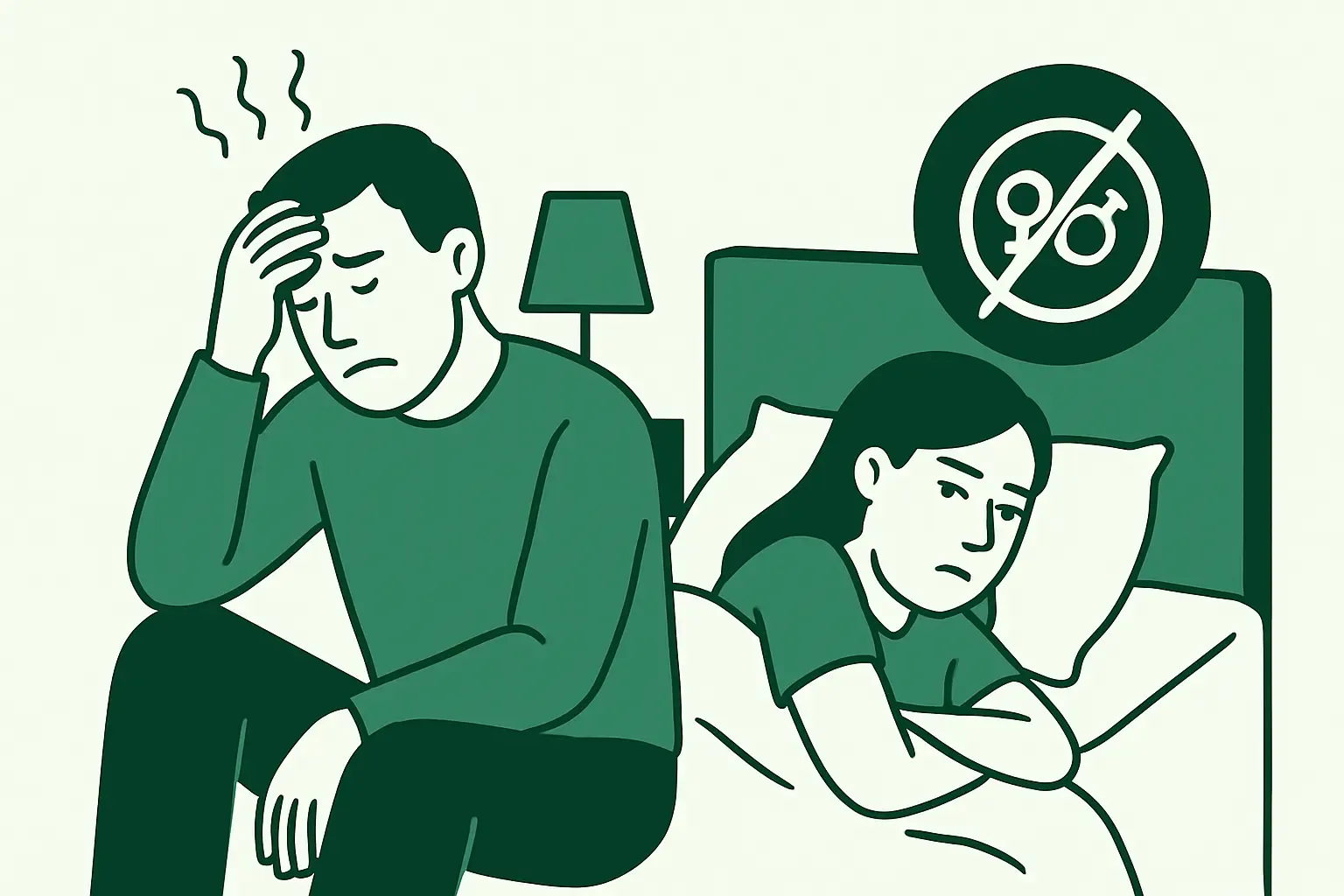
Stress doesn’t knock before it barges in. One moment, you’re breezing through the day, and the next, you’re snapping at your partner, ignoring your own needs, or wondering when you last felt actually present in your body.
It’s not just about headaches and deadlines. Chronic stress can slowly reshape your relationship with intimacy, shifting everything from desire to physical response. And when that happens, the bedroom often turns into yet another place where pressure replaces pleasure.
Let’s talk about it (not with judgment or performance checklists) but with genuine curiosity about how stress manifests in our bodies, moods, and most vulnerable moments.
How Stress Affects Your Sex Life
We tend to think of desire as spontaneous. Like a switch that flips when the lighting is right or someone touches the small of your back. But the truth? Desire has context. And stress is often the context killer.
When cortisol levels rise, your nervous system switches into “fight or flight” mode. That’s great if you’re escaping danger. Not so great when you’re trying to connect with a partner, or even yourself. Your body literally deprioritizes pleasure—blood flow shifts, hormones rebalance, and arousal becomes harder to access.
Your body is likely too overwhelmed to remember how to want anything at all.
The Connection Between Stress and Libido
When your brain is busy keeping tabs on finances, family drama, unread emails, and that weird sound your car started making, it doesn’t exactly leave room for sensuality.
Even a simple touch can feel like one more thing, rather than a grounding experience.
Sometimes, intimacy feels like a mirror for everything we’re carrying. The vulnerability of sex, or even the idea of initiating, can bring up feelings of guilt, frustration, or fatigue.
So what happens next? You avoid it. You “don’t feel in the mood.” You scroll. You sleep. You tell yourself, “Tomorrow. When I’m less stressed.”
But tomorrow doesn’t come unless something shifts.
Can Intimacy Help Reduce Stress?
Here’s the other side of it: Intimacy, when approached gently and without pressure, can reduce stress.
Touch—especially slow, non-goal-oriented touch—activates your parasympathetic nervous system. That’s your body’s calm-down mode. It lowers cortisol. It boosts oxytocin. It helps you sleep better and feel more connected.
Think less “heat of the moment,” more “slow exhale.” Sometimes, that’s all it takes to reconnect.
Practical Ways to Rebuild Intimacy Under Stress
Another stress trap? Thinking that intimacy has to follow a script.
Penetration. Orgasm. Perfect timing. The works. But what if sex were a spectrum, not a checklist?
Redefine What Intimacy Is
What if some days, it’s lying next to your partner with your hands on each other’s chests, feeling your breath sync? Or using an oil-based lube to give a slow massage—not with a destination in mind, but just to remind yourselves that your bodies still speak the same language.
Desire isn’t linear, and sometimes, it’s cyclical. Plus, it often needs space, not pressure, to emerge.
Build Micro-Moments of Intimacy
You don’t need an entire stress-free week to reconnect. You need small, intentional moments:
- Holding eye contact for 30 seconds.
- Saying one thing you appreciate about your partner out loud.
- Letting your partner rub your back with warm oil and no expectation of where it leads.
- Laughing together—yes, that counts.
These gestures create trust and safety, which are far more effective arousal aids than anything you’ll find in a bottle. (Though a high-quality bottle of organic massage lube doesn’t hurt.)
Focus on Yourself
Let’s not pretend that focusing on yourself is always easy. Stress can also impact how we feel about our bodies, how we perceive touch, and how we feel when we’re naked.
This is where solo intimacy comes in. Taking time for yourself, without a partner, to explore what actually feels good again. It can be as simple as taking a bath and listening to soft music, engaging in slow, intentional self-pleasure, or any activity that helps you slow down and relearn what you enjoy.
It’s not selfish, and in many ways, it’s the first step toward rekindling shared intimacy.
Frequently Asked Questions
How does stress affect your libido?
Stress can lower libido by increasing cortisol, a hormone that suppresses sexual desire. It also shifts your nervous system into a state where pleasure and connection feel inaccessible.
Can stress cause problems with arousal or orgasm?
Yes. Stress disrupts the physiological processes involved in arousal, like blood flow and lubrication, making it harder to become physically stimulated or reach orgasm. This same stress response can also affect timing and endurance, which is why many people search for answers on how to last longer in bed when the real issue is often about addressing underlying stress and anxiety.
Is it normal to avoid sex when stressed?
Completely. Many people feel emotionally or physically disconnected during high-stress periods. Avoiding sex doesn’t mean there’s something wrong—it often means your system is overwhelmed.
Can intimacy help with stress relief?
Gentle, consensual intimacy can reduce cortisol and increase oxytocin, promoting a sense of calm and connection. This includes massage, cuddling, or even mindful touch without a sexual goal.
What if my partner and I have mismatched stress levels?
It’s common. The key is communication and adjusting expectations. Create low-pressure moments of connection that don’t rely on sex but still nurture closeness, like sharing a quiet massage or talking openly.
Final Thoughts On Stress and Your Sex Life
There’s no gold star for powering through stress. No intimacy trophy for always being “in the mood.” Sometimes, what your body needs most is softness, stillness, presence, and maybe a little help from tools that encourage you to slow down.
The main fix is about noticing how you feel and asking, “What would feel nourishing right now?” instead of, “What should I be doing?”
Whether that’s holding your partner’s hand, setting down your phone, or using a lube that turns a moment of tension into one of comfort, those little choices matter.
Because your sex life isn’t separate from your stress, they’re part of the same story. And the good news? You can rewrite it—one small act of care at a time.