How Excessive Thinking Affects Mental Health
<p>Excessive thinking is one of those things we don’t notice until it feels like we’re carrying a bag of words and images in our heads. Sometimes, we even describe the feeling as having a heavy head…
- Published
- Written by
- Women In Balance Team
- Reading time
- 5 minutes
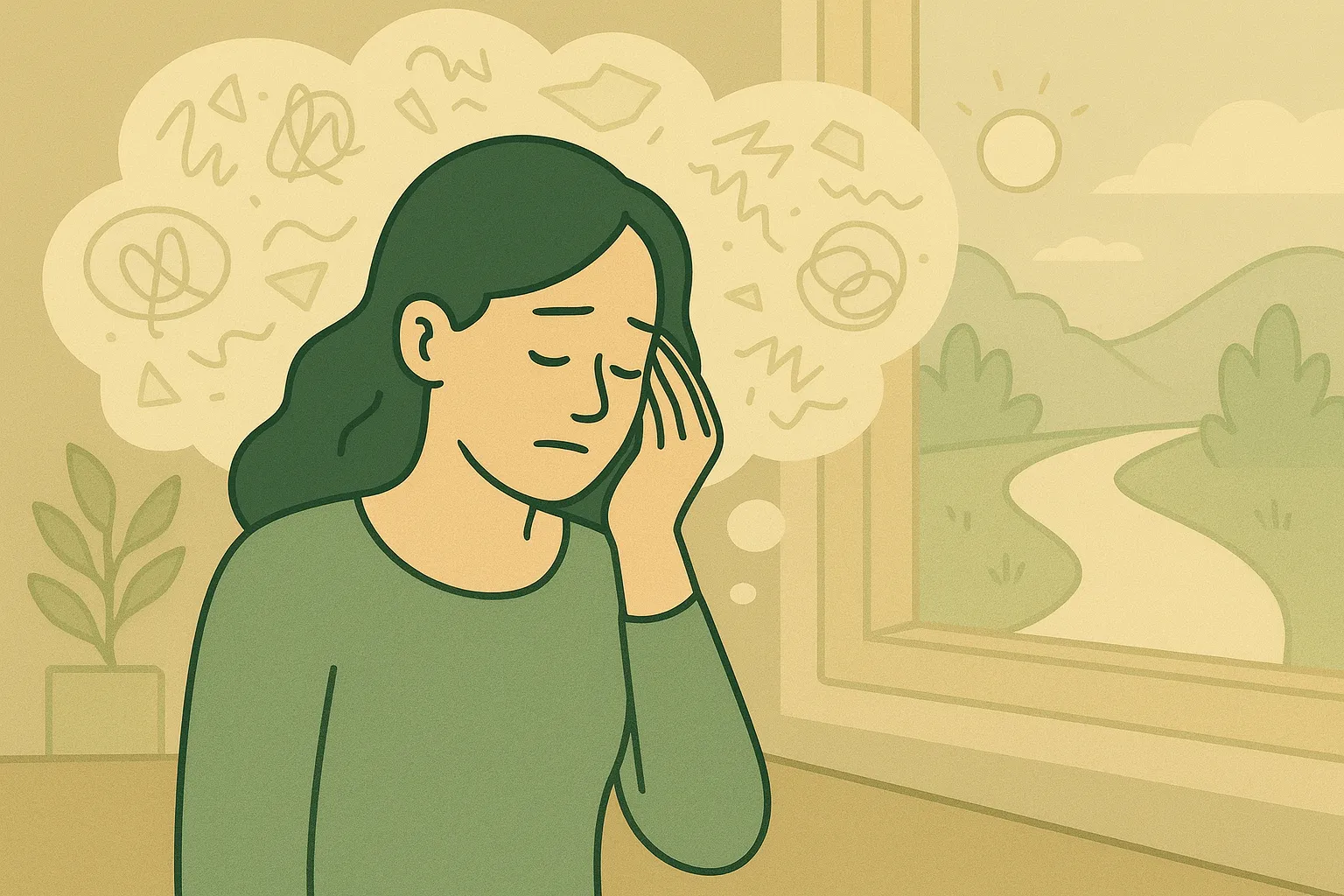
Excessive thinking is one of those things we don’t notice until it feels like we’re carrying a bag of words and images in our heads. Sometimes, we even describe the feeling as having a heavy head, and it’s not an exaggeration. The recipe to get rid of the feeling? Get a quiet night and you’re (theoretically) done. In reality, the overthinking impact on mental health is actually underestimated; it’s not something we can just “sleep off” and forget. If you want to take better care of yourself after you’ve been internally running in circles for a long time, this article might be a good read. Check for these symptoms to learn if you need to focus on recovery more.
What Can Trigger Overthinking?
Usually, you don’t develop chronic overthinking out of the blue — it happens because of the combination of factors.
- Stressful life events. Let’s be honest: our lives are the epitome of stress. Individuals who have searched “What is Liven” and have become the app’s users often admit that worrisome things in their lives are the key factor in triggering their rumination tendencies. This can be a career switch (or a contemplation of such), a challenging exam, or even a conflict in your personal life. What matters is the creation of imbalance — when you don’t know what happens next, you compensate for it by thinking about all the potential paths.
- Uncertainty about the future. Just like with unexpected turns of events we’ve mentioned above, a sense of ambiguity regarding things that matter (such as your health, relationships, or stability) can lead to overthinking. This may translate into indecisiveness or stalling.
- Perfectionism and fear of mistakes. People who want everything to be ideal analyze each variable. Because the world changes every second and we cannot account for it, perfectionists struggle with keeping all these mental tabs open.
- Traumatic or unresolved past experiences. Painful relationships where you had to tiptoe around your partner or toxic friendships where every word felt like an attack can make you prone to this habit. People who have lived through disasters or catastrophes often tend to overanalyze every detail, trying to ensure their safety for the future.
There are other contributors (for instance, social media or a trip to a new place), but they all have one thing in common: they remove the sense of balance and security.
Consequences of Overthinking on Your Mental Health
Overthinking has an impact on you — it reaches your emotions, your self-esteem, and how you perceive the world.
Higher Level of Anxiety
As a rule, anxiety is the first sign that your rumination has a more profound psychological influence on you than you believed. Excessive thinking is always associated with worry, even when it appears as if you are entirely logical and unaffected. Your body stays on high alert, losing its ability to relax. With this endless tension, anxiety also increases, and it typically comes with overwhelming thoughts, restlessness, and physical symptoms like a tight chest or a racing heart.
Increased Depression Risk
Although overthinking doesn’t necessarily cause depression, the link is still there. Dwelling on negative experiences or perceived failures can feed feelings of hopelessness. Do you recall the times you felt like giving up because each path felt impossibly tough? It keeps you in the painful cycle that seems infinite, reinforcing loneliness and mental fatigue.
Uneven Sleep
Some people fall asleep the second they lie down; others develop insomnia. Although every body responds differently to the stress of excessive thinking, trouble sleeping is common in the majority of cases. Many people who overthink describe lying in bed with a mind that won’t switch off. Even if you fall asleep, your rest is irregular, and the deep sleep phase is either too short or nonexistent.
Decision Fatigue or Paralysis
Lack of action and instead directing all your efforts to rumination is one of the most unpleasant signs of overthinking. The more you doubt yourself, the more you stall — and while you haven’t made a decision yet, you are already exhausted.
Loss of Social Connections
The moment you truly need other people is the same you distance yourself from them. Excessive thinking can lead you to question your friends’ motivations and wonder if your loved ones truly care for you. You nitpick their words or what you said, turning the secure base of our relationship into a labyrinth. This drains both of you, and even if you don’t mean it, you may push those you love away.
When to Look for a Professional
There may be times when you need someone else to help you with this unending loop. How do you know when you can’t keep up on your own?
The prevalence of overthinking is the leading indicator. If your mind races when you try to rest, or you can’t stop replaying specific scenarios despite your best efforts, it may be a sign that your thought patterns have gone beyond your control.
If your habits affect your life and its quality, it is the next sign. It can worsen academic or professional performance, leading to neglect of your commitments.
Remember: if you have tried other approaches, from mindfulness to connecting with your social support network, it means you require specialized assistance. Talking with a therapist, counselor, or psychiatrist can open up new tools and perspectives you might not access on your own. Professional help, such as mental health treatment at Victory Bay, can provide structured support to help you uncover underlying thought patterns, address related anxiety or low mood, and develop practical strategies for managing sleep and daily functioning
Conclusion
Overthinking damages your mental health by turning your mind from maintaining well-being to solving fictional challenges. Noticing the first troubling symptoms is the best way to avoid fatigue. And if you feel like you have to start taking care of yourself right now, don’t forget that sometimes, choosing the right thing doesn’t take ten circles of reflection. The best day to protect your calm is today.