The Future of Healthcare for Women: Telehealth is Transforming the Landscape
<p>Telehealth has helped women across the world find new ways to access healthcare that is personal, private, affordable, and effective. Virtual care brings high-quality healthcare to their doorstep…
- Published
- Written by
- Women In Balance Team
- Reading time
- 3 minutes
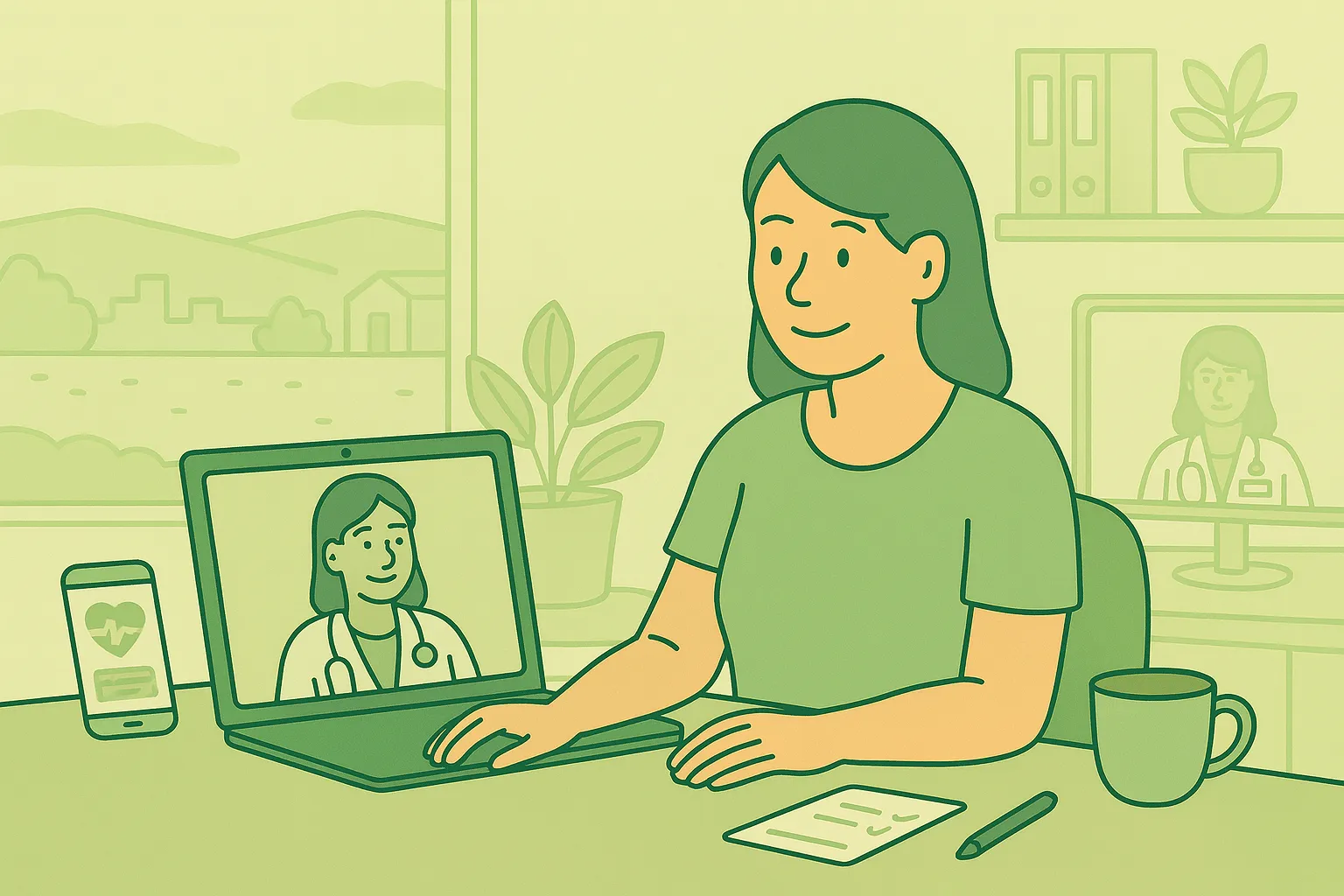
Telehealth has helped women across the world find new ways to access healthcare that is personal, private, affordable, and effective.
Virtual care brings high-quality healthcare to their doorstep through video consultations, mobile applications, and secure digital platforms.
It helps to improve health outcomes and gives women the opportunity to take greater control of their own wellbeing.
Using Apps to Tackle Bladder Control Problems
Bladder control issues are commonplace among females, but many of them do not report them out of fear of being stigmatised.
Researchers in the United States recently tested whether digital solutions could help female military veterans suffering from urinary incontinence. The results were encouraging.
They used a smartphone app called MyHealtheBladder to deliver daily lessons over eight weeks. It taught women about pelvic floor exercises, bladder control strategies, fluid management and self-monitoring.
Another group of participants got help through a telehealth consultation with medical professionals who specialise in urinary incontinence, and it was effective.
Women who used the app made significant improvements, while those who took up the telehealth option also felt huge relief over time.
According to the research team led by Dr Alayne Markland, director of geriatric research and education with the Birmingham VA Health Care System in Alabama, women veterans reported improved urinary incontinence symptoms with both remote delivery modalities.
The research proved that women can tackle bladder control problems without visiting a land-based medical facility.
This was a huge breakthrough, especially for women in rural areas or remote communities who may not have access to a urologist or a gynaecologist.
Defying Distance to Help Women in Australia
Australia’s geography has traditionally made it difficult for women to access healthcare services, especially if they live in remote communities.
Digital technology has been a lifeline. Tools such as My Health Record and the My Health app allow women to securely store medical records, prescriptions and test results online.
Medical professionals in regional Australia have testified that these digital systems have changed the entire healthcare sector.
Prescriptions can be issued more efficiently, test results are accessible across providers and women have a greater say in how their health information is distributed.
Australia has a diverse and dispersed population, and many of its citizens enjoy unprecedented access to quality healthcare when they use digital tools.
Digital tools have helped to level the playing field, giving women from indigenous communities a fair crack at accessing quality and affordable healthcare.
Telehealth platforms such as Updoc have transformed the healthcare in Australia. This Updoc review by Medicompare highlights why the platform is considered one of the best in the country.
Updoc allows women to connect with medical professionals through video consultations within minutes, allowing them to fit appointments into their busy schedules.
Many women do not seek treatment for issues such as urinary incontinence because they feel embarrassed or fear that they would not be taken seriously.
Digital health tools have removed those fears from the equation, helping women get their confidence back and feel independent.
Caring for Women with Serious Health Conditions
Telehealth has had a huge influence in taking care of people going through serious health conditions such stroke, which is one of the leading causes of disability and death among women.
The urgency of treatment it needs cannot be understated, considering every second it is not treated can lead to irreparable brain damage.
The Hendrix Health system in Texas decided to use tele-neurology because there are not enough specialists in the region to properly care for stroke patients. Unsurprisingly, digital solutions have been a game-changer.
Neurologists use advanced telemedicine carts with cameras and secure links to assess stroke patients remotely, and this is done in a matter of minutes. The integration of AI in telemedicine further enhances these assessments by analyzing imaging data and patient symptoms to support faster diagnostic decisions. That makes it much faster than heading down to a hospital and waiting for treatment.
Many of the women in the region are older and at higher risk of stroke, but they now have access to life-saving tools that would have taken ages to access without digital solutions.
According to recent data, the number of patients reaching out to neurologists through telehealth platforms has increased by a staggering 600 percent over the last five years.
The results have been fantastic. It has helped many of them improve their wellbeing and drastically reduced the need to transfer patients to hospitals.