Effective Communication Strategies to Strengthen Romantic Relationships for Women
<p>Want to have a better relationship with your partner? (Hint: communication is key.) There are all kinds of skills you can learn to feel happier and more fulfilled with your partner. But no matter…
- Published
- Written by
- Women In Balance Team
- Reading time
- 6 minutes
Want to have a better relationship with your partner? (Hint: communication is key.)
There are all kinds of skills you can learn to feel happier and more fulfilled with your partner. But no matter what, if you can’t connect with your partner, your relationship will have fundamental issues and likely start to disintegrate.
And here’s the interesting thing…
When it comes to most relationship problems, the issues mostly stem from one critical problem:
Miscommunication.
The good news?
You can learn to communicate better (and these are free tools).
You don’t need a high-level psychology degree to build better connection skills. The strategies in this guide have been time-tested, and if you apply them, you will see transformation in your relationship in a short amount of time.
Let’s talk about:
- Why communication is key for a healthy relationship
- The communication patterns that are toxic for relationships
- The 5x communication skills you need to improve how you connect
- When it’s time to seek professional help
Let’s get into it.
Why communication is key for a healthy relationship
Communication problems are the number one reason relationships and marriages fail.
In a poll of mental health professionals conducted by BestColleges, 65% of the respondents reported that communication is the number one contributing factor of divorce. I know… this is higher than financial problems, cheating, domestic violence, mental illness, or any other contributing factors.
Let that sink in.
Two-thirds of failed marriages could have been different with proper communication skills. This is why many relationship counseling services focus on helping couples learn how to talk to one another.
If you are struggling to communicate with your partner, you should consider talking to a professional therapist. A top-rated couples therapy service will be able to give you support to relearn how to build a healthy and stable connection.
But there is something many women don’t realize…
It’s not only important that you and your partner communicate. It’s essential that you know how to talk to one another.
The communication patterns that are toxic for relationships
You need to be aware of what’s sabotaging your communication with your partner.
There are specific patterns that destroy relationships over time. Sometimes they take years to build, and most times, these are habits we aren’t even aware of. But the end result is the same:
Disconnect.
Danger signs to watch out for:
- Criticizing your partner instead of talking about the problem
- Being defensive instead of listening to your partner
- Shutting down while having a difficult conversation
- Making assumptions about what your partner is thinking
- Keeping score of past issues
Sound familiar?
Most of us have done these things before. The key to stopping these patterns is to be aware of when they are happening and take a different route instead.
Studies have shown that over 80% of women who experienced a relationship breakup said their partners never validated their opinions and feelings. It can’t be stated more clearly than this – making the other person feel heard and understood is critical for a stable relationship.
5x Communication skills to improve how you connect
Here are the best communication strategies that will truly work for you. These aren’t fancy academic theories.
These are practical strategies and simple techniques you can start using today to improve how you connect with your partner.
1. Active listening
Most people don’t listen to understand. They listen to respond.
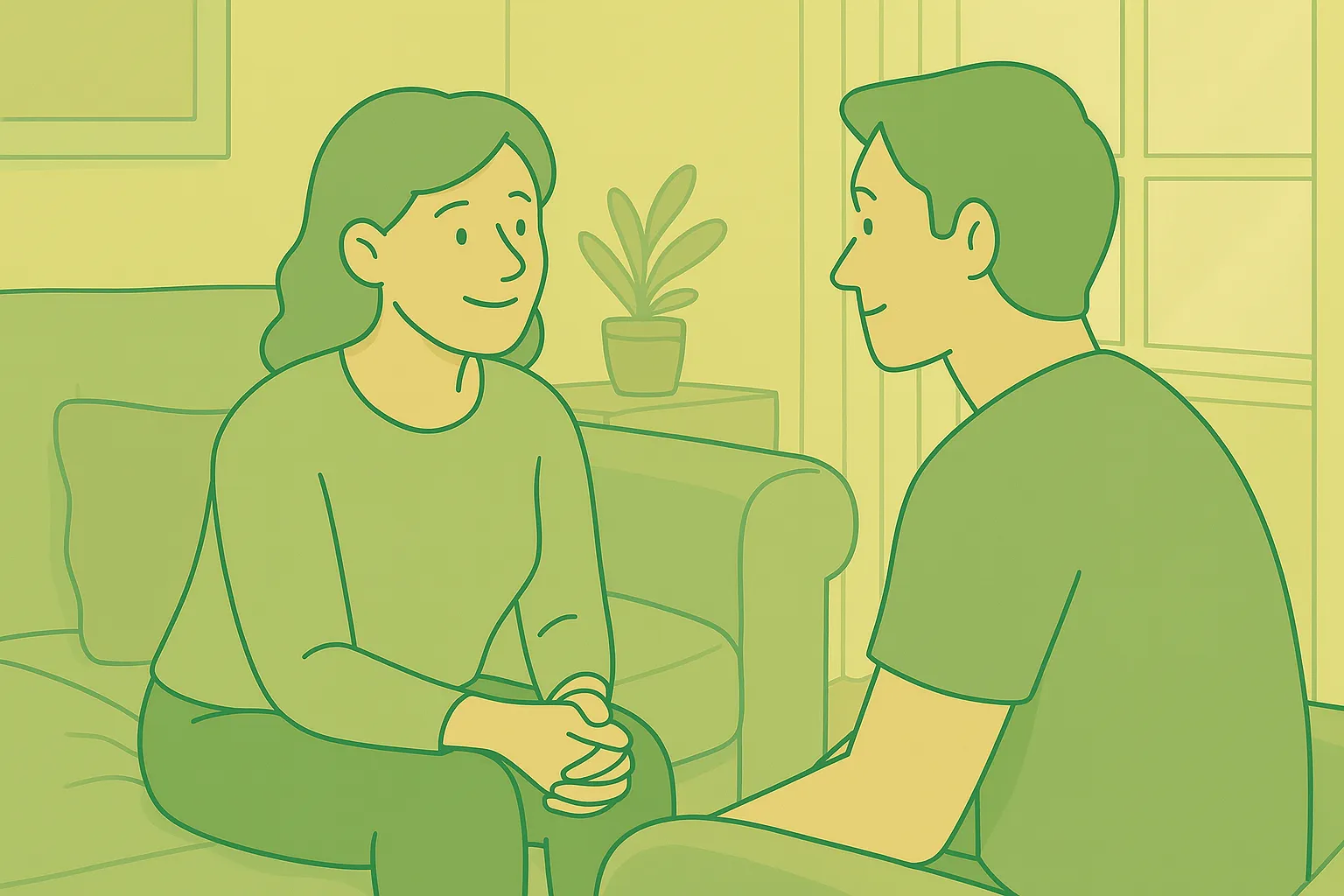
Active listening is when you put all your attention on the person that is talking to you. Put your phone down. Look them in the eye. Don’t interrupt them. Let them finish talking before you respond.
Here is how you can do it:
- Be 100% present with what the person is saying.
- If you are unsure about something, ask questions.
- Repeat back what you understood to make sure you got the message right.
- Do not interrupt or think of a response while the other person is talking.
This small shift in how you engage in a conversation can change how your partner feels speaking with you.
2. Use “I” statements instead of “you” statements
Words are powerful.
“You never help around the house” is going to make your partner go on the defensive. “I feel overwhelmed when I am the only one doing the chores” opens up a conversation.
“I” statements express your feelings instead of pointing the finger and blaming your partner. “I” statements invite your partner to help you find a solution rather than creating a conflict.
Simple, right?
3. Timing is everything
You can’t have a serious talk with your partner when they are busy, stressed, tired, or distracted.
Don’t bring up difficult issues during the morning rush hour or right before bed. Do not have important conversations when your partner is trying to unwind from a busy day.
Pick times when you and your partner are calm and have the time to give each other the proper attention.
You can even schedule regular check-ins with your partner to make sure you are on the same page in your relationship.
4. Learn to manage conflict healthily
Arguments are a natural part of every relationship.
What is the difference between a healthy couple and an unhealthy couple? The answer is simple.
It’s not whether a couple fights or not. It is how they fight.
Healthy conflict looks like:
- Focusing on the current issue and not bringing up past mistakes
- Taking a time out if things get too heated
- Trying to find solutions together
- Apologizing when you are wrong
- Forgiving when your partner apologizes
Healthy couples have a 5:1 ratio of positive to negative interactions. That means that for every negative thing (criticism, complaint), there should be five positive interactions between you and your partner.
5. Regularly show appreciation
When is the last time you said “thank you” to your partner?
Regular small expressions of gratitude will have a massive impact on your relationship over time. Saying “thank you” for daily, little things is a reminder to your partner that they are seen and appreciated.
Don’t wait for your partner to go above and beyond to show their love. Expressing gratitude for the little things will show your partner that you care. You won’t be able to show appreciation all the time, but over time, it will add up.
When to seek professional help
In some cases, you may need outside assistance.
You may have tried to do it all on your own. But sometimes you may run into a brick wall no matter how much effort you put in. When this happens, getting professional support can make all the difference. It is hard to replicate what relationship counseling services can give you.
You should consider looking for professional help if you:
- Repeat the same arguments
- One or both of the partners have stopped trying
- Trust has been broken in the relationship
- You no longer feel like partners, more like roommates
- The communication between you and your partner is mostly negative
A trained relationship counselor or therapist will be able to help you identify things that you cannot see by yourself. A professional will be able to teach you communication techniques that will work for your specific relationship.
Remember that it is okay to ask for help.
Building better communication takes time and practice
Communication is the foundation of any healthy and strong relationship.
The strategies shared here aren’t complicated. You can start practicing active listening, using “I” statements, making sure the timing is right, learning to manage conflict, and expressing appreciation regularly starting today.
To recap:
- Most relationship issues are due to communication problems
- Destructive patterns can be broken with awareness and conscious effort
- Simple techniques work over time
- Professional help is available when you need it
It will take time and practice to build better communication skills.
You will not get it right every time.
But every time you try to improve your communication skills, you will build a stronger connection with your partner.
Pick one skill. Work on it. Master it. Then move on to the next one.
Your relationship with your partner is worth it.
The women who manage to have stable and fulfilling relationships in their life are not necessarily the luckiest. They have just learned how to communicate with their partners in a way that brings them closer instead of pushing them apart.
You can do that too.