Women’s Health and Well-being: How Financial Stress Impacts Mental and Physical Health
<p>Money problems show up in your body before your bank account hits zero. The tension starts subtle. You may experience trouble sleeping, skipped periods, and weight that won’t budge no matter what…
- Published
- Written by
- Women In Balance Team
- Reading time
- 4 minutes
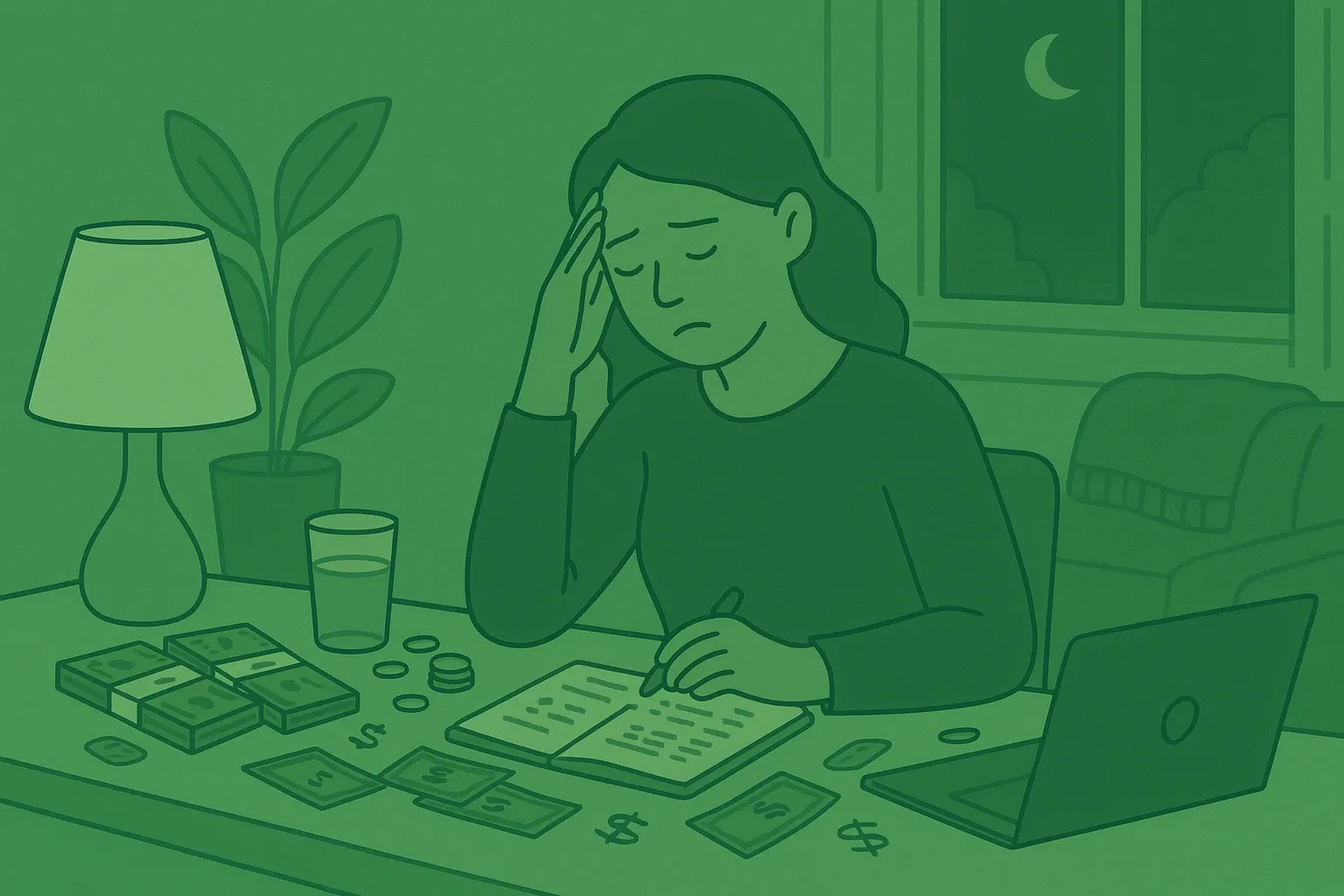
Money problems show up in your body before your bank account hits zero. The tension starts subtle. You may experience trouble sleeping, skipped periods, and weight that won’t budge no matter what you eat.
Then it escalates. Your body keeps a running tab of every unpaid bill, every declined card, every night you lay awake doing math that doesn’t add up.
Women’s bodies respond to financial pressure differently than men’s. The stress rewires your hormones, disrupts your cycle, and fundamentally changes how your body functions.
And when it comes to hormones, things can be detrimental. So, yes, if you’re already concerned, your gut feeling isn’t lying.
The Body Keeps Score – Especially Your Hormones
Money problems don’t stay in your wallet. They move into your body, setting up shop in your nervous system and throwing your hormones completely off balance.
When bills pile up or unexpected expenses hit, your adrenal glands pump out cortisol. This “stress hormone” was designed to help you escape danger, not manage a car repair bill. But your body can’t tell the difference between a saber-toothed tiger and a maxed-out credit card.
Here’s where it gets complicated for women: cortisol doesn’t work in isolation. It interacts directly with estrogen and progesterone – the hormones responsible for mood stability, sleep quality, bone density, and reproductive health. When cortisol stays elevated for weeks or months, it essentially hijacks resources your body needs for hormonal balance.
Why Women Feel Financial Stress More Intensely According to research from the American Psychological Association, 23% of women report extreme stress compared to 16% of men. Money is the absolute top stressor for both genders, but women often carry additional financial pressures that make it even worse (as if it wasn’t already like that).
If you take into account the gender pay gap, career interruptions for caregiving, and longer life expectancy, you will need more retirement savings. Add single motherhood statistics – roughly 80% of single-parent households are headed by women – and the financial stress picture becomes a nightmare that’s waiting for unfold.
This isn’t just about feeling anxious. Chronic stress fundamentally changes how your body functions.
Sleep, Mood, and the Exhaustion Cycle
Financial worry doesn’t switch off just because the lights do. Many women lie awake counting expenses in their heads, trying to plan for bills, or feeling a tightness in their chest that won’t let them settle.
When sleep (if it ever) comes, it’s often shallow. Poor rest pushes cortisol even higher and reduces the hormones your body needs to repair itself. You wake up exhausted, irritable, and foggy. Small tasks feel heavier. Decisions that should be simple suddenly take real effort.
Over time, this becomes a loop: money stress bad sleep less capacity to deal with money stress. And when your body stays in that cycle long enough, anxiety and depression can follow. It’s not a personal failure – it’s a biological response to prolonged pressure. And a study examining economic hardship found that financial stress affected women’s mental and physical health through multiple pathways, like self-blame, anxiety, and depression.
Breaking the Cycle: Practical Steps
Addressing financial stress takes more than a budget spreadsheet. It’s a two-part process: you work on the numbers, and you support your body while you do it.
Stabilize immediate cash flow concerns
Sometimes the stress comes from not knowing how you’d handle an emergency expense. Having a plan – even if it’s not perfect – reduces cortisol spikes associated with uncertainty. If you’re dealing with unexpected bills or cash shortfalls, taking time to discover alternative cash options can provide quick relief while you develop longer-term solutions. Even knowing that options exist for accessing emergency funds online – regardless of credit history – provides psychological breathing room that directly benefits your stress response.
Support your body’s stress response
Give yourself space to relax. Keep money talk and bill-paying out of the bedroom, and pick a specific time earlier in the day to think through finances so it doesn’t spill into your nights.
Protecting your sleep makes a real difference – your hormones settle, your mind softens, and your body stops running on overdrive. Gentle supplements like vitamins B or magnesium may help, and even a short walk can burn off that wired, stressed feeling.
Strengthen your financial stability
You don’t need a huge overhaul to feel safer. Start with one small, steady step – like automating $25 into savings – and let that first win remind you that progress is possible.
If you keep money conversations contained to a set time, it helps them feel less damaging, too. Over weeks and months, these tiny choices stack up, and finally give you a growing sense of control and confidence.
The Big Picture Reveals Everything
Financial stress and hormonal health exist in a bidirectional relationship. Money problems trigger hormone imbalances, and those imbalances – brain fog, fatigue, mood swings – make financial management harder. Recognizing this connection is the first step toward addressing both simultaneously.
Your body is designed to handle acute stress and recover. The goal isn’t eliminating financial pressure entirely (good luck with that), but rather preventing chronic elevation of stress hormones that erode your health over months and years.