8 Empowering Resources Where Women Share Their Health and Wellness Journeys
<p>Health and wellness for women are no longer private topics whispered in silence. They are becoming shared experiences, discussed openly, and celebrated across different platforms. Today, a woman…
- Published
- Written by
- Women In Balance Team
- Reading time
- 5 minutes
Health and wellness for women are no longer private topics whispered in silence. They are becoming shared experiences, discussed openly, and celebrated across different platforms. Today, a woman in New York may learn stress-management tricks from a mother in Nairobi, while someone in Madrid could be inspired by fitness routines designed in Tokyo. The truth is that knowledge expands when stories are shared. But where can women find these empowering voices and practical tips? The following eight resources to empower women’s health show that support comes in many forms, sometimes digital, sometimes local, and always personal.
1. Online Communities for Women’s Health Discussions
The first stop for many is digital communities. Platforms like health forums, dedicated apps, and moderated Facebook groups allow women to ask real questions about nutrition, exercise, or mental health. According to a 2022 survey by Mckeansey, around 45% of women between 25-40 years old participate in online groups focused on wellness topics. That number is only growing. These spaces are valuable because anonymity can make it easier to share sensitive questions without fear of judgment.
2. Personal Blogs and Storytelling Websites
Sometimes, one person’s voice becomes an anchor for thousands. Personal blogs and storytelling sites highlight the struggles and victories of women who faced illness, battled anxiety, or worked through postpartum recovery. Unlike medical articles filled with complex terms, these blogs use lived experiences. They are spaces where to share women wellness tips in raw and relatable ways. And often, reading a single blog post feels like a heart-to-heart conversation.
3. Wellness Podcasts Hosted by Women
Podcasts are booming, and women are at the microphone. Shows led by doctors, midwives, fitness experts, or everyday women blend science with storytelling. A simple commute can turn into an empowering lesson about hormone balance, sleep strategies, or mindful eating. Audio makes it personal you hear emotion, laughter, even hesitation. That’s what creates trust. According to Edison Research, podcast listenership among women rose 76% in the last five years, proof that women are hungry for this style of wellness education.
4. Local Women’s Circles and Workshops
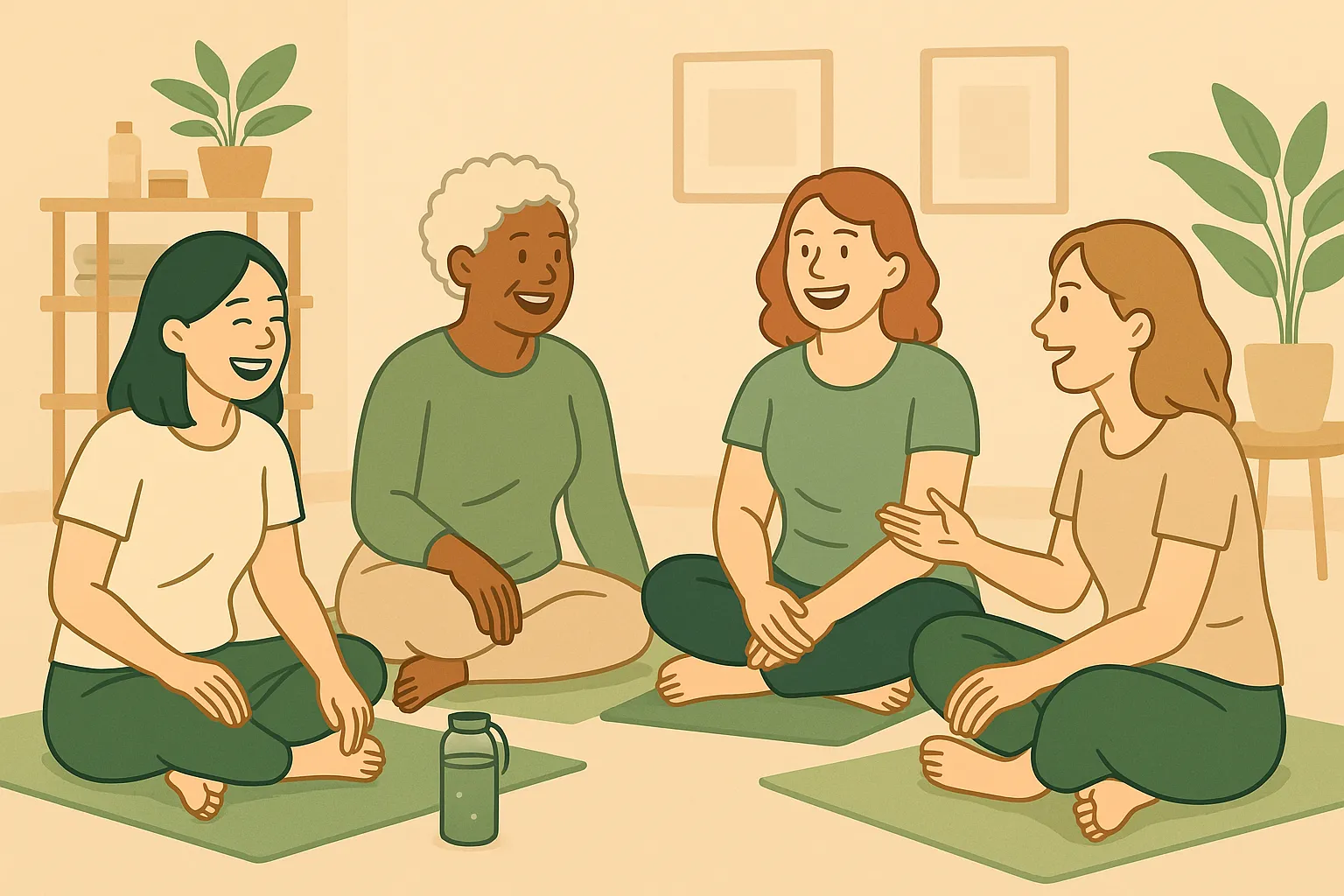
Technology may dominate, but face-to-face gatherings still matter. Local women’s circles, yoga retreats, or weekend workshops give a safe physical environment to exchange knowledge. Here, body language, presence, and immediate empathy play a big role. Women’s health and wellness thrive when real connections are formed. These circles often combine physical practices, such as yoga, meditation, or dancing, with open dialogue about challenges like balancing work and motherhood.
5. Anonymous Video Chat with Global Perspectives
Sometimes the best advice doesn’t come from someone next door. It comes from a stranger halfway around the world. Imagine this: you are struggling with balancing traditional diets with modern health advice. Many girls around the world envy the smooth skin of Asian women and their ability to apply makeup. Obviously, a girl from Singapore or Bangkok knows the intricacies of beauty better than bloggers who are just trying to repeat advertising slogans.
This is where anonymous chat online steps in. It connects people instantly, allows safe sharing, and crosses borders. Language barriers fade with translation tools, and cultural diversity adds richness. By connecting to an anonymous video chat, you can get the best advice from people from all over the world. Usually, this is personally tested advice or even the wisdom of different people, collected over the centuries.
6. Instagram and Social Media Wellness Influencers
Love it or not, social media remains a powerful tool. Instagram accounts dedicated to women’s health and wellness showcase workout routines, meal prep ideas, or affirmations. What’s unique is the visual storytelling: before-and-after photos, live workout streams, or short motivational reels. For women building their own wellness presence, tools that let you create AI videos make it easy to produce professional-looking reels and health content without a production setup. The downside is the risk of curated perfection, but many influencers are now moving toward authenticity, showing struggles alongside victories. A follower count may not equal expertise, but it does show the collective hunger for shared wellness journeys.
7. Nonprofit Organizations and Resource Hubs
There are structured resources too. Nonprofits focusing on women’s health provide research articles, free guides, and sometimes helplines. These organizations focus on accessible knowledge. For example, global NGOs provide toolkits on reproductive health, nutrition in low-income communities, and strategies for managing chronic illnesses. Unlike personal blogs, these resources add credibility backed by science. They serve as a backbone where empowerment meets evidence.
8. YouTube Channels and Video Libraries
The final resource is visual learning on demand. From guided meditations to strength-training sessions designed for postpartum women, YouTube libraries have it all. A 2023 YouTube report revealed that over 70% of women between 18–35 use the platform to access health and wellness content at least once a month. The appeal lies in visual demonstration; seeing someone perform a stretch or prepare a balanced meal is far more effective than reading about it. And unlike expensive workshops, it’s free.
Why These Resources Matter
What makes these eight resources powerful is not just the information, but the feeling of not being alone. Women across the globe face shared struggles: fatigue, anxiety, body image, fertility concerns, and career burnout. When advice comes from another woman who lived through it, the lesson feels real. And when that advice comes from across cultures through anonymous video chat or global platforms, it brings fresh solutions no doctor’s pamphlet may provide.
Wellness is not just about vitamins or exercise; it’s about connection. Whether shared in a local workshop, written on a blog at midnight, or spoken in a video chat with a woman across the ocean, these stories empower. They remind us that healing is collective.
Final Thoughts
Women’s health is dynamic. It is deeply personal, yet universally relevant. These eight resources to empower women’s health prove that every story matters, every voice counts, and every shared experience builds strength. In an age when screens connect us more than streets, a woman’s journey to wellness may begin anywhere: with a podcast, a circle, an Instagram post, or even an anonymous conversation with someone from another culture.
And that’s the essence: empowerment grows when women listen to each other, across borders, across ages, across experiences.