CPR Training with Nationwide Certification: Why It Matters for Women Everywhere
<p>Table of Contents: Cardiopulmonary resuscitation is one of the most essential life-saving skills that saves a person’s life if they become unresponsive and stop breathing. CPR Training gives you…
- Published
- Written by
- Women In Balance Team
- Reading time
- 5 minutes
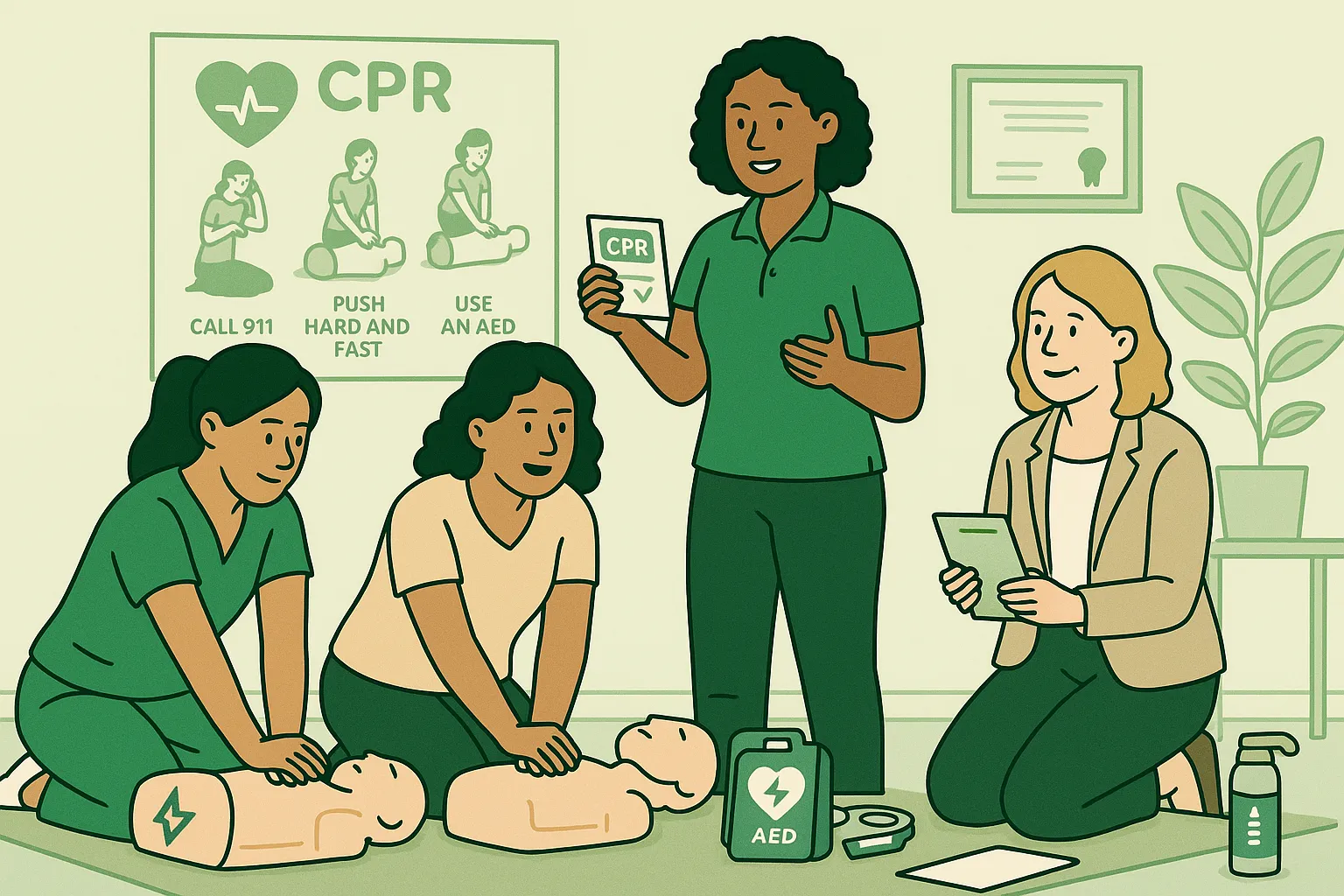
Table of Contents:
- What is “Nationwide Recognition in CPR Certification”?
- Nationwide Recognition in CPR Certification: Significance
- How to Get a Nationally Recognized CPR Training Certification
- Make a Difference by Upgrading Your Skills Through CPR Training
Cardiopulmonary resuscitation is one of the most essential life-saving skills that saves a person’s life if they become unresponsive and stop breathing. CPR Training gives you the skills and confidence to act when it matters most, whether you’re a parent, teacher, healthcare worker, or corporate professional. According to the latest data, between 2000 and 2021, 348,996 adults (18 years or older) had a cardiac arrest in the hospital and received CPR. Because of this, emergency responders need to know how to perform CPR, even if they don’t work in medicine. When you choose a nationally recognized CPR certification, you’re learning what you need to know, and also getting a credential that you can use in any state or job.
In this blog, we’ll explore the significance of nationally recognized CPR certification and how to get certified in a way that is reliable, easy to understand, and empowering.
What is “Nationwide Recognition in CPR Certification”?
A nationally recognized CPR/BLS training certification shows that the training you’ve completed meets the rules for CPR in your state and the industry as a whole. This type of certification ensures that your training will be accepted by businesses, licensing authorities, regulatory bodies, and schools all over the country.
It also means that your qualification meets the minimum standards for workplace safety and professional compliance. If you work in customer service, healthcare, education, childcare, or fitness, a nationally recognized certificate will ensure you don’t have to worry about compliance. It makes it easier to get started, switch jobs, and reassure the people around you that you are ready to handle emergencies.
Nationwide Recognition in CPR Certification: Significance
A nationally recognized certification ensures that your training stays relevant, opens doors, and builds trust, no matter what your job is or where you work. Below are the main reasons why it matters.
1. Reliable for Following Professional Standards
People who work in healthcare, education, and child care, among other fields, need to be certified in CPR as part of their legal or licensing requirements. If your credential is recognized in all states, it means that you won’t have to retrain when you move or change jobs.
2. Improves Skills for Non-Healthcare Professionals
Even if you don’t work in healthcare, knowing how to do CPR is a valuable skill. Employers in fields like manufacturing, customer service, hospitality, and fitness often prefer candidates who have certifications in CPR and other life-saving skills. When you have a recognized certification, people know you’ve had real, structured training and can be counted on in an emergency.
3. High Quality Training
Nationally certified programs follow the most up-to-date CPR guidelines and standardized protocols. This ensures that the training you receive is thorough, current, and aligned with what emergency professionals do in the United States.
4. Gives You Confidence
You can be sure that you’re ready to act correctly in an emergency because your qualification is respected everywhere. That peace of mind can make the difference between doing nothing and taking action when every second counts.
5. Prepares You for Real-Life Situations
In an emergency, you can’t control when you’ll need to perform CPR. A nationally recognized training program uses methods that are familiar, practical, and proven to prepare you for situations you might face at work, home, or in public.
How to Get a Nationally Recognized CPR Training Certification
Getting a CPR/BLS training certification that is recognized across the country is a simple but important step. You can receive a quality education while training at your own pace, thanks to the availability of online and blended options. Here’s how to do it right:
1. Choose A Training Provider
Find a provider who clearly states that their accreditation is valid in all 50 states. The course should include modules for caring for adults, children, and infants, and it should follow the most up-to-date CPR guidelines. Most credible programs will tell you which licensing boards or companies accept their credentials.
2. Choose The Correct Course Level
There are many course levels, depending on your profession. Many clinical jobs require Basic Life Support (BLS). For most workplaces or community settings, standard adult/child CPR with an Automated External Defibrillator (AED) is sufficient. Choose based on your needs and workplace requirements.
3. Complete All Of The Course’s Modules.
Most training is divided into short video lessons, each focused on a specific topic. These sessions cover how to check responsiveness, call for help, perform rescue breathing and chest compressions, use an AED, and respond to choking. Interactive checkpoints along the way help reinforce your learning.
4. Take The Test
After completing all the lessons, you will take a final exam to demonstrate your understanding. This often includes multiple-choice or sequence-based questions. Most programs allow multiple attempts and provide feedback so you can review any incorrect answers.
5. Get Your Certification
Once you pass the test, you’ll receive a digital certificate. Many providers also offer physical cards or printable versions. Most certifications are valid for one to two years and include renewal reminders to help you stay current. Some platforms even provide printable certificate free templates to make it easier to customize and share your achievements.
6. Check With Licensing Boards Or Employers To Make Sure They Accept It.
Even though the certification is nationally recognized, it’s always a good idea to confirm that your employer, licensing authority, or educational institution accepts it. Most nationally recognized providers offer detailed documentation or course descriptions to make verification easy.
Make a Difference by Upgrading Your Skills Through CPR Training
Getting certified in CPR training is more than just a skill; it’s about taking on a responsibility to help people during an emergency. No matter where you live, work, or travel, having a nationally recognized qualification will always show that you’re prepared to help others. It boosts your confidence, expands your job opportunities, and places you among a group of individuals ready to respond when someone is in danger. When you need to act in an emergency, being prepared is critical. Getting certified in an Online CPR/AED and First Aid Combo Course equips you with the skills needed to handle any emergency with confidence.