IUI vs. IVF: Costs, Success Rates, and Risks
<p>Key Takeaways If you’re navigating fertility challenges, you’ve likely encountered two common assisted reproductive treatments: intrauterine insemination (IUI) and in vitro fertilization (IVF)…
- Published
- Written by
- wib-seo
- Reading time
- 14 minutes
Key Takeaways
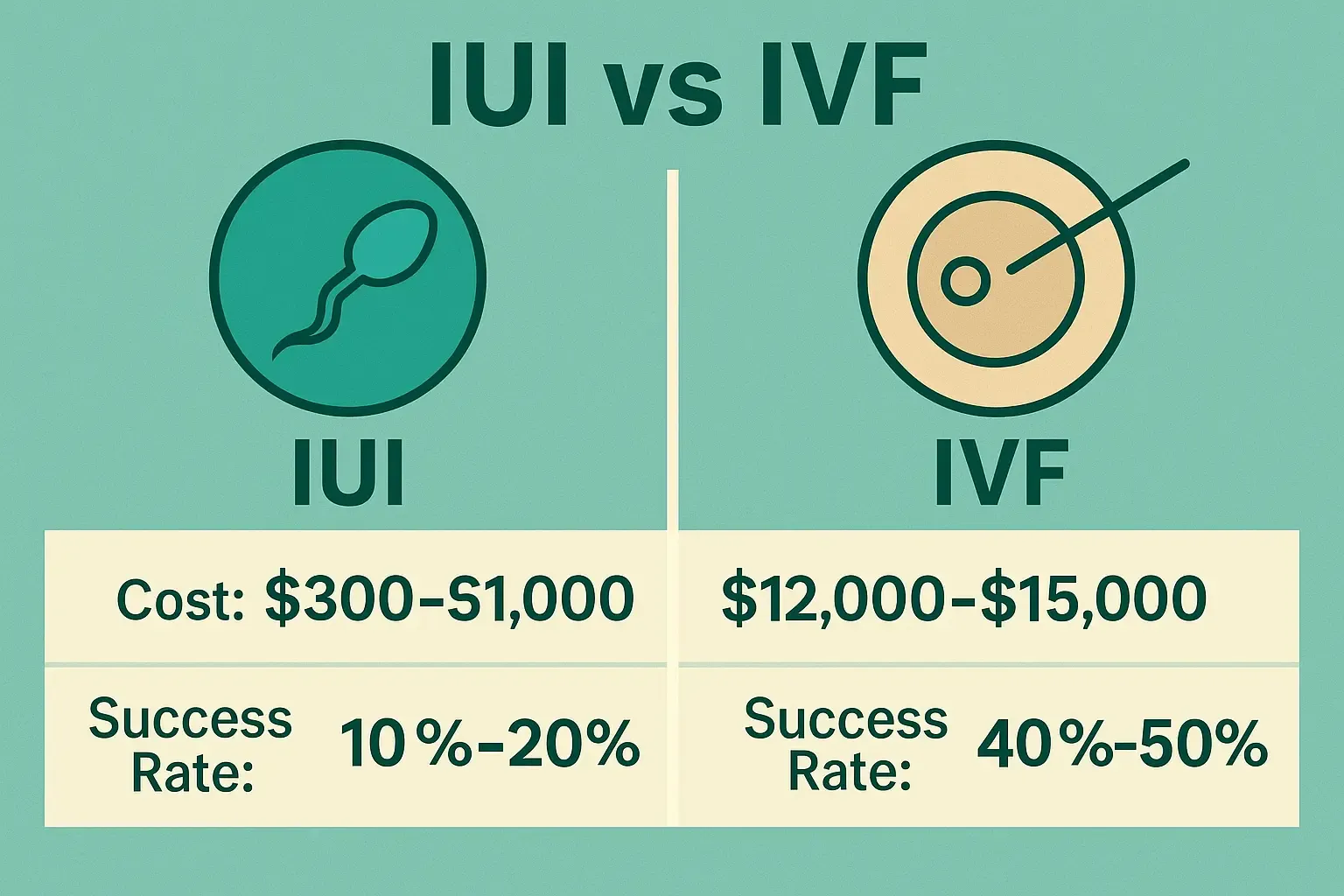
- IUI is less invasive and more affordable ($300-$1,000 per cycle) with 15-20% success rates, while IVF is more complex and expensive ($12,000-$20,000+ per cycle) with 35-50% success rates
- The choice between IUI and IVF depends on your specific diagnosis, age, fertility history, timeline, and financial considerations
- Multiple factors including blocked fallopian tubes, severe male infertility, advanced maternal age, or failed IUI cycles often make IVF the recommended option
If you’re navigating fertility challenges, you’ve likely encountered two common assisted reproductive treatments: intrauterine insemination (IUI) and in vitro fertilization (IVF). Understanding the differences between IUI vs IVF is crucial for making informed decisions about your fertility journey.
Both treatments aim to help individuals and couples achieve pregnancy, but they use fundamentally different approaches. IUI is a simpler procedure that places prepared sperm directly into the uterus, while IVF involves fertilizing eggs outside the body in a laboratory setting before transferring embryos to the uterus.
Choosing between these options isn’t just about medical factors—it involves weighing costs, time commitments, success rates, and personal circumstances. This article breaks down everything you need to know about IUI and IVF, from how they work to what they cost, so you can have meaningful conversations with your fertility specialist..
What Is IUI?
Intrauterine insemination (IUI) is a fertility treatment where specially prepared sperm is placed directly into your uterus around the time of ovulation. This process bypasses the cervix and shortens the distance sperm must travel to reach and fertilize an egg.
The IUI procedure is relatively straightforward. First, sperm (from a partner or donor) is collected and “washed” in a laboratory to concentrate the healthiest, most motile sperm. During your fertile window—typically monitored through ovulation tracking or triggered with medication—your doctor uses a thin catheter to insert the prepared sperm directly into your uterus. The procedure takes just a few minutes and feels similar to a pap smear.
IUI is typically recommended for:
- Mild male factor infertility (low sperm count or motility)
- Unexplained infertility
- Cervical factor infertility (cervical mucus problems)
- Same-sex female couples or single women using donor sperm
- Couples with religious or ethical concerns about IVF
One of IUI’s main advantages is that it’s less invasive than IVF. Fertilization happens naturally inside your body rather than in a laboratory. Many patients also combine IUI with fertility medications like Clomid or letrozole to stimulate ovulation and increase the number of eggs released, improving success chances.
IUI is often considered a first-line treatment for couples with less complex fertility issues. It’s quicker, more affordable, and requires less medical intervention than IVF, making it an accessible starting point for many on their fertility journey.
What Is IVF?
In vitro fertilization (IVF) is a more complex assisted reproductive technology where eggs are retrieved from the ovaries, fertilized with sperm in a laboratory, and the resulting embryos are transferred into the uterus. “In vitro” literally means “in glass,” referring to the fertilization happening outside the body.
The IVF process involves multiple steps over several weeks. First, you take hormonal medications to stimulate your ovaries to produce multiple eggs (instead of the single egg typically released each month). Your doctor monitors egg development through blood tests and ultrasounds.
When eggs are mature, you undergo an egg retrieval procedure under sedation. A needle guided by ultrasound removes eggs directly from your ovarian follicles. These eggs are immediately combined with sperm in the laboratory, where fertilization occurs over the next few days.
The resulting embryos develop for 3-5 days while embryologists monitor their quality. The best quality embryo(s) are then transferred into your uterus using a thin catheter. Any remaining high-quality embryos can be frozen for future use.
IVF is typically recommended for:
- Blocked or damaged fallopian tubes
- Severe male factor infertility
- Endometriosis
- Advanced maternal age (typically 35 and older)
- Ovulation disorders
- Genetic disorders (when combined with preimplantation genetic testing)
- Multiple failed IUI attempts
- Unexplained infertility after other treatments
One significant advantage of IVF is the ability to perform preimplantation genetic testing (PGT). This allows embryos to be screened for chromosomal abnormalities or specific genetic conditions before transfer, which can increase success rates and reduce miscarriage risk, particularly for women over 35.
Key Differences Between IUI and IVF
While both IUI and IVF aim to help you achieve pregnancy, they differ significantly in complexity, invasiveness, cost, time commitment, and success rates. Understanding these differences helps you weigh which treatment might be appropriate for your specific situation.
IUI vs IVF isn’t about which treatment is universally “better”—it’s about which is better suited to your diagnosis, age, financial situation, and personal preferences. Some couples start with IUI due to its lower cost and less invasive nature, while others proceed directly to IVF based on their specific fertility challenges.
The following subsections break down the practical differences between these two treatments across the factors that matter most when making your decision.
Process
The IUI process is relatively simple and minimally invasive. Sperm is prepared in the lab, then inserted directly into your uterus using a thin catheter during your fertile window. Fertilization happens naturally inside your body, just like with unassisted conception—IUI simply gives sperm a better starting position. The procedure takes about 5-10 minutes and doesn’t require anesthesia or sedation.
IVF is considerably more complex. It involves ovarian stimulation with injectable hormones for 10-14 days, frequent monitoring appointments, surgical egg retrieval under sedation, laboratory fertilization, embryo culture for several days, and embryo transfer. Each step requires medical intervention and technology.
With IUI, you’ll have fewer clinic visits—typically just monitoring appointments to track ovulation and the insemination procedure itself. IVF requires numerous visits throughout the cycle for blood work, ultrasounds, egg retrieval, and embryo transfer.
The key difference is where fertilization occurs. IUI supports natural fertilization inside your fallopian tubes, while IVF brings the entire fertilization process into the controlled environment of a laboratory. This laboratory control is precisely why IVF can overcome more severe fertility challenges.
Cost
Cost is one of the most significant practical differences between these treatments, and often a determining factor in which option couples pursue.
IUI typically costs $300-$1,000 per cycle in the United States, not including fertility medications. If you add ovulation-stimulating drugs like Clomid or letrozole, costs may increase by $50-$200. Injectable medications (gonadotropins) can add $1,000-$3,000 per cycle. Even with medications, IUI remains significantly more affordable than IVF.
IVF costs $12,000-$20,000 or more per cycle, varying widely by clinic, location, and what’s included. This base price typically covers monitoring, egg retrieval, fertilization, and embryo transfer. However, medications add another $3,000-$7,000 per cycle. Additional procedures like ICSI (intracytoplasmic sperm injection), preimplantation genetic testing, or embryo freezing increase costs further.
Insurance coverage varies dramatically. Some states mandate fertility coverage, while others don’t. Many insurance plans cover diagnostic testing and IUI but not IVF, making IUI more accessible for many couples. Always verify your specific coverage before proceeding.
While IVF has a much higher upfront cost, it’s worth noting that it often has higher per-cycle success rates. If IUI requires 4-6 attempts to achieve pregnancy while IVF succeeds in 1-2 cycles, the total cost difference may be less dramatic than initial prices suggest. Still, the immediate financial burden of IVF is substantial and prohibitive for many families.
Time
The timeline for IUI is relatively quick. A single cycle takes about 1-2 weeks from the start of your menstrual cycle to the insemination procedure. If you’re using minimal medication, you might track ovulation naturally and simply time the IUI accordingly. With medication, you’ll have monitoring appointments before the procedure.
After IUI, you’ll wait about two weeks before taking a pregnancy test. If that cycle doesn’t succeed, you can typically try again with your next menstrual cycle. This means some couples complete multiple IUI attempts within a few months.
IVF requires a significantly longer time commitment. A single cycle typically takes 4-6 weeks from the start of ovarian stimulation through embryo transfer. You’ll need multiple appointments during the stimulation phase (sometimes every 2-3 days), the egg retrieval procedure, several days for embryo development, and the transfer.
Recovery time differs as well. IUI has virtually no recovery period—most women resume normal activities immediately. IVF requires some downtime after egg retrieval (usually 1-2 days) and many doctors recommend reduced activity for a few days after embryo transfer.
If the first IVF cycle is unsuccessful, your doctor may recommend waiting 1-2 menstrual cycles before attempting again. This means IVF cycles are typically spaced further apart than IUI attempts. For couples facing time-sensitive fertility issues (such as advancing maternal age), this timeline consideration becomes particularly important.
Success Rates
Success rates are perhaps the most critical factor when comparing treatments, though it’s essential to understand that individual results vary based on age, diagnosis, and other factors.
IUI success rates average 15-20% per cycle for women under 35 with unexplained infertility or mild male factor issues. Success rates decline with age—dropping to approximately 10% for women 35-40 and under 5% for women over 40. The type of fertility issue also affects success; IUI works better for some diagnoses than others.
IVF success rates are substantially higher, averaging 35-50% per cycle, but they’re heavily age-dependent. Women under 35 typically see 40-50% success rates per embryo transfer. This drops to 30-40% for ages 35-37, 20-30% for ages 38-40, and 10-15% for women over 40.
It’s important to understand cumulative success rates as well. Many couples don’t succeed on the first attempt with either treatment. With IUI, success rates increase with multiple attempts—typically maxing out around 3-6 cycles. If IUI hasn’t worked after 4-6 attempts, doctors usually recommend transitioning to IVF.
IVF generally has higher success rates because it overcomes more barriers to conception. Eggs and sperm are definitively brought together, eliminating issues with blocked tubes, poor sperm motility, or fertilization problems. Embryologists can select the best-quality embryos for transfer, and genetic testing can screen out chromosomally abnormal embryos.
The higher success rates of IVF are precisely why doctors often recommend it for patients with lower chances of success with IUI—such as women over 37, severe male factor infertility, endometriosis, or after multiple failed IUI cycles.
Risks and Side Effects
Both treatments carry some risks and side effects, though they differ in severity and likelihood.
Common side effects for both treatments include bloating, mild cramping, and mood changes related to hormonal medications. These are generally temporary and manageable with over-the-counter pain relief.
IUI-specific risks are relatively minimal. The procedure itself carries a small risk of infection (less than 1%). If combined with fertility drugs that stimulate multiple eggs, there’s an increased risk of multiple pregnancy (twins or triplets), which carries higher health risks for both mother and babies. However, careful monitoring can minimize this risk.
IVF carries additional risks due to its more invasive nature. The most serious is ovarian hyperstimulation syndrome (OHSS), where ovaries become swollen and painful in response to fertility medications. Mild OHSS is common, but severe cases (affecting 1-2% of patients) can require hospitalization.
The egg retrieval procedure involves small risks including bleeding, infection, and very rarely, damage to surrounding organs. These complications are uncommon but more significant than the minimal invasiveness of IUI.
Multiple pregnancy risk is present with both treatments but can be better controlled with IVF. With IUI, you cannot control how many eggs are fertilized. With IVF, doctors can transfer a single embryo (called elective single embryo transfer or eSET), virtually eliminating multiple pregnancy risk while maintaining good success rates.
Both treatments also carry emotional and financial stress. The two-week wait between procedure and pregnancy test can be emotionally draining. Multiple failed cycles take a psychological toll. The financial burden of treatment—especially IVF—creates additional stress for many couples.
All fertility treatments should be conducted under close medical supervision. Your doctor will monitor you carefully to minimize risks and intervene quickly if complications arise.
Which Treatment Is Right for You?
Choosing between IUI and IVF isn’t a one-size-fits-all decision. The right choice depends on your unique medical situation, age, fertility history, financial circumstances, and personal preferences.
IUI may be appropriate if you have:
- Mild male factor infertility
- Unexplained infertility with no other complications
- Cervical issues preventing sperm passage
- Regular ovulation (or ovulation that responds well to medication)
- Open fallopian tubes
- Good ovarian reserve
- Are under 35-37 years old
- Want to try a less invasive, more affordable option first
IVF is often recommended if you have:
- Blocked or damaged fallopian tubes
- Severe male factor infertility (very low sperm count or motility)
- Advanced maternal age (typically 37+, though this varies)
- Endometriosis
- Ovulation disorders that don’t respond to medication
- Previous pelvic infections or surgeries
- Need for genetic testing of embryos
- Multiple failed IUI cycles (typically 3-6 attempts)
Age is a significant factor in this decision. Women under 35 with less complex fertility issues often start with IUI and move to IVF if needed. Women 38 and older may be advised to proceed directly to IVF since time is more limited and IVF offers better success rates.
Financial considerations play a real role in decision-making. If IVF isn’t financially accessible or covered by insurance, IUI may be the only viable option for now. Some couples try several IUI cycles while saving for IVF.
Your personal timeline matters too. If you’ve been trying to conceive for several years and are eager to pursue the most effective option, IVF might make sense even if IUI could theoretically work. If you prefer starting with less invasive options and have time to try multiple approaches, IUI first is reasonable.
The most important step is consulting with a fertility specialist who can review your specific test results, medical history, and circumstances. They can provide personalized recommendations and help you understand realistic success rates for your situation with each treatment option.
Alternatives to IUI and IVF
While IUI and IVF are the most common assisted reproductive technologies, they’re not the only paths to pregnancy. Depending on your situation, other options may be worth considering.
Ovulation induction with timed intercourse involves taking fertility medications (like Clomid or letrozole) to stimulate egg production, combined with carefully timed intercourse around ovulation. This is less invasive and more affordable than IUI, though success rates are lower. It works best for women who don’t ovulate regularly but have no other fertility issues.
Donor sperm or donor eggs expand possibilities for certain situations. Same-sex female couples and single women commonly use donor sperm with IUI or IVF. Women with diminished ovarian reserve or genetic concerns may consider donor eggs. Donor gametes can be used with either IUI or IVF depending on other fertility factors.
Gestational surrogacy is an option when carrying a pregnancy isn’t possible or safe due to uterine abnormalities, medical conditions, recurrent pregnancy loss, or previous complications. With surrogacy, IVF is used to create embryos that are transferred to a gestational carrier who carries the pregnancy.
Lifestyle modifications can support fertility for some couples, though they’re not replacements for medical treatment when needed. Maintaining a healthy weight, managing stress, eating a balanced diet, limiting alcohol, quitting smoking, and reducing environmental toxin exposure all support reproductive health. These changes won’t overcome structural issues like blocked tubes, but they can optimize your fertility potential.
It’s important to recognize that not all couples need assisted reproduction immediately. If you’re under 35 and have been trying for less than a year, or under 40 and trying for less than six months, your doctor may recommend continued trying or basic fertility testing before pursuing treatment. However, if you have known conditions affecting fertility, are over 40, or have been trying unsuccessfully for the recommended timeframe, seeking fertility evaluation and treatment is appropriate.
Conclusion
Understanding the differences between IUI vs IVF—from process and cost to success rates and risks—empowers you to make informed decisions about your fertility journey. IUI offers a less invasive, more affordable first option for less complex infertility, while IVF provides higher success rates and can overcome more significant fertility barriers.
There’s no universally “right” choice between these treatments. The best option depends on your specific diagnosis, age, financial situation, timeline, and personal preferences. Some couples start with IUI and progress to IVF if needed, while others proceed directly to IVF based on their circumstances.
What matters most is working with a qualified fertility specialist who can evaluate your unique situation and recommend personalized treatment options. They’ll consider your test results, medical history, and goals to help you understand realistic success rates and make the choice that’s right for you.
The fertility journey is deeply personal and often emotionally challenging. Remember that seeking help isn’t giving up—it’s taking active steps toward your goal of building your family. Whether you choose IUI, IVF, or explore other options, you’re not alone in this journey.
Ready to take the next step? Schedule a consultation with a fertility specialist to discuss your options and create a treatment plan tailored to your needs.
Frequently Asked Questions
Which is better, IUI or IVF?
Neither is universally “better”—the right choice depends on your specific diagnosis, age, and circumstances. IVF has higher success rates but is more invasive and expensive, while IUI is more affordable and less invasive but works better for less complex fertility issues.
What are some disadvantages of IUI?
IUI has lower success rates than IVF (15-20% vs 35-50% per cycle), can’t overcome blocked fallopian tubes or severe male factor infertility, and may increase multiple pregnancy risk when combined with ovulation-stimulating medications. It also typically requires multiple attempts to achieve pregnancy.
Can I have twins with IUI?
Yes, particularly when IUI is combined with fertility medications that stimulate multiple egg production. The multiple pregnancy rate with medicated IUI is approximately 10-20%, with most being twins. Your doctor monitors follicle development to minimize this risk while optimizing success chances.
Is in vitro fertilization (IVF) painful?
The egg retrieval procedure is performed under sedation so you won’t feel pain during it, though you may experience cramping and discomfort afterward for 1-2 days. The embryo transfer is typically painless, feeling similar to a pap smear. Side effects from hormonal medications can cause bloating and mood changes but aren’t typically described as painful.