Racing Thoughts: How to Stop the Mental Overload
<p>Do you ever feel like your brain is running a marathon you didn’t sign up for? You’re trying to focus, but a constant stream of concerns, ideas, memories, and worries flashes through your mind…
- Published
- Written by
- Women In Balance Team
- Reading time
- 7 minutes
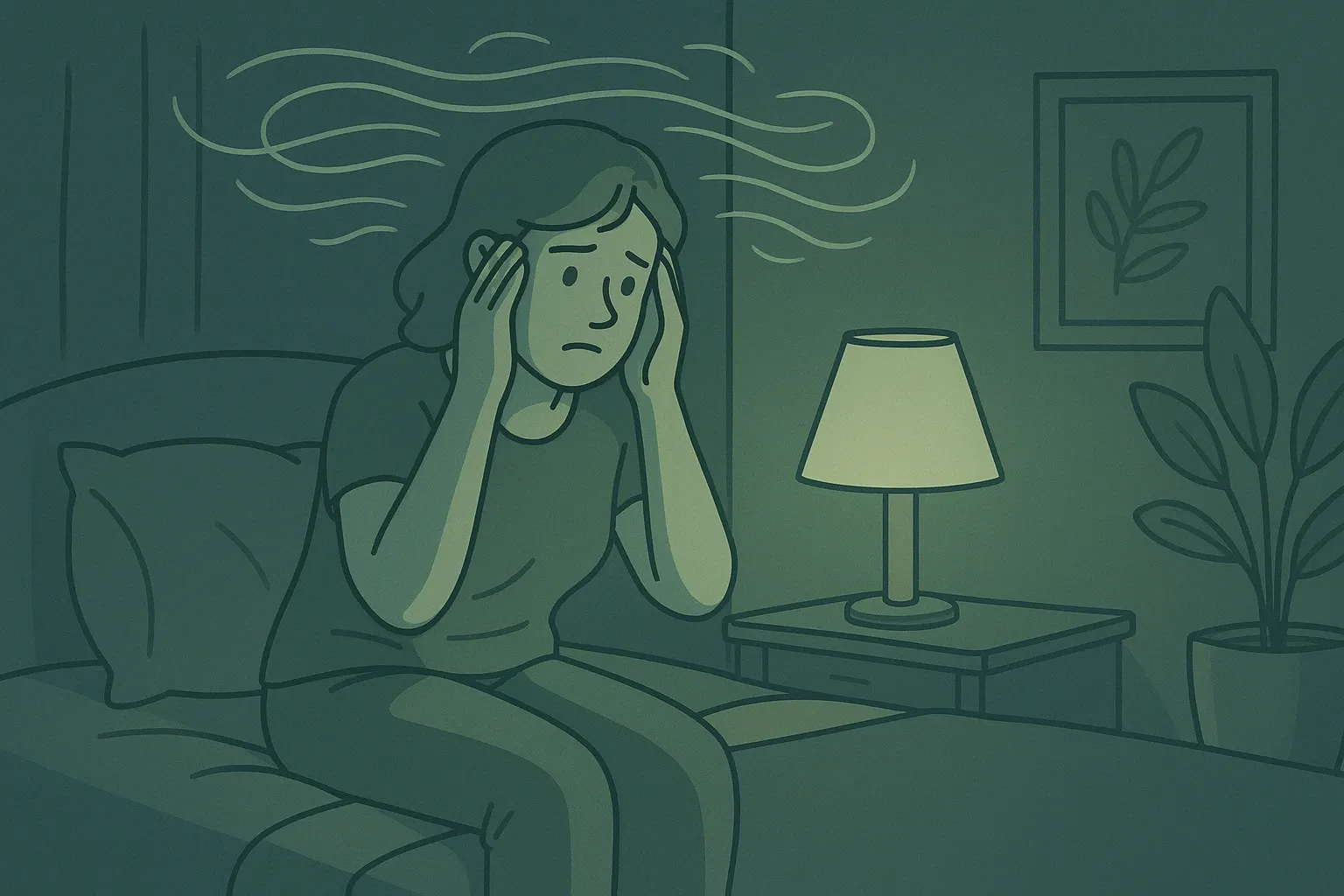
Do you ever feel like your brain is running a marathon you didn’t sign up for? You’re trying to focus, but a constant stream of concerns, ideas, memories, and worries flashes through your mind. This experience is often referred to as mind racing. It’s more than just having a lot on your mind — it’s a relentless, overwhelming rush of thoughts that can be hard to control and even harder to slow down.
Living with this mental overload can be exhausting. It affects your sleep, your focus at work, and your ability to enjoy quiet moments. Our article will help you understand this common mental state. We’ll explore its causes, its strong link to anxiety and other conditions like ADHD, and most importantly, we’ll provide clear, practical strategies to stop this relentless mental rush.
What Are Racing Thoughts?
To put it simply, what are racing thoughts? They’re a pattern of thinking where ideas seem to cascade or fly through the mind at an overwhelming speed. They often come with a sense of urgency or pressure. Unlike normal, active thinking, these thoughts are usually disorganized and jump from one topic to the next without a clear connection.
Imagine watching a slideshow that changes slides every half-second. That’s what the mental experience can feel like. The topics can range from serious concerns about the future to minor, insignificant details from the past.
Here are some common characteristics of the racing thoughts experience:
- Speed and Volume: The thoughts feel fast, numerous, and continuous.
- Difficulty Focusing: It becomes nearly impossible to stick to one task or thought.
- Disorganization: The content often lacks a logical flow or a central theme.
- Sense of Pressure: There’s an internal feeling of being driven or forced to think constantly.
- Interference with Sleep: Racing thoughts are a major cause of insomnia, making it hard to quiet the mind at night.
Recognizing this pattern is the first step toward managing it — it’s a sign that your brain is in overdrive and needs a break.
What Causes Racing Thoughts? Root Causes
Understanding the root causes of this mental phenomenon is crucial for effective management. What causes racing thoughts can often be traced back to a combination of psychological, biological, and environmental factors. It’s rarely just one thing, but rather a mix that creates the perfect storm for a hyperactive brain.
The most common root causes include:
- Stress: High levels of chronic stress flood the body with hormones like cortisol, keeping the brain wired and highly active in a constant state of alert that makes it difficult to switch off.
- Sleep Deprivation: Not getting enough quality sleep disrupts the brain’s ability to process and organize information, often leading to disorganized, racing thoughts when you try to rest.
- Mental Health Conditions: This is a key symptom of several conditions, including generalized anxiety disorder, bipolar disorder, and post-traumatic stress disorder.
- Substance Use: Certain substances, such as caffeine, stimulants, and some prescription medications, can directly increase brain activity and heart rate, leading to mind racing.
- Hormonal Changes: Fluctuations in hormones, often observed during periods such as menopause or puberty, can impact mood regulation and affect the nervous system, contributing to this thought pattern.
Racing Thoughts and Anxiety – The Vicious Cycle
The connection between this mental speed and anxiety is incredibly strong. Often, the two fuel each other in a continuous, negative loop. When people talk about racing thoughts and anxiety, they’re describing a common experience where worry accelerates the thought process.
Here’s how the cycle typically works:
- Anxiety Starts: An initial worry pops up — it could be about a work deadline, a relationship problem, codependency recovery, or even a past mistake.
- The Thoughts Accelerate: The initial worry rapidly spins into multiple, related ‘what-if’ scenarios as the brain doesn’t just think about the problem — it obsessively details every possible negative outcome.
- Physical Symptoms Kick In: The physical symptoms of anxiety — a pounding heart, shallow breathing, and muscle tension — signal to the brain that there’s a real threat.
- The Brain Stays Wired: This physical and mental state of alertness keeps the nervous system active, making it harder to slow down the relentless speed and volume of thoughts.
In this cycle, the racing thoughts anxiety feeling makes the thoughts faster, and the rapid thoughts generate more fear and worry. Breaking this cycle often requires calming the mind and soothing the nervous system through relaxation techniques that are essential for disrupting this intense feedback loop.
ADHD Racing Thoughts – Neurodivergent Thinking Patterns
For people with ADHD, experiencing racing thoughts is very common. The term ADHD racing thoughts describes a unique manifestation of this symptom within a neurodivergent mind. It shares some characteristics with anxiety-driven thoughts, but the underlying mechanism is often related to the disorder’s core features.
In ADHD, the brain has difficulty regulating attention and managing the flow of information. This can result in a few distinct patterns:
- Internal Hyperfocus: The mind rapidly cycles through an intense series of related ideas or creative plans, often highly focused on topics of interest, but the speed makes it feel out of control.
- The Idea Factory: A constant bombardment of new, unrelated ideas that are all equally urgent and important can feel like 10 projects are starting at once, but none can be finished.
- Difficulty Filtering: The brain struggles to filter out unimportant internal and external information, resulting in a crowded and noisy mind.
Unlike anxiety-driven racing thoughts, for many with ADHD, this thought pattern is simply the brain’s default operating speed. Management for this group often involves techniques that organize and structure the thoughts, along with finding healthy outlets for this high-speed mental energy.Canadians from the Loyalist Province are often learning how to get adult ADHD diagnosis Ontario so they could properly identify the underlying causes of their unique cognitive patterns and mental energy levels. Seeking professional clarity allows individuals to implement specific lifestyle adjustments that align with their neurodivergent needs.
How to Stop Racing Thoughts – Practical Techniques
Successfully dealing with this issue is possible, but it takes consistent practice. The goal isn’t to stop thinking entirely, but to regain control and choose a slower, more deliberate mental pace. When you’re looking for guidance on how to stop racing thoughts, you’ll find that a combination of physical, mental, and behavioral strategies works best.
Physical Reset Strategies
The mind and body are strongly connected, so changing your physical state is one of the quickest ways to calm your mental state:
- Deep Breathing: The simplest and most effective tool is slow, deep belly breaths, which signal to your nervous system that you’re safe. Try the 4-7-8 technique: inhale for a count of 4, hold for 7 seconds, exhale slowly for 8 seconds, and repeat 5-10 times.
- Mindful Movement: Quick bursts of physical activity, such as a 10-minute walk or a few minutes of stretching, can help “reset” the brain by burning off nervous energy.
Grounding in the Present Moment
Since racing thoughts often jump between past worries and future fears, anchoring yourself firmly in the present moment can help stop them:
- Grounding Techniques: Use your five senses to focus on your immediate environment by naming 5 things you can see, 4 things you can touch, 3 things you can hear, 2 things you can smell, and 1 thing you can taste — this pulls your attention away from the internal rush.
- Mindful Meditation: Even five minutes of daily meditation can be beneficial, as the practice isn’t about emptying your mind, but rather about observing thoughts as they pass without judgment or engagement.
Cognitive Strategies
You cannot stop the thoughts from appearing, but you can change how you react to them:
- Write Them Down (The Brain Dump): When the mental speed is highest, grab a notebook and rapidly write down every single thought, worry, or idea — this process transfers the clutter from your head onto the page, creating distance and space so you can either ignore them until later or address them one by one.
- Schedule “Worry Time”: Designate a specific 15-minute window each day for worrying. When a worrying thought pops up outside of this time, simply tell yourself, “Thanks, but I’ll think about that during my worry time,” and redirect your focus.
Long-Term Lifestyle Changes
Long-term control depends heavily on healthy habits that support brain health:
- Establish a Bedtime Routine: Consistency is key, so create a relaxing routine starting an hour before bed that includes reading a physical book or light stretching, and crucially, turn off all screens at least 30 minutes before trying to sleep.
- Seek Professional Support: If these techniques don’t provide relief, or if the thoughts are severely impacting your life, reaching out to a therapist through the Internet or in person is the next best step. Cognitive Behavioral Therapy and other talk therapies are highly effective in helping people manage these intense thought patterns.
- Normalize Your Diet: consistent intake of all macronutrients makes better not only your body but also your mind.
By using these practical techniques, you can begin to regain control over your attention, lower your baseline stress level, and finally turn down the volume on your racing thoughts. It’s a journey of small, consistent steps that leads to a calmer, more focused, and more peaceful mind.