The Emotional Side of Aging: Identity, Confidence, and Self-Care After 40
<p>Turning 40 doesn’t come with an instruction manual. One morning you wake up and realize the woman looking back at you in the mirror has more to say than she did a decade ago. She’s less interested…
- Published
- Written by
- Women In Balance Team
- Reading time
- 7 minutes
Turning 40 doesn’t come with an instruction manual. One morning you wake up and realize the woman looking back at you in the mirror has more to say than she did a decade ago. She’s less interested in approval and more interested in authenticity. She knows what she wants, but she’s also questioning everything she thought she knew about who she’s supposed to be.
This isn’t a crisis. It’s a recalibration. The emotional landscape of aging after 40 involves more than managing hot flashes or adjusting to a slower metabolism. It’s about navigating a profound shift in identity, rebuilding confidence on your own terms, and learning to care for yourself in ways you never prioritized before.
The identity shift nobody talks about
By your 40s, you’ve likely spent years being someone to someone else. The dedicated employee. The reliable friend. The attentive mother. The supportive partner.
Then something shifts. Maybe your kids need you less. Maybe your career path feels less certain. Maybe you realize you’ve been so busy meeting everyone else’s expectations that you’ve lost touch with your own.
Research shows that identity certainty actually increases in the 40s compared to the 30s, but the transition isn’t smooth. Who are you when you’re not primarily defined by your job title or your role as a caregiver?
Your 40s force you to ask harder questions: What do I actually want? What matters to me now? What parts of my life am I just going through the motions on?
These aren’t comfortable questions, but they’re necessary. The women who lean into this discomfort often emerge with a clearer sense of self than they’ve ever had. They stop performing for external validation and start making choices that align with their actual values.
When confidence gets complicated
There’s a paradox at the heart of aging after 40. Studies indicate that women 40 and older tend to be more confident and know what they like and need than in their earlier years. You care less about what others think. You set better boundaries. You say no without guilt.
But at the same time, you’re navigating a culture that constantly reminds you that your value is diminishing. You’re bombarded with anti-aging products, overlooked in professional settings, and told that your relevance has an expiration date.
This tension is exhausting.
The truth? Confidence after 40 doesn’t come from having a perfect body. It comes from accumulating decades of experience—surviving hard things, making mistakes, learning what you’re capable of. It comes from realizing that the opinions of people who don’t know you don’t actually matter.
Younger women experience greater anxiety about aging, particularly as it relates to declines in health and attractiveness. But older women who maintain increasingly youthful identities as they age often report enhanced well-being. The key isn’t trying to look 25 again. It’s refusing to internalize society’s dismissive attitudes about aging women.
Redefining beauty and skincare on your terms
After 40, your relationship with beauty and skincare changes, or at least, it should.
You’ve probably noticed that the products you swore by in your 30s don’t work the same way anymore. Your skin behaves differently. Fine lines appear where you swear there were none last month. And the beauty industry responds by bombarding you with anti-aging creams that promise to “turn back time.”
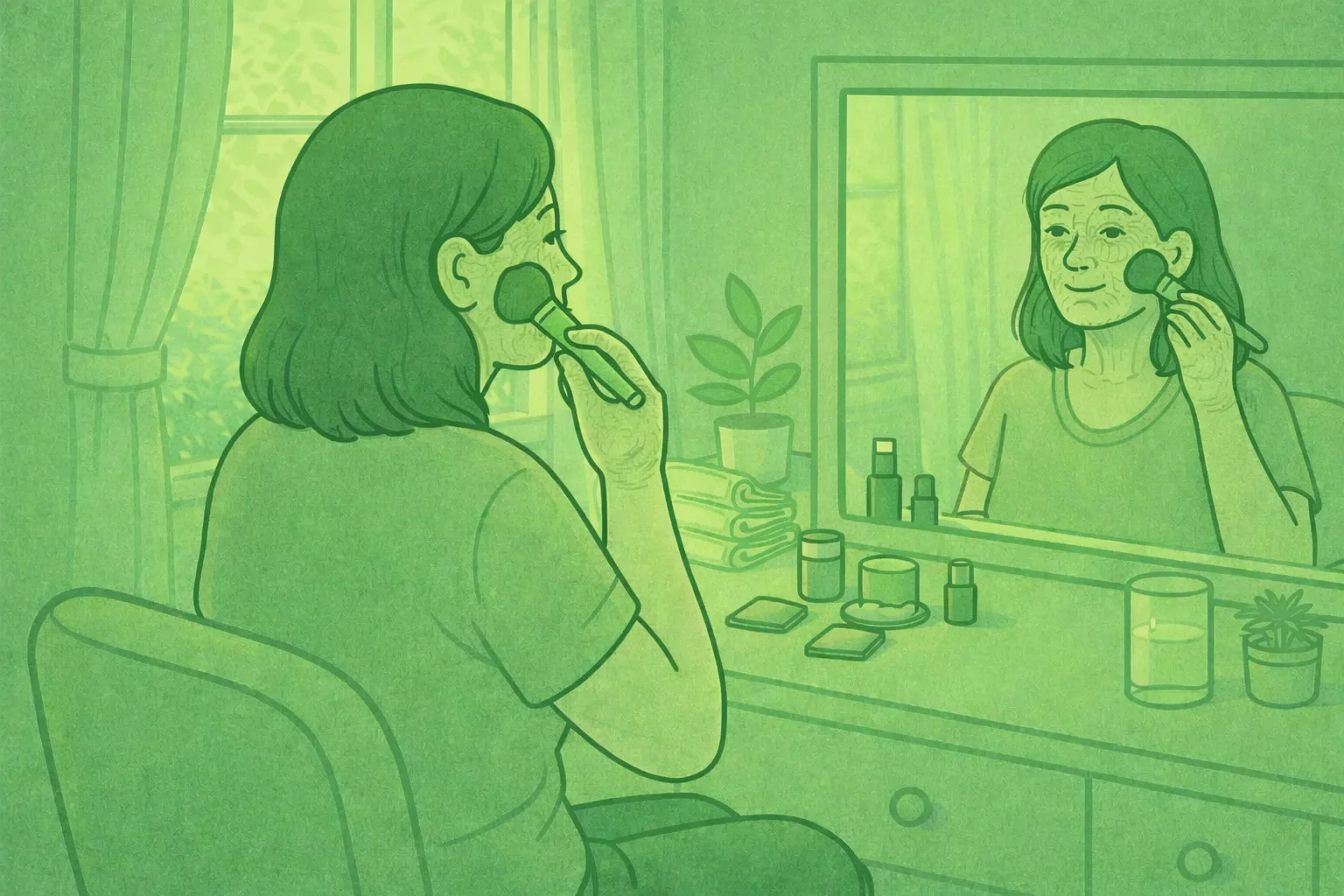
Here’s the shift that matters: beauty after 40 isn’t about erasing evidence of your life. It’s about taking care of the skin you’re in and feeling comfortable when you look in the mirror.
This means building a skincare routine that actually addresses your skin’s current needs—proper hydration, sun protection, and ingredients that support skin health rather than just cosmetic appearance. It means investing in quality products that make your skin feel good, not just ones that promise impossible results.
But more importantly, it means examining what beauty actually means to you now.
Maybe you’re done with complicated makeup routines that take 45 minutes. Maybe you’ve discovered that you feel more like yourself with minimal coverage. Maybe you’ve decided that gray hair is actually more interesting than covering it every six weeks.
Fortunately, some pioneering brands are recognizing this reality.
Laura Geller, for instance, has championed the “pro-aging” movement, demonstrating that the goal is to celebrate mature skin rather than hide it. This philosophy often aligns with a desire for purer ingredients. Their makeup cosmetics kits for mature women feature natural and organic ingredients, allowing their real skin to shine through without the weight of heavy chemicals. And, maybe that’s exactly what’s needed; products made with older women in mind.
The women who feel most confident after 40 aren’t necessarily the ones who look the youngest. They’re the ones who’ve stopped trying to meet someone else’s standard and started defining beauty for themselves.
Your face tells the story of your life, the laughter, the worry, the late nights, the joy. That’s not something to apologize for.
Why sleep becomes non-negotiable
If there’s one thing that changes dramatically after 40, it’s your relationship with sleep.
You can’t get away with pulling all-nighters anymore. You can’t function well on five hours. And you can’t keep borrowing from tomorrow’s energy to get through today. Sleep disruption becomes increasingly common in your 40s, and it’s not just about hormones. It’s also about stress, anxiety, changing circadian rhythms, and the cumulative effect of years of not prioritizing rest.
Poor sleep doesn’t just make you tired. It affects everything. Your mood becomes more volatile. Your patience runs thinner. Your ability to handle stress diminishes. Your cognitive function suffers, brain fog isn’t just a cute phrase, it’s a real consequence of inadequate sleep.
And here’s the cruel irony: the more anxious you are about not sleeping, the harder it becomes to actually fall asleep, says 53 years old mother of two kids who is experiencing menopause and transitioning Breaking this cycle requires a multi-pronged approach. Create genuine sleep hygiene, keep your bedroom cool and dark, establish a consistent bedtime, limit screen time before bed. Consider magnesium supplements or herbal teas if they help you wind down.
But also address what’s keeping you awake. If it’s anxiety, you might need therapy or stress management techniques. If it’s hormones, talk to your doctor about options. If it’s sleep apnea which becomes more common after 40; get tested.
Most importantly, stop treating sleep like it’s optional or indulgent. It’s fundamental to your physical health, emotional stability, and mental clarity.
Self-care that actually means something
After 40, self-care stops being about bubble baths and face masks and becomes about deeper maintenance. It’s about protecting your energy, your boundaries, and your mental health with the same seriousness you’d protect your physical safety.
Real self-care after 40 looks like saying no to commitments that drain you. Insisting on adequate sleep. Moving your body in ways that feel sustainable. Eating foods that actually make you feel good rather than following whatever diet trend is currently popular.
It looks like therapy when you need it. Like asking for help instead of powering through alone. Like recognizing that you don’t have to earn rest.
Remember rest is a biological necessity, not a reward for productivity.
Self-care also means confronting the ways you’ve neglected yourself for years. Maybe you’ve put your health appointments on the back burner. Maybe you’ve accepted relationships that consistently leave you feeling diminished. Maybe you’ve stayed in situations that stopped serving you years ago.
Your 40s are when you start holding yourself accountable for your own well-being. Not in a punishing way, but in a way that acknowledges you deserve better than what you’ve been settling for.
The hormone factor nobody escapes
It would be irresponsible to discuss the emotional side of aging after 40 without addressing hormones. Perimenopause typically begins in the 40s, and the hormonal fluctuations that accompany it directly affect mood, anxiety, sleep, and emotional regulation.
Estrogen and progesterone fluctuate wildly, sometimes within the same week. These shifts can trigger mood swings, irritability, anxiety, and depression that feel disproportionate to what’s actually happening in your life. Understanding menopause and its connection is crucial because it helps you recognize when your emotional responses are being amplified by biology rather than purely by circumstances. You’re not losing your mind. Your endocrine system is going through a massive transition.
This doesn’t mean you’re powerless. Many women find relief through hormone therapy, supplements, lifestyle modifications, or a combination of approaches. But you have to be willing to talk about it, to seek help, and to refuse to suffer in silence.
Moving forward without apology
Here’s what aging after 40 ultimately teaches you: your worth isn’t determined by how closely you resemble your younger self. Your confidence doesn’t depend on maintaining the body or the achievements that defined you at 30. Your identity isn’t fixed; it’s allowed to evolve, expand, and surprise you.
The women who thrive emotionally after 40 are the ones who stop apologizing for aging. They refuse to disappear quietly. They claim space. They speak up. They pursue what they want without waiting for permission.
They also extend themselves gracefully. They recognize that some days are harder than others, that emotional work is exhausting, and that progress isn’t linear. They celebrate small victories, setting a boundary, choosing themselves, asking for what they need.
Your 40s can be the decade when you finally become comfortable in your own skin, when you stop performing and start living, when you recognize that the best version of yourself isn’t behind you. She’s still unfolding.
The emotional side of aging after 40 is messy, complicated, and sometimes painful. It’s also liberating, clarifying, and surprisingly powerful. And you don’t have to navigate it alone.