Posterior Placenta: Meaning, Position & Pregnancy Impact
<p>Key Takeaways When you receive news about your placenta’s position during a prenatal appointment, it’s natural to wonder what this means for you and your baby. A posterior placenta is one of the…
- Published
- Written by
- Women In Balance Team
- Reading time
- 11 minutes
Key Takeaways
- A posterior placenta is completely normal and healthy, positioned at the back of your uterus along your spine rather than at the front
- You may feel your baby’s movements earlier and more strongly with a posterior placenta since there’s less cushioning between baby and your belly
- This placement typically doesn’t complicate delivery, though it may slightly increase the chance of experiencing back labor during childbirth
When you receive news about your placenta’s position during a prenatal appointment, it’s natural to wonder what this means for you and your baby. A posterior placenta is one of the most common placental positions, affecting how you experience your pregnancy in subtle but noticeable ways.
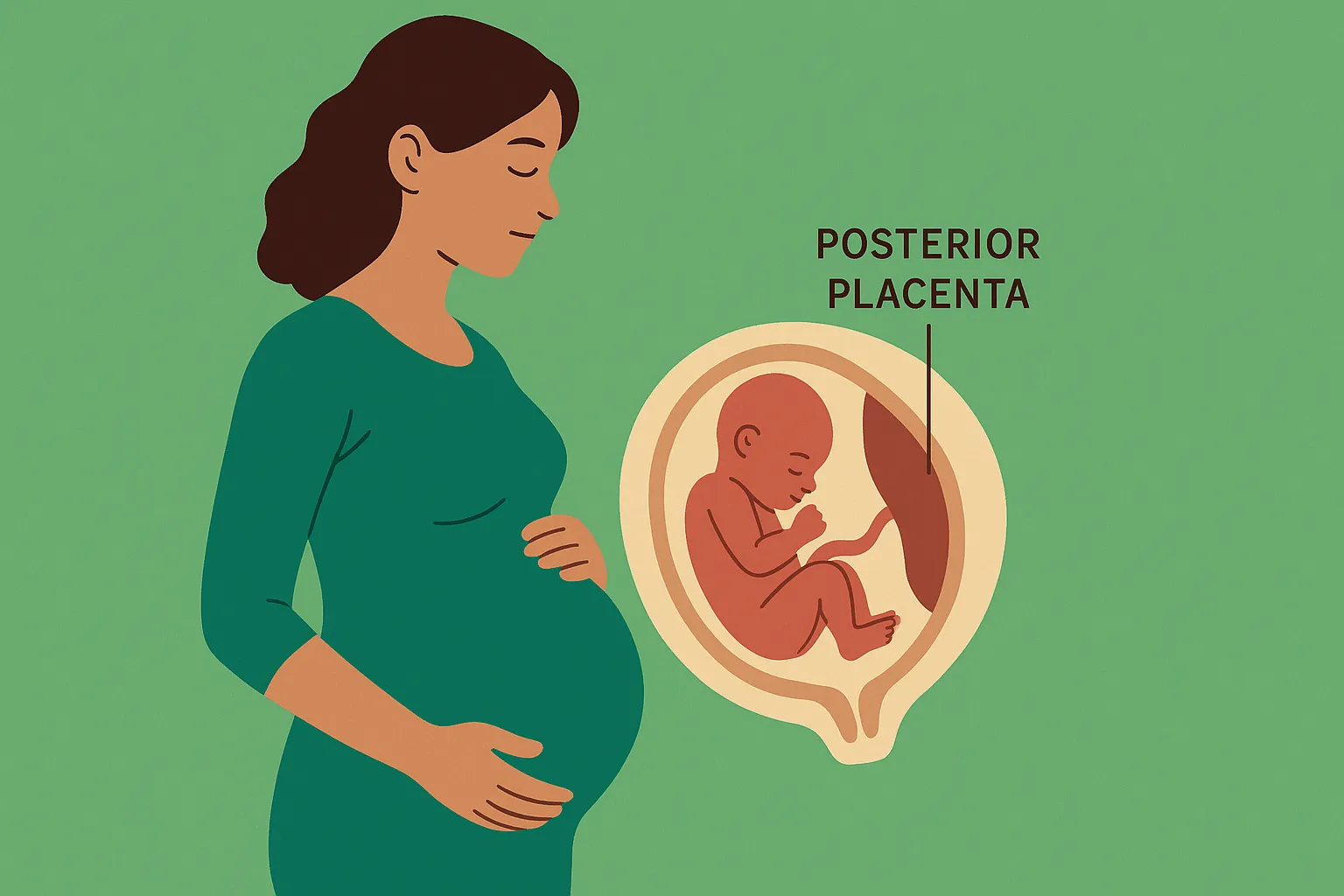
A posterior placenta means the placenta attaches to the back wall of the uterus. This position is common and does not usually affect pregnancy. It can improve fetal movement detection and supports normal delivery. Most pregnancies with a posterior placenta proceed without complications.
Understanding where yours is positioned helps explain certain pregnancy sensations and what to expect as your baby grows. Whether you’re feeling stronger kicks than expected or wondering about delivery implications, knowing about your posterior placenta can put your mind at ease.
What Is a Posterior Placenta?
A posterior placenta means your placenta has attached to the back wall of your uterus, closest to your spine. Think of it like a cushion positioned between your baby and your back rather than between your baby and your belly. A comprehensive 2025 meta-analysis reviewing 40 studies covering over 98,000 pregnancies found that both anterior and posterior placenta positions each represent approximately 40-45% of pregnancies, with lateral placentation occurring in only 3.6% of cases. The vast majority of placentas were either anterior or posterior, with no significant relationship found between placenta position and the baby’s ability to achieve head-down position for birth.
How placental attachment works:
During early pregnancy, the fertilized embryo implants into the uterine wall, and the placenta develops at that attachment site. The location where implantation occurs determines your placenta’s position throughout pregnancy. This process is entirely natural and not influenced by anything you do or don’t do.
Normal placental positions include:
- Posterior: Attached to the back uterine wall (most common)
- Anterior: Attached to the front uterine wall
- Fundal: Attached to the top of the uterus
- Lateral: Attached to the left or right side
The posterior position is considered ideal by many healthcare providers because it allows for optimal baby positioning and clearer monitoring throughout pregnancy. Your placenta continues to grow and develop in this position, providing essential nutrients and oxygen to your baby while removing waste products.
Why this placement matters:
Understanding your placenta’s position helps explain various pregnancy experiences you might have. It’s not better or worse than other positions—it’s simply different, with its own characteristics that influence how you feel and experience your pregnancy journey.
Posterior Placenta and Pregnancy Experience
Having a posterior placenta creates a distinct pregnancy experience that many women find quite positive. The positioning affects several aspects of how you feel and connect with your growing baby throughout the nine months.
Fetal Movement
One of the most noticeable benefits of a posterior placenta is experiencing stronger, earlier fetal movements. Without the placenta acting as a cushion between your baby and your belly, you’re likely to feel kicks, punches, and rolls more distinctly. Research confirms that maternal perception of fetal movements is 2.10 times more likely to be decreased with an anterior placenta compared to posterior placenta positioning, with movement sensation arising from pressure against body wall structures rather than the uterus itself.
Timeline for feeling movement:
- First-time mothers: May feel movements as early as 16-18 weeks (compared to 18-20 weeks with anterior placenta)
- Experienced mothers: Often feel movements by 14-16 weeks
- Movement quality: Kicks feel sharper and more defined
- Monitoring benefits: Easier to track daily movement patterns
These stronger sensations can be reassuring for expectant parents, as you’ll have a clearer sense of your baby’s activity levels and patterns. This can be particularly comforting during the third trimester when monitoring fetal movement becomes an important part of prenatal care.
What to expect:
Your baby’s movements will likely feel more pronounced throughout pregnancy. You might notice distinct body parts—like a foot pushing against your ribs or a hand pressing against your belly. These sensations often become a special way to bond with your baby before birth.
Pain or Back Labor
While a posterior placenta doesn’t guarantee back labor, it may slightly increase the likelihood of experiencing back pain during pregnancy and labor. This occurs because babies with posterior placentas sometimes settle into a “sunny-side up” (occiput posterior) position, where the back of their head presses against your spine.
During pregnancy:
- You may experience more lower back discomfort, especially in the third trimester
- The baby’s position against your spine can create pressure and aching
- Good posture and prenatal yoga can help alleviate discomfort
During labor:
- Approximately 15-30% of babies born to mothers with posterior placentas present in the occiput posterior position
- This can lead to back labor—intense lower back pain during contractions
- Most babies still rotate to the optimal position during labor
- Pain management options remain effective regardless of baby’s position
Important reassurance:
Many women with posterior placentas have completely normal, comfortable deliveries. The slight increased risk of back labor doesn’t mean you’ll definitely experience it, and even if you do, effective pain management strategies can help you through labor successfully.
Belly Shape and Ultrasound Visibility
A posterior placenta typically doesn’t dramatically change your belly’s appearance, but it can affect ultrasound quality and clarity in positive ways.
Belly appearance:
- Your belly shape is primarily determined by your body type, baby’s size, and uterine muscle tone
- You might carry slightly more forward since the placenta isn’t adding bulk to your front
- Baby’s movements may be more visible from the outside
Ultrasound advantages:
- Clearer images: Without the placenta blocking the view from the front, ultrasound technicians can often get better pictures of your baby
- Better anatomy scans: The 20-week anatomy scan may be more detailed and complete
- Easier measurements: Growth measurements and assessments are often more accurate
- Gender determination: May be easier to determine baby’s sex during ultrasounds
These clearer ultrasound images can enhance your bonding experience, allowing you to see your baby’s features more distinctly and get those precious keepsake photos that are clear and detailed.
Trimester-by-Trimester Impact
Understanding how a posterior placenta affects each stage of pregnancy helps you know what to expect and appreciate the unique aspects of your pregnancy journey.
First Trimester
During the first trimester, placental position has minimal impact on your daily experience. The placenta is still developing and relatively small, so the effects you’ll notice later haven’t yet emerged.
What’s happening:
- The placenta forms and begins establishing its blood supply
- Hormonal changes dominate your pregnancy symptoms
- Morning sickness, fatigue, and breast tenderness are unrelated to placental position
- Your baby is still too small for movement to be felt
Early development:
The location where your embryo initially implanted determines your placenta’s position. By the end of the first trimester, your placenta is fully formed and positioned, though it will continue growing throughout pregnancy to meet your baby’s increasing needs.
Second Trimester
The second trimester is when you’ll begin noticing the real benefits of having a posterior placenta, particularly regarding fetal movement and prenatal appointments.
Fetal movement benefits:
- Earlier detection of first movements (quickening)
- Stronger, more distinct sensations
- Better ability to distinguish different types of movement
- Increased confidence in your baby’s well-being
Prenatal appointment advantages:
- Healthcare providers may find it easier to measure fundal height
- Fetal heart rate monitoring is often clearer
- Baby’s position is easier to determine through palpation
- Doppler readings may be more consistent
Ultrasound benefits:
The 20-week anatomy scan is typically more comprehensive with a posterior placenta. Technicians can often complete the scan more quickly and thoroughly, potentially reducing the need for follow-up appointments if initial images aren’t clear enough.
Third Trimester
The third trimester brings the most noticeable effects of having a posterior placenta, both positive and potentially challenging.
Baby positioning:
- Your baby has more room to settle into the optimal head-down position
- However, some babies may settle “sunny-side up” (occiput posterior)
- Most babies rotate to the correct position during labor even if they start posterior
- Your healthcare provider will monitor baby’s position during routine checks
Movement and monitoring:
- Baby’s movements remain strong and easily felt
- Kick counts and movement tracking are straightforward
- You’ll likely notice distinct patterns in your baby’s activity
- Strong movements continue right up until delivery
Comfort considerations:
- You may experience more back discomfort as baby grows
- Sleeping positions become important for comfort
- Prenatal massage and proper support can help manage any discomfort
During this trimester, understanding your baby’s position becomes increasingly important as delivery approaches. Your healthcare provider, like the best and most trusted OBGYN Alpharetta,will assess baby’s position and discuss any implications for your birth plan.
Does Posterior Placenta Affect Delivery?
A posterior placenta generally doesn’t complicate delivery, and many women with this placental position have straightforward, normal births. However, there are a few considerations to keep in mind as you approach your due date.
Normal delivery expectations:
- Most women with posterior placentas have uncomplicated vaginal deliveries
- Labor progresses normally in the majority of cases
- The placenta’s position doesn’t affect its function during delivery
- Cesarean rates aren’t significantly higher with posterior placenta
Back labor possibility:
- Slightly increased chance of experiencing back labor
- This occurs when baby is in occiput posterior position (face-up)
- Back labor involves intense lower back pain during contractions
- Pain management options remain effective
Labor positioning:
- Certain positions during labor may be more comfortable
- Hands-and-knees, side-lying, or forward-leaning positions often help
- Your labor and delivery team can suggest optimal positioning
- Movement and position changes during labor are encouraged
Pain management:
- All pain relief options remain available (epidural, IV medications, natural methods)
- Back labor pain can be effectively managed with proper techniques
- Early communication with your care team about comfort measures is beneficial
Reassuring facts:
Most babies who start in the posterior position rotate during labor to the optimal anterior position. Even those who remain posterior can usually be delivered vaginally without complications. Your healthcare team is experienced in managing all types of presentations and will support you through the process.
Posterior Placenta vs. Anterior Placenta: Key Differences
Understanding the differences between posterior and anterior placenta positions helps put your experience in perspective and shows why neither position is inherently better than the other.
| Aspect | Posterior Placenta | Anterior Placenta |
|---|---|---|
| Fetal Movement | Felt earlier and more strongly | Felt later and may be muffled |
| Movement Timeline | 16-18 weeks (first pregnancy) | 18-20 weeks (first pregnancy) |
| Ultrasound Clarity | Generally clearer images | May be somewhat obscured |
| Back Pain Risk | Slightly higher chance | Lower chance |
| Belly Appearance | May carry more forward | May appear more rounded |
| Labor Sensations | Possible back labor | Typically front-focused pain |
| Delivery Outcomes | Normal vaginal delivery rates | Normal vaginal delivery rates |
Important similarities:
- Both positions are completely normal and healthy
- Both provide equal nutrition and support to your baby
- Neither affects your baby’s growth or development
- Both have the same rates of pregnancy complications
- Delivery outcomes are similarly positive for both positions
Individual variation:
Remember that every pregnancy is unique, and your experience may differ from typical patterns. Some women with anterior placentas feel strong movements early, while others with posterior placentas might experience minimal back discomfort. Your individual body structure, baby’s size and position, and other factors all influence your pregnancy experience.
The key is understanding that whichever position you have, your pregnancy can be healthy and normal. Focus on the positive aspects of your placenta’s position while staying informed about what to expect. Sometimes, women may experience fuzzy thinking during pregnancy due to hormonal changes, but this is unrelated to placental position.
For those who experienced challenges with conception, achieving pregnancy success often makes any placental position feel like a blessing, regardless of minor differences in pregnancy experience.
Conclusion
A posterior placenta is a normal, healthy placental position that offers several advantages throughout your pregnancy journey. From feeling your baby’s movements earlier and more distinctly to having clearer ultrasound images, this positioning can enhance your connection with your growing baby.
While there’s a slight possibility of experiencing back labor or increased back discomfort, the vast majority of women with posterior placentas have normal, uncomplicated deliveries. The key is staying informed about what to expect while maintaining open communication with your healthcare team throughout your pregnancy.
Take advantage of the benefits your posterior placenta offers—enjoy those strong kicks and clear ultrasound photos. Use the enhanced fetal movement to bond with your baby and establish daily movement patterns that provide reassurance about your baby’s well-being.
Start a simple kick-counting routine today if you haven’t already. With a posterior placenta, you’re in an excellent position to monitor your baby’s movements effectively. Discuss any questions or concerns with your healthcare provider, who can provide personalized guidance based on your specific situation and pregnancy progress.
Remember that regardless of placental position, every pregnancy is a unique journey. Embrace the special aspects of your posterior placenta experience while staying focused on the ultimate goal—welcoming your healthy baby into the world.
Frequently Asked Questions
Can you feel the baby more with a posterior placenta?
Yes, you typically can feel your baby’s movements more clearly and earlier with a posterior placenta. Since the placenta is positioned at the back of your uterus rather than the front, there’s less cushioning between your baby and your belly. This means kicks, punches, and rolls feel more distinct and pronounced.
Can anterior placenta change to posterior?
No, your placenta’s position doesn’t change from anterior to posterior during pregnancy. The placenta’s location is determined by where the embryo initially implants in the uterine wall during early pregnancy, and it remains in that position throughout the entire pregnancy. However, as your uterus grows and stretches, the placenta may appear to move slightly or change position relative to your cervix—this is called placental migration.
Does placenta position affect baby growth?
Placental position (posterior, anterior, fundal, or lateral) does not affect your baby’s growth or development. All positions are equally capable of providing optimal nutrition, oxygen, and waste removal for your growing baby. What matters for baby’s growth is the placenta’s function and blood flow, not its location on the uterine wall. A healthy placenta in any position will support normal fetal development.