PdG Test: A Reliable Method for Fertility Insights
<p>The PdG test measures pregnanediol glucuronide, a urine marker of progesterone, to confirm ovulation. It offers a non-invasive way to track luteal phase health and fertility status. Testing is…
- Published
- Written by
- Women In Balance Team
- Reading time
- 11 minutes
The PdG test measures pregnanediol glucuronide, a urine marker of progesterone, to confirm ovulation. It offers a non-invasive way to track luteal phase health and fertility status. Testing is most reliable when done 7–10 days after ovulation, helping identify issues like luteal phase defects.
Key Takeaways
- PdG tests confirm ovulation after it occurs – Unlike LH tests that predict ovulation, PdG tests verify that ovulation actually happened by detecting progesterone metabolites
- Timing is crucial for accuracy – Testing too early or inconsistently can lead to false negative results, making proper cycle timing essential
- Ideal for fertility tracking challenges – Particularly helpful for women with PCOS, irregular cycles, or those who struggle with traditional ovulation detection methods
If you’re trying to conceive and want more certainty about your ovulation patterns, a PdG test might be the fertility tracking tool you’ve been searching for. As at-home fertility monitoring becomes increasingly sophisticated, PdG tests have emerged as a reliable method for confirming whether ovulation has actually occurred – something that traditional ovulation predictor kits can’t definitively tell you. Whether you’re new to fertility tracking or have been struggling with irregular cycles, understanding how PdG tests work and when to use them can provide valuable insights into your reproductive health and help optimize your conception timing.
What Is a PdG Test?
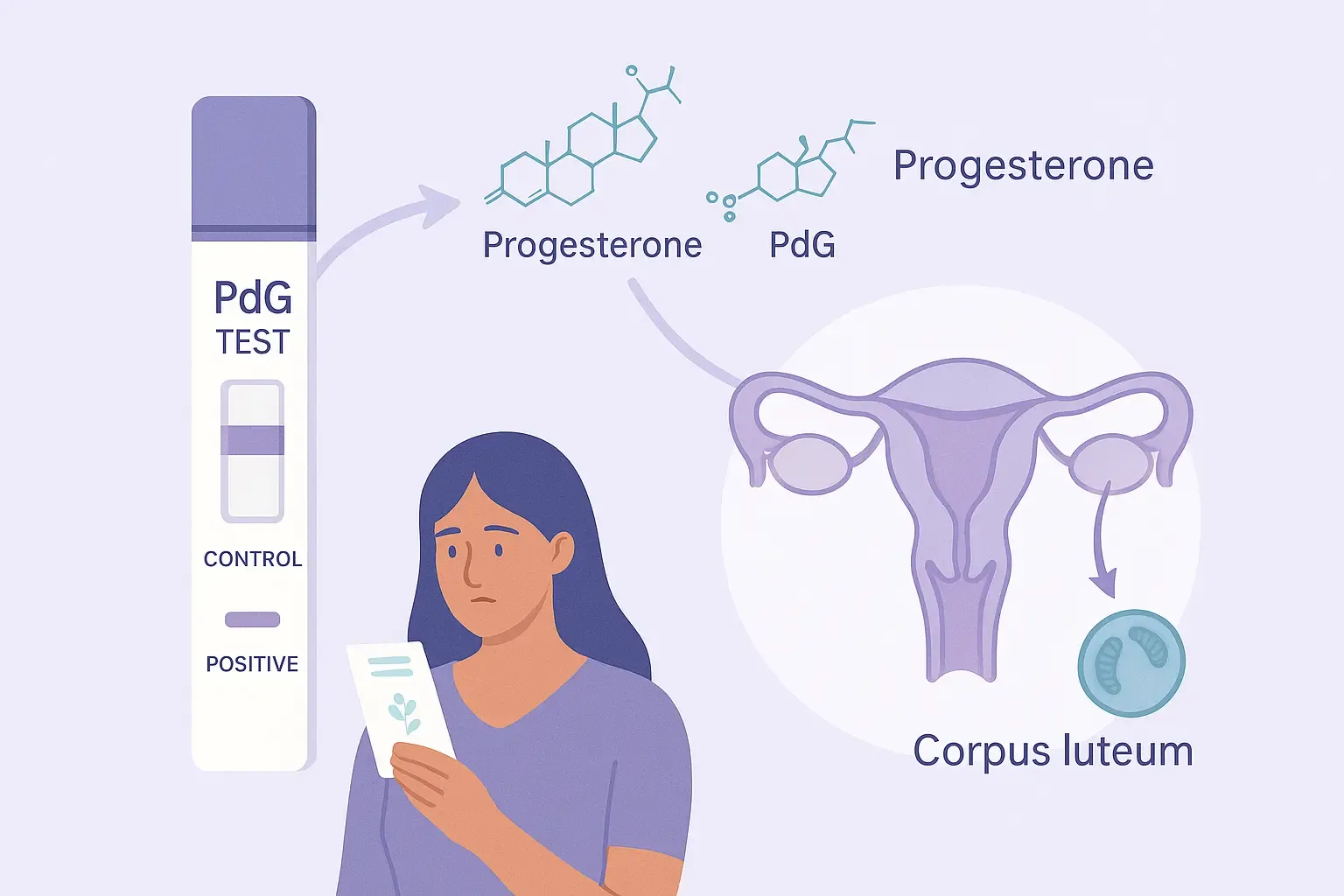
A PdG test is a urine-based fertility tracking tool that detects Pregnanediol Glucuronide (PdG), which is a metabolite of progesterone that appears in your urine after ovulation occurs. Unlike other fertility tests that predict when ovulation might happen, PdG tests confirm that ovulation has actually taken place.
Pregnanediol Glucuronide explained in simple terms: After you ovulate, your body produces progesterone to prepare the uterine lining for potential pregnancy. As your body processes this progesterone, it creates PdG as a byproduct, which then appears in your urine. This makes PdG a reliable marker that ovulation has occurred.
The confirmation advantage sets PdG tests apart from other fertility tracking methods. While ovulation predictor kits (OPKs) detect the LH surge that typically leads to ovulation, they can’t confirm that an egg was actually released. Some women experience LH surges without ovulation, a condition called luteinized unruptured follicle syndrome, making PdG testing valuable for verification.
Scientific reliability comes from the fact that PdG levels only rise significantly after ovulation has occurred. This biological process makes PdG testing one of the most accurate at-home methods for confirming ovulation, with studies showing high correlation between PdG detection and confirmed ovulation through clinical methods.
Modern convenience allows you to perform PdG testing at home using simple urine test strips or digital devices, making it accessible for regular fertility tracking without requiring medical appointments or invasive procedures.
How PdG Tests Work
Understanding the biological process behind PdG testing helps you use these tools more effectively and interpret results accurately.
The progesterone pathway begins after ovulation when the corpus luteum (the structure left behind after egg release) starts producing progesterone. This hormone is essential for maintaining the uterine lining and supporting early pregnancy if conception occurs. As your body metabolizes progesterone, it creates PdG, which is then filtered through your kidneys and appears in your urine.
Timing of PdG appearance typically occurs 5-12 days after ovulation, with peak levels usually appearing 7-8 days post-ovulation. This timing corresponds to the mid-luteal phase of your menstrual cycle, when progesterone levels are naturally at their highest in a normal ovulatory cycle.
Detection methodology involves testing your urine sample with specialized test strips or digital devices that can identify PdG concentrations. Most PdG tests work similarly to pregnancy tests – you either dip a test strip in your urine sample or urinate directly on the test device.
Threshold levels vary between different PdG test brands, but most are designed to detect PdG concentrations that indicate successful ovulation has occurred. Some tests provide simple positive/negative results, while others offer quantitative measurements that can track PdG levels over multiple days.
Comparison to other hormones highlights PdG’s unique advantage. While LH (detected by ovulation predictor kits) surges before ovulation and estrogen fluctuates throughout the cycle, PdG only appears in significant quantities after ovulation, making it a definitive confirmation marker.
Why PdG Testing Matters for Fertility
PdG testing addresses several critical aspects of fertility tracking that other methods cannot provide, making it valuable for many women trying to conceive.
Ovulation confirmation is the primary benefit, especially important for women who may experience anovulatory cycles (cycles without ovulation). Some women have regular periods but don’t actually ovulate, making conception impossible. PdG testing can identify these cycles and help you understand whether fertility treatments or medical evaluation might be necessary.
Luteal phase assessment provides insights into the post-ovulation phase of your cycle. Adequate progesterone production during the luteal phase is essential for supporting implantation and early pregnancy. PdG testing can help identify luteal phase defects, where progesterone production is insufficient to support pregnancy.
Treatment monitoring becomes valuable if you’re working with a fertility specialist. PdG tests can help confirm whether ovulation-inducing medications are working effectively or whether hormone supplementation is providing adequate progesterone support.
Cycle irregularity insights help women with conditions like PCOS (Polycystic Ovary Syndrome) understand their ovulation patterns. PCOS can cause irregular ovulation, and PdG testing can help identify when ovulation does occur, providing valuable timing information for conception attempts.
Peace of mind comes from knowing definitively whether ovulation occurred in any given cycle. This knowledge can reduce anxiety about “wasted” cycles and help you make informed decisions about timing intercourse, seeking medical help, or adjusting your fertility tracking approach.
Fertility awareness extends beyond conception attempts. Understanding your ovulation patterns through PdG testing can provide insights into your overall reproductive health and help identify potential issues before they become more serious problems.
Comparing PdG Tests: What to Look For
With several PdG test options available, understanding key features can help you choose the most appropriate option for your needs and budget.
Accuracy and sensitivity vary between brands and testing methods. Look for tests that have been clinically validated and can detect PdG at levels that reliably indicate ovulation. Some tests are more sensitive than others, potentially detecting lower levels of PdG earlier in the luteal phase.
Ease of use considerations include whether you prefer test strips that require dipping in collected urine samples or direct-stream tests that you can use while urinating. Digital tests may be easier to read but are typically more expensive than traditional strip tests.
FDA approval status varies among PdG tests. Some have received FDA clearance as medical devices, while others are marketed as wellness products. FDA-cleared tests generally undergo more rigorous testing for accuracy and reliability.
Integration with apps can enhance your fertility tracking experience. Some PdG test brands offer companion apps that help you track results, predict optimal testing days, and integrate with other fertility signs like basal body temperature and cervical mucus.
Cost considerations include both per-test cost and package options. PdG tests are generally more expensive than basic ovulation predictor kits, but bulk packages or subscription options may offer better value for regular users.
Testing frequency requirements differ between brands. Some recommend testing for several consecutive days to establish a pattern, while others may require only 1-2 tests per cycle. Consider your comfort level with frequent testing and associated costs.
Result interpretation varies from simple positive/negative indicators to quantitative measurements that show PdG levels over time. More detailed results may provide additional insights but require more interpretation knowledge.
Who Should Use a PdG Test?
PdG testing isn’t necessary for everyone trying to conceive, but certain situations make it particularly valuable for fertility tracking and reproductive health assessment.
Women with irregular cycles benefit significantly from PdG testing because traditional cycle-based ovulation prediction methods may be unreliable. If your cycles vary in length or you experience irregular periods, PdG testing can help identify when ovulation actually occurs.
PCOS patients often struggle with unpredictable ovulation patterns. Since PCOS can cause multiple LH surges without ovulation, PdG testing provides definitive confirmation when ovulation does occur, helping optimize conception timing.
Those with luteal phase concerns may benefit from PdG testing to assess progesterone production. If you’ve experienced recurrent early miscarriages, short luteal phases, or have been told you have low progesterone, PdG testing can help monitor this crucial hormone.
Couples trying to conceive over 35 may want the additional confirmation that PdG testing provides, especially since fertility declines with age and maximizing conception chances becomes more important.
Women using fertility treatments can use PdG testing to confirm whether ovulation-inducing medications are working effectively or to monitor the success of timed intercourse cycles.
Those with confusing fertility signs who struggle to interpret cervical mucus changes, have unclear basal body temperature patterns, or get ambiguous results from ovulation predictor kits may find PdG testing provides clearer information.
Health-conscious individuals who want comprehensive understanding of their reproductive health may incorporate PdG testing into broader fertility awareness practices, even before actively trying to conceive.
How to Interpret PdG Test Results
Understanding PdG test results requires knowledge of proper timing, normal patterns, and when results might indicate the need for medical consultation.
Positive results indicate that ovulation has occurred and your body is producing adequate progesterone during the luteal phase. Most PdG tests show positive results 5-12 days after ovulation, with strongest positives typically appearing 7-8 days post-ovulation.
Negative results can mean several things depending on timing. If tested too early after ovulation (less than 5 days), PdG levels may not yet be high enough to detect. If tested at the appropriate time and results remain negative, it may indicate that ovulation didn’t occur in that cycle.
Testing timing is crucial for accurate interpretation. Most experts recommend beginning PdG testing around 7 days after suspected ovulation (based on other fertility signs like LH surge or basal body temperature rise) and continuing for 3-5 consecutive days to establish a pattern.
Consecutive testing patterns provide more reliable information than single tests. A series of positive tests over several days confirms sustained progesterone production, while intermittent positive and negative results might indicate luteal phase insufficiency.
Cycle variations are normal, and not every cycle will show identical PdG patterns. Stress, illness, travel, or other factors can affect hormone production, so occasional unusual results don’t necessarily indicate problems.
Quantitative vs. qualitative results offer different levels of information. Simple positive/negative tests confirm ovulation occurrence, while tests that provide PdG level measurements can help assess the adequacy of progesterone production.
When to seek medical advice includes consistently negative PdG tests despite other signs of ovulation, very weak positive results that might indicate inadequate progesterone production, or irregular patterns that don’t align with your menstrual cycle timing.
Where to Buy PdG Tests
PdG tests are available through various channels, each offering different advantages in terms of convenience, cost, and product selection.
Online retailers like Amazon, CVS.com, and Walgreens.com offer wide selections of PdG test brands with customer reviews and competitive pricing. Online shopping allows easy price comparison and bulk purchasing options that can reduce per-test costs.
Brick-and-mortar pharmacies including CVS, Walgreens, and Rite Aid increasingly stock PdG tests in their family planning sections. Physical stores allow immediate purchase and the opportunity to ask pharmacists questions about different options.
Direct from manufacturers often provides the best prices for bulk orders and may offer subscription services for regular users. Many PdG test companies sell directly through their websites with detailed product information and customer support.
Fertility specialty retailers both online and in some larger cities offer curated selections of fertility tracking tools, including PdG tests, often with expert guidance on product selection and usage.
Price ranges typically vary from $3-10 per test, with bulk packages and subscription services offering better per-unit pricing. Consider your expected usage frequency when comparing costs, as regular users may benefit from larger packages.
Popular brands include Proov (one of the most well-known PdG test brands), Easy@Home, and Pregmate, each offering different features like app integration, sensitivity levels, and packaging options.
Subscription services offered by some manufacturers can provide automatic delivery of PdG tests based on your cycle length, ensuring you always have tests available when needed while often offering cost savings compared to individual purchases.
Conclusion
PdG testing represents a significant advancement in at-home fertility tracking, offering the unique ability to confirm ovulation and assess luteal phase progesterone production. While not necessary for every woman trying to conceive, PdG tests provide valuable insights for those with irregular cycles, PCOS, luteal phase concerns, or anyone seeking comprehensive understanding of their reproductive health. The key to successful PdG testing lies in proper timing, consistent use, and accurate interpretation of results within the context of your overall fertility awareness practice.
Remember that PdG testing works best as part of a comprehensive approach to fertility tracking, complementing rather than replacing other methods like basal body temperature monitoring and cervical mucus observation. What makes PdG testing particularly valuable is its ability to provide definitive confirmation of ovulation, something that predictive methods simply cannot offer.
Take action today by researching PdG test options that fit your needs and budget, and consider incorporating this powerful tool into your fertility tracking routine. If you’re experiencing fertility challenges or have questions about your ovulation patterns, discuss PdG testing with your healthcare provider to determine how it might support your conception goals and overall reproductive health.
Frequently Asked Questions
What is the difference between PdG and LH test?
LH tests (ovulation predictor kits) detect luteinizing hormone to predict when ovulation will occur, typically 12-36 hours before egg release. PdG tests detect progesterone metabolites to confirm that ovulation has already occurred, usually 5-12 days after ovulation. LH tests help time intercourse, while PdG tests verify that ovulation actually happened – they serve complementary but different purposes in fertility tracking.
Are PdG tests useful?
Yes, PdG tests are particularly useful for women with irregular cycles, PCOS, or those who want confirmation that ovulation occurred. They’re especially valuable if you have regular periods but suspect you might not be ovulating, or if you want to assess whether your progesterone levels are adequate during the luteal phase. However, they’re not necessary for everyone – women with regular cycles and clear fertility signs may not need the additional confirmation PdG testing provides.
How accurate are PdG tests for confirming ovulation?
PdG tests are highly accurate for confirming ovulation when used correctly, with studies showing strong correlation between positive PdG results and confirmed ovulation through clinical methods. However, accuracy depends on proper timing – testing too early can result in false negatives. Most PdG tests show 99% accuracy when used according to instructions, making them one of the most reliable at-home methods for ovulation confirmation.