Can You Get Pregnant During Perimenopause?
<p>You can get pregnant during perimenopause because ovulation still occurs, though irregularly. Fertility declines with age, but pregnancy is possible until menopause is complete. Use contraception…
- Published
- Written by
- Women In Balance Team
- Reading time
- 11 minutes
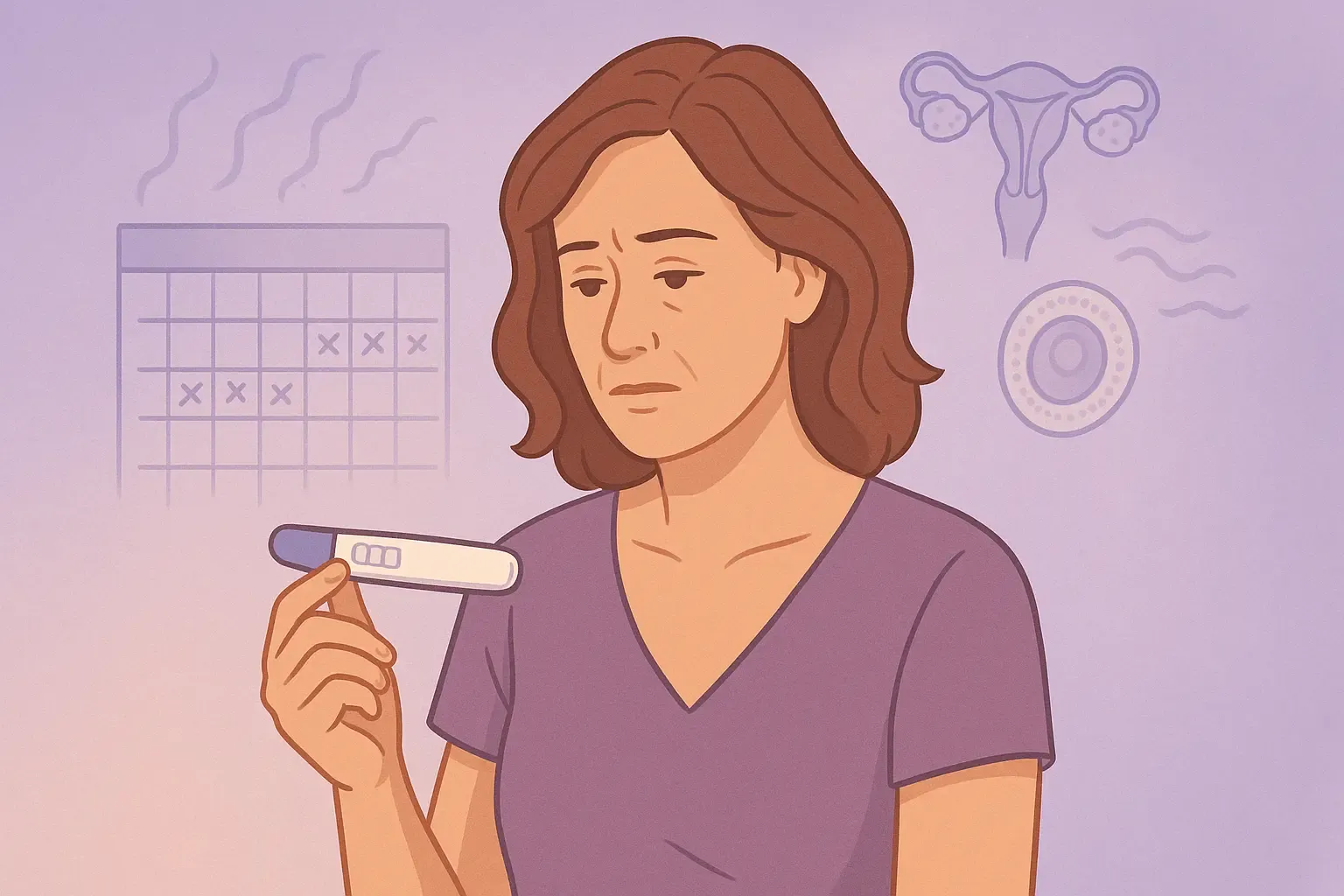
You can get pregnant during perimenopause because ovulation still occurs, though irregularly. Fertility declines with age, but pregnancy is possible until menopause is complete. Use contraception if avoiding pregnancy, as hormone shifts alone do not guarantee infertility.
Key Takeaways
- Yes, pregnancy is possible during perimenopause – You can still ovulate and conceive even with irregular periods, though fertility significantly decreases
- Contraception remains important – Many unplanned pregnancies occur during perimenopause because women assume they’re no longer fertile
- Age-related risks increase – Pregnancy after 40 carries higher risks for both mother and baby, requiring specialized medical care
If you’re experiencing the unpredictable changes of perimenopause – irregular periods, hot flashes, and mood swings – you might be wondering about your fertility status. Can you get pregnant during perimenopause? This question concerns millions of women, whether they’re hoping to conceive or worried about an unplanned pregnancy. The answer isn’t as straightforward as you might expect. While fertility does decline significantly during perimenopause, pregnancy remains possible until you reach complete menopause. Understanding how your reproductive system changes during this transition can help you make informed decisions about family planning and contraception during this complex life stage.
What Is Perimenopause?
Perimenopause, literally meaning “around menopause,” represents the transitional period leading up to menopause when your reproductive system gradually winds down. This phase typically begins in your 40s, though it can start as early as your mid-30s or as late as your early 50s, and usually lasts 4-8 years before menopause is complete.
During perimenopause, your ovaries produce fluctuating and generally declining levels of estrogen and progesterone. These hormonal changes create the characteristic symptoms many women experience: irregular menstrual cycles, hot flashes, night sweats, mood changes, and sleep disturbances. Your periods may become shorter or longer, lighter or heavier, and the time between cycles can vary dramatically.
Early perimenopause typically involves subtle changes – perhaps your cycle shortens from 28 to 25 days, or you notice slight changes in flow. You’re still ovulating regularly, and fertility, while declining, remains relatively intact. Late perimenopause brings more dramatic changes, with cycles becoming increasingly irregular and potentially skipping months between periods.
The unpredictability of perimenopause creates confusion about fertility status. You might have a normal period one month, skip the next two, then have a heavy period followed by spotting. This irregularity makes it difficult to predict ovulation and determine whether you’re still capable of conceiving, leading many women to make incorrect assumptions about their fertility. Because estrogen and progesterone fluctuations during perimenopause can trigger sporadic ovulation, even after skipped cycles, irregular periods do not rule out pregnancy” adds Clara Whitlow, a sex educator.
Understanding that perimenopause is a gradual process rather than an on-off switch is crucial for making informed reproductive decisions during this time.
Can You Still Get Pregnant During Perimenopause?
The clear answer is yes – you can still get pregnant during perimenopause, though your chances are significantly reduced compared to your younger years. This possibility exists because ovulation can still occur, even when your cycles become irregular or unpredictable.
Research shows that fertility begins declining in your late 20s and accelerates after age 35, with a particularly steep drop after 40. However, decline doesn’t mean disappearance. Studies indicate that women in their early 40s have approximately a 5% chance of conceiving naturally each month, while women in their mid-40s have about a 1-2% monthly chance. Though these percentages are much lower than the 25% monthly chance for women in their 20s, they still represent real possibilities for conception.
Ovulation patterns during perimenopause become increasingly unpredictable. You might ovulate normally for several months, then skip ovulation entirely, then return to normal patterns. Some cycles may be anovulatory (no egg released), while others produce viable eggs capable of fertilization. This unpredictability means that even if you haven’t had a period in several months, you could still ovulate and potentially conceive.
Hormone fluctuations during perimenopause can actually cause some women to experience periods of increased fertility. Temporary spikes in follicle-stimulating hormone (FSH) might trigger the release of multiple eggs, potentially increasing conception chances during certain cycles.
The key point is that fertility doesn’t switch off suddenly during perimenopause – it gradually decreases over time, with significant individual variation in the timeline and pattern of decline.
Can You Get Pregnant Without a Period?
This common question deserves special attention because many women assume that missing periods means they can’t get pregnant. The reality is more complex and potentially surprising.
Ovulation timing relative to menstruation means that you typically ovulate about 14 days before your next period. If you conceive during that ovulation, you won’t have the period you were expecting – instead, you’ll be pregnant. This means pregnancy can occur even when you haven’t had a visible period in weeks or months.
Silent ovulation can occur during perimenopause, where your body releases an egg without the typical signs of a normal menstrual cycle. You might ovulate after months of missed periods, and if sperm is present, conception is possible. The absence of menstruation doesn’t guarantee the absence of ovulation.
Irregular bleeding patterns during perimenopause can mask early pregnancy symptoms. Light spotting or irregular bleeding might be attributed to perimenopausal changes when it’s actually implantation bleeding or early pregnancy symptoms. This confusion can delay pregnancy recognition.
Lactation considerations also apply if you’re still breastfeeding an older child, as lactation can suppress menstruation while still allowing for occasional ovulation and potential conception.
The bottom line is that as long as you’re still in perimenopause (not yet in complete menopause), pregnancy remains possible regardless of your recent menstrual patterns.
Myths vs. Facts
Several persistent myths surround pregnancy and perimenopause, often leading to poor reproductive decisions and unplanned pregnancies.
Myth: Irregular periods mean you can’t get pregnant. Fact: Irregular periods are a hallmark of perimenopause, but they don’t eliminate the possibility of ovulation and conception. Many unplanned pregnancies occur during perimenopause precisely because women assume irregular cycles mean infertility.
Myth: You only need contraception if you’re having regular periods. Fact: Contraception remains important throughout perimenopause until you’ve been period-free for 12 consecutive months (the definition of complete menopause). Ovulation can occur unpredictably, making pregnancy possible even with very irregular cycles.
Myth: Fertility ends abruptly at a certain age. Fact: Fertility decline is gradual and varies significantly between individuals. Some women maintain fertility well into their late 40s, while others experience significant decline in their late 30s. Age alone doesn’t determine fertility status.
Myth: Hot flashes and other menopausal symptoms mean you can’t get pregnant. Fact: Perimenopausal symptoms and fertility can coexist. You might experience classic menopausal symptoms while still ovulating occasionally. Symptoms indicate hormonal changes but don’t confirm complete reproductive shutdown.
Myth: Previous fertility problems mean perimenopause pregnancy is impossible. Fact: Some women who struggled with fertility in their younger years find themselves surprisingly pregnant during perimenopause. Hormonal fluctuations during this time can sometimes temporarily improve fertility conditions.
Myth: Natural conception after 45 is virtually impossible. Fact: While conception rates are very low after 45, natural pregnancies do occur. Celebrity pregnancies often highlight this reality, though they represent exceptional rather than typical cases.
Understanding these facts helps you make informed decisions about contraception and family planning during perimenopause.
Risks of Pregnancy During Perimenopause
Pregnancy during perimenopause, typically occurring after age 40, carries increased risks that require careful consideration and specialized medical care.
Maternal health risks increase significantly with age. Women over 40 face higher rates of gestational diabetes, pregnancy-induced hypertension, placental complications, and blood clotting disorders. The risk of miscarriage also rises substantially, reaching 40-50% for women in their early 40s and even higher for women in their late 40s.
Chromosomal abnormalities become more common as egg quality declines with age. The risk of Down syndrome increases from about 1 in 1,200 for women at age 25 to 1 in 100 at age 40 and 1 in 30 at age 45. Other chromosomal abnormalities also become more frequent, leading to higher rates of pregnancy loss and birth defects.
Pregnancy complications occur more frequently in older mothers. These include preterm labor, low birth weight babies, placental abruption, and the need for cesarean delivery. Multiple pregnancies (twins or triplets) are also more common in older women, adding additional risks.
Existing health conditions that often develop with age can complicate pregnancy. High blood pressure, diabetes, thyroid disorders, and other chronic conditions may worsen during pregnancy or require medication adjustments that could affect the developing baby.
Recovery challenges tend to be more significant for older mothers. Physical recovery from childbirth may take longer, and the demands of caring for a newborn can be more challenging when combined with perimenopausal symptoms.
Despite these risks, many women over 40 have healthy pregnancies and babies with appropriate medical care, lifestyle management, and monitoring.
What to Do If You’re Trying to Conceive
If you’re hoping to conceive during perimenopause, understanding your options and optimizing your approach can improve your chances of success.
Fertility tracking becomes crucial but more challenging with irregular cycles. Consider using ovulation predictor kits, tracking basal body temperature, or monitoring cervical mucus changes. Fertility apps designed for irregular cycles might be helpful, though they’re less reliable during perimenopause than in younger women with regular cycles.
Preconception health optimization is especially important for older women. Begin taking prenatal vitamins with folic acid at least three months before trying to conceive. Maintain a healthy weight, exercise regularly, limit alcohol consumption, quit smoking, and manage stress levels. Address any existing health conditions with your healthcare provider.
Medical consultation should occur early in your conception journey. A reproductive endocrinologist or maternal-fetal medicine specialist can assess your fertility status through hormone testing, ovarian reserve evaluation, and general health screening. They can identify potential issues and recommend appropriate interventions.
Fertility treatments may be necessary or beneficial for women trying to conceive during perimenopause. Clinics like First Fertility offer options such as ovulation induction medications, intrauterine insemination (IUI), or in vitro fertilization (IVF). Success rates for fertility treatments decline with age, but they remain viable options for many women.
Timing considerations are critical given the time-sensitive nature of fertility decline. Don’t delay seeking help if you’ve been trying to conceive for 3-6 months without success, especially if you’re over 42.
Lifestyle modifications can support fertility during perimenopause. Maintain a balanced diet rich in antioxidants, ensure adequate sleep despite perimenopausal sleep challenges, manage stress through relaxation techniques, and maintain a healthy weight.
Partner evaluation is also important, as male fertility declines with age, though less dramatically than female fertility. Ensuring both partners are in optimal health improves conception chances.
When to Talk to a Healthcare Provider
Several situations warrant professional medical consultation regarding perimenopause and pregnancy concerns.
Pregnancy symptoms during perimenopause can be confusing because they often overlap with perimenopausal symptoms. Missed periods, breast tenderness, fatigue, and nausea could indicate either pregnancy or hormonal changes. If you experience these symptoms and there’s any possibility of pregnancy, take a home pregnancy test or consult your healthcare provider.
Contraception planning should be discussed with your provider if you want to avoid pregnancy. They can recommend appropriate birth control methods that work well during perimenopause and may also help manage perimenopausal symptoms. Options include hormonal methods, barrier methods, or permanent sterilization.
Fertility concerns deserve professional attention if you’re trying to conceive and haven’t succeeded after 3-6 months of trying, especially if you’re over 40. Earlier consultation is warranted if you have irregular periods, a history of fertility problems, or other reproductive health concerns.
Unusual symptoms should prompt medical evaluation. Heavy bleeding, severe pelvic pain, sudden onset of severe hot flashes, or other concerning symptoms may indicate underlying conditions requiring treatment.
Hormone level testing can help clarify your perimenopausal status and remaining fertility. Tests measuring FSH, estradiol, and anti-Müllerian hormone (AMH) can provide insight into your ovarian function and reproductive timeline.
Health screening becomes increasingly important during perimenopause. Regular check-ups should include screening for conditions that become more common with age and could affect pregnancy outcomes if conception occurs.
Family planning decisions benefit from professional guidance. Whether you’re hoping to conceive or prevent pregnancy, a healthcare provider can help you understand your options and make informed decisions based on your individual circumstances.
Conclusion
The answer to “can you get pregnant during perimenopause” is a definitive yes, though your fertility is significantly reduced compared to your younger years. This reality affects women differently – some welcome the possibility of a late-in-life pregnancy, while others need reassurance about contraception effectiveness during this transitional period. Understanding that perimenopause is a gradual process where ovulation can still occur unpredictably helps you make informed decisions about your reproductive health.
Whether you’re hoping to conceive or prevent pregnancy, the key is working with healthcare providers who understand the complexities of perimenopause and can guide you through your options. Remember that every woman’s experience with perimenopause is unique, and what applies to others may not apply to your specific situation.
Take action today by scheduling a conversation with your healthcare provider about your fertility status and reproductive goals during perimenopause. They can help you understand your individual risk factors, discuss appropriate contraception or fertility optimization strategies, and develop a plan that aligns with your health needs and family planning desires.
Frequently Asked Questions
What are the early signs of pregnancy during perimenopause?
Early pregnancy signs during perimenopause include missed periods, breast tenderness, nausea, fatigue, and frequent urination. However, these symptoms often overlap with perimenopausal symptoms, making them difficult to distinguish. The most reliable approach is taking a home pregnancy test if you’ve had unprotected intercourse, especially if symptoms feel different from your typical perimenopausal changes.
How to tell what stage of perimenopause a person is in?
Early perimenopause involves cycle changes of 7+ days from your normal pattern but regular periods. Late perimenopause means skipping periods entirely (60+ days between cycles) with more intense symptoms like hot flashes. Your healthcare provider can assess your stage through hormone testing (FSH and estradiol levels), though multiple tests over time provide better insight than single measurements.
What are the chances of getting pregnant at age 49?
The chances of natural conception at age 49 are less than 1% per month. Most women this age are in late perimenopause with very infrequent ovulation. While natural conception is extremely rare, pregnancy remains possible until you’ve been period-free for 12 consecutive months. The miscarriage risk is over 75%, and chromosomal abnormality risks are significant.