Hair Loss During Menopause: Real, Lasting Solutions for Women
When menopause comes up in conversation, we usually talk about hot flashes, sleep disruption, and mood changes. Those symptoms are real and well recognized, but there is another side of the…
- Published
- Written by
- Women In Balance Team
- Reading time
- 4 minutes
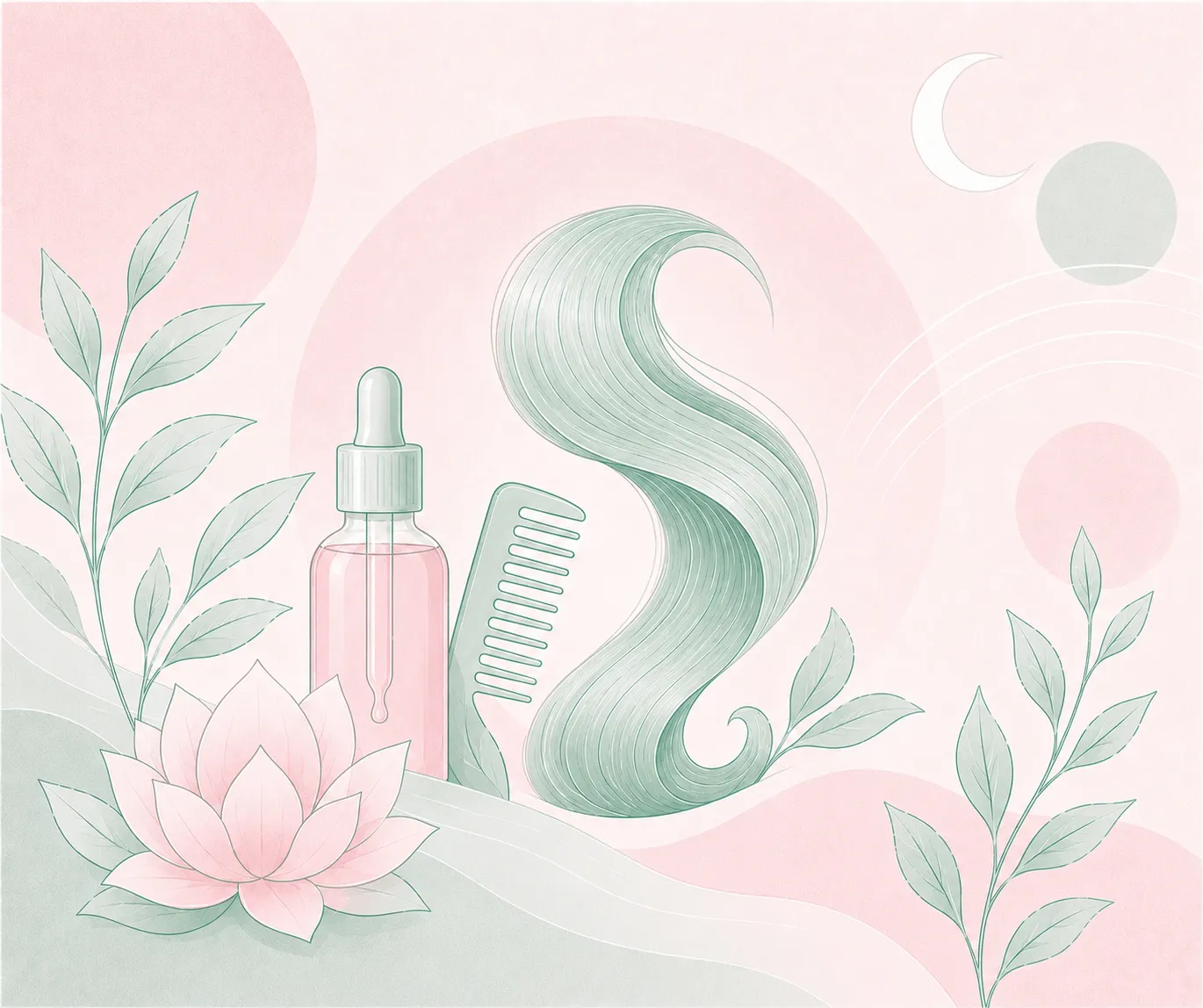
When menopause comes up in conversation, we usually talk about hot flashes, sleep disruption, and mood changes. Those symptoms are real and well recognized, but there is another side of the transition that often gets far less attention: hormonal hair thinning.
For many women, the earliest signs are subtle. A little more hair in the shower drain. A part that starts to look slightly wider under certain lighting. Over time, those changes can become harder to ignore. Because hair is so closely tied to identity and self-image, thinning can feel emotionally heavier than many expect.
Still, many women dismiss it as everyday stress or “just aging.” But menopausal hair changes are not random. They reflect real hormonal shifts in the body, and understanding them is often the first step toward managing the systemic shifts of perimenopause.
Key Takeaways
- Hormonal shifts drive hair thinning: As menopause approaches, the decline in estrogen and progesterone allows androgens to become more dominant, which causes hair follicles to shrink, thin, and eventually fall out.
- Track broader patterns over shedding: Normal shedding can be up to 100 hairs a day, so it is better to look for broader signs of thinning, such as a widening part, a thinner ponytail, or increased scalp visibility.
- Women of color face unique considerations: Black women often experience menopause earlier and are at a higher risk for overlapping conditions like traction alopecia and Central Centrifugal Cicatricial Alopecia (CCCA), making early diagnosis and intervention absolutely critical.
- Medical evaluation is the first step: Because hair thinning is often multifactorial, an initial medical evaluation is essential to identify contributing factors like thyroid function, iron levels, and vitamin D status.
- Modern treatments offer real solutions: Menopausal hair loss is highly manageable with modern care options ranging from topical minoxidil and regenerative therapies (like exosomes) to specialized female hair restoration surgeries.
The Hormonal Shift Behind Hair Changes
Hair growth is influenced by a balance of hormones, including estrogen and progesterone. During the reproductive years, these hormones help support the hair’s growth phase, contributing to overall density and fullness.
As menopause approaches, estrogen and progesterone levels decline. When estrogen declines in menopause, the hormonal environment that supports hair growth shifts, and follicles may become more prone to gradual thinning.
“When these ‘protective’ hormones drop, the effects of androgens are unmasked and become more dominant,” explains Dr. Kevin Blumenthal, a board-certified physician and hair restoration expert at Natural Transplants, Hair Restoration Clinic. “This is what causes shrinking, thinning, and loss of the hair follicles.”
According to research published by the National Institutes of Health, this hormonal transition alters the normal hair growth cycle, which may result in what is commonly referred to as female pattern hair loss. This typically appears as diffuse thinning across the scalp rather than a receding hairline alone.
Shedding or Thinning? Knowing the Difference
It is normal to shed up to 100 hairs every day as part of the natural growth cycle. Concern usually arises when shedding feels excessive or when overall density begins to visibly change.
Instead of obsessively counting individual hairs, Dr. Blumenthal recommends paying attention to broader patterns such as:
- A widening part
- A thinner ponytail
- Increased scalp visibility under normal lighting
These changes often indicate that hair growth is not keeping pace with shedding and may warrant a professional evaluation.
Hair Loss in Women of Color: Additional Considerations
Hair loss in women of color can involve multiple overlapping factors and may present differently depending on hair type and styling practices. Because Black women often experience the onset of menopause earlier than other demographics, they are more prone to these hormonal changes at a younger age.
Black women may also experience traction alopecia, which is associated with long-term tension from certain hairstyles. Another condition, Central Centrifugal Cicatricial Alopecia (CCCA), is also more commonly observed in this population and is important to identify early because it can lead to permanent scarring if untreated.
“As a result of the early drop in protective estrogen levels, these hormonal changes can accelerate or worsen these conditions,” notes Dr. Blumenthal of Natural Transplants, who specializes in treating hair loss in women with a wide range of hair types, including afro-textured hair. Because of these complexities, he emphasizes that early diagnosis and early intervention are absolutely critical when changes first appear. For additional guidance on identifying specific conditions, the American Academy of Dermatology provides comprehensive diagnostic resources.
Treatment Options: What Modern Care Actually Looks Like
The encouraging shift in recent years is that menopausal hair thinning is no longer considered something women simply have to accept without options.
The first step is typically a medical evaluation to identify contributing factors such as thyroid function, iron levels, vitamin D status, and hormonal changes. Hair thinning is often multifactorial, so a broad assessment is key.
From there, treatment depends on the underlying cause and severity. Common evidence-based approaches may include topical minoxidil, adjustments in hair care practices, and prescription therapies guided by a physician. Low-level laser devices and regenerative medical therapies like exosomes are also sometimes used to support follicle health.
In more advanced cases, when follicles are no longer producing viable hair, procedural options may be considered. Today, board-certified surgeons are achieving seamless, natural-looking density through specialized female hair restoration.
Moving Forward With Clarity, Not Stigma
Menopause is a significant biological transition, and hair changes can be one of its more emotionally challenging aspects. Still, these changes are medically recognized and increasingly manageable.
The most important step is early attention rather than waiting until thinning becomes severe. With appropriate medical guidance, many women are able to slow progression and improve density over time.
Hair changes during midlife are common, but they do not have to define how this stage of life is experienced.