Ovulation vs Implantation Bleeding: Key Differences
<p>The main difference between ovulation and implantation bleeding is timing and cause. Ovulation bleeding occurs mid-cycle from hormone shifts and is light pink or red. Implantation bleeding happens…
- Published
- Written by
- Women In Balance Team
- Reading time
- 6 minutes
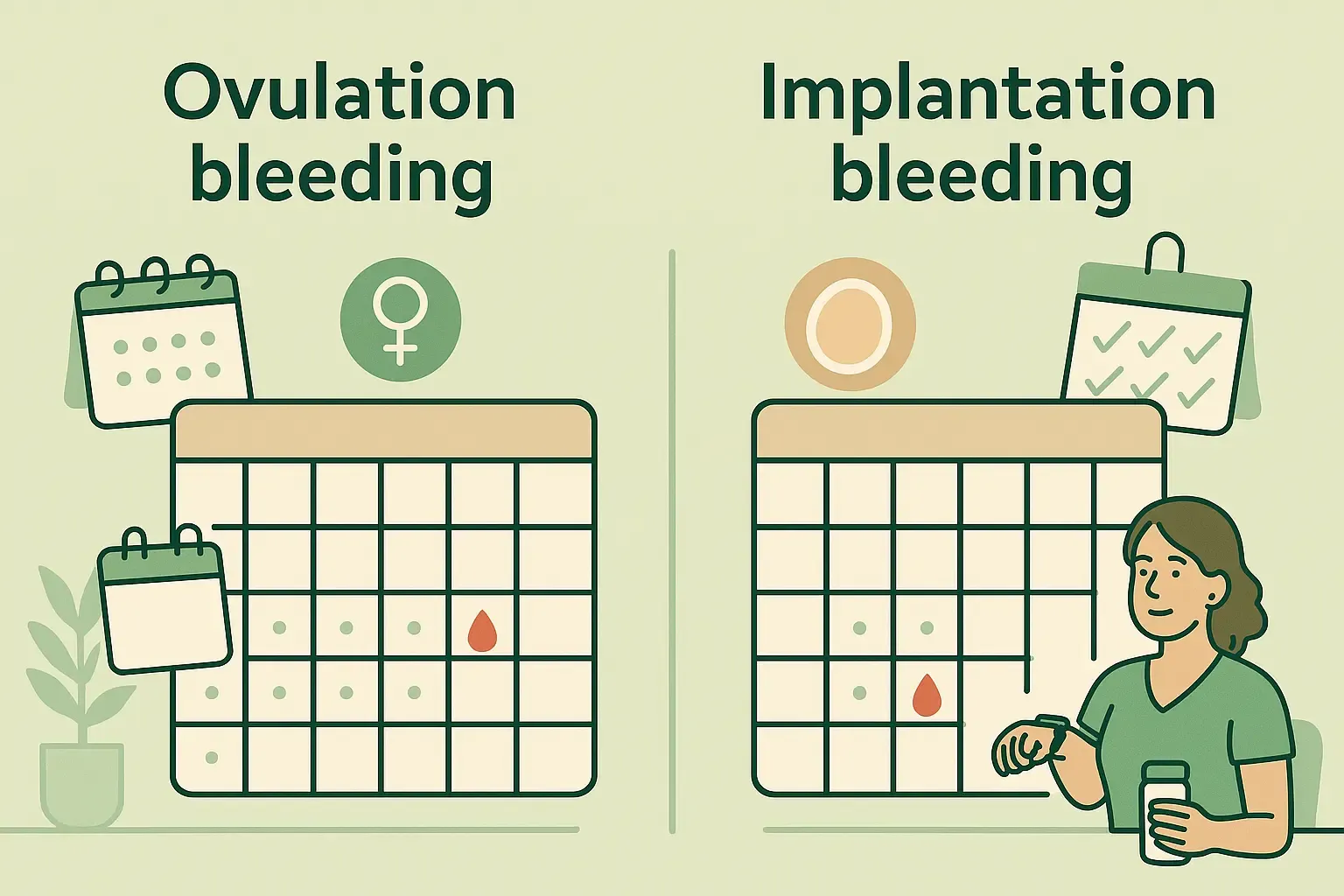
The main difference between ovulation and implantation bleeding is timing and cause. Ovulation bleeding occurs mid-cycle from hormone shifts and is light pink or red. Implantation bleeding happens 6–12 days after ovulation when a fertilized egg attaches to the uterus, and is usually light brown or pink with spotting.
Key Takeaways
- Timing is the biggest clue – ovulation bleeding occurs mid-cycle while implantation bleeding happens 6-12 days after ovulation
- Both types of bleeding are light spotting that’s much lighter than a regular period, but they have different underlying causes
- Pregnancy testing timing matters – implantation bleeding may occur before hCG levels are high enough for accurate test results
Spotting between periods can leave you wondering what’s happening with your body, especially when you’re trying to conceive or tracking your cycle. Two of the most commonly confused types of bleeding are ovulation spotting and implantation bleeding.
Understanding ovulation bleeding vs implantation bleeding can help you interpret your body’s signals more accurately and know when to take a pregnancy test or consult your healthcare provider.
While both involve light spotting, they occur at different times in your cycle and have distinct characteristics that can help you tell them apart.
What Is Ovulation Bleeding?
Ovulation bleeding, also called ovulation spotting, is very light bleeding that some women experience around the time their ovary releases an egg. This happens in approximately 5% of women during their reproductive years.
Timing
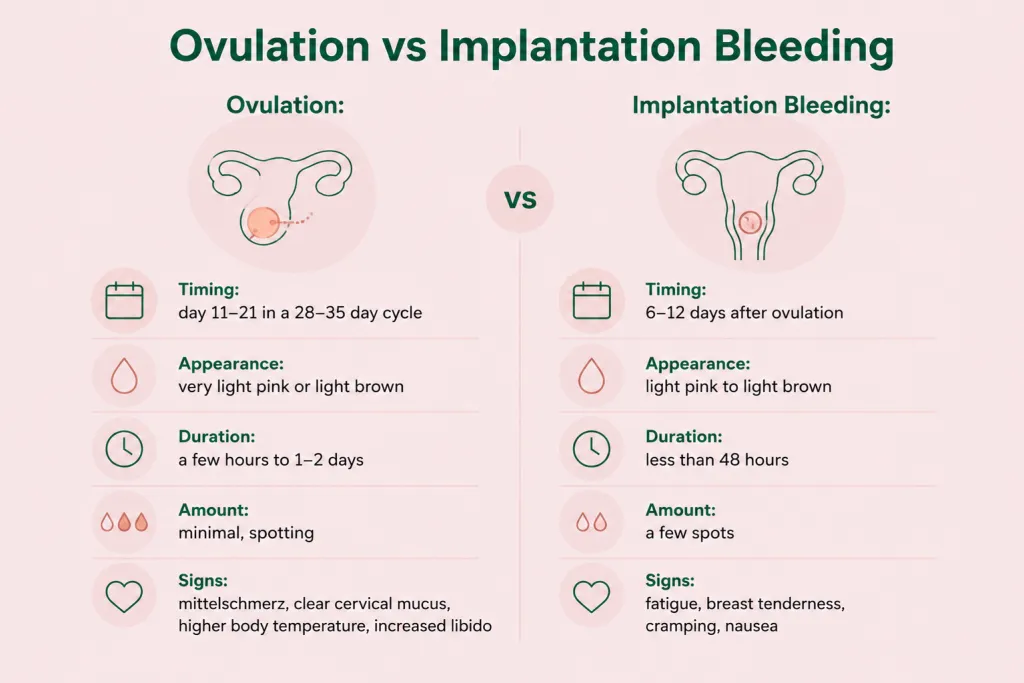
Ovulation bleeding typically occurs mid-cycle, usually around day 11-21 in a 28-35 day cycle. The exact timing depends on when you ovulate, which can vary between women and even between cycles.
Appearance
The bleeding is usually very light pink or light brown in color and often appears mixed with cervical mucus. It’s much lighter than menstrual blood and may have a different consistency.
Duration and Amount
Ovulation spotting is typically very brief, lasting anywhere from a few hours to 1-2 days maximum. The amount is minimal – true spotting rather than any kind of flow that would require more than a panty liner.
Accompanying Signs
You might notice other ovulation symptoms around the same time:
- Mild one-sided pelvic twinges (mittelschmerz)
- Stretchy, clear cervical mucus similar to egg whites
- A slight increase in basal body temperature after ovulation occurs
- Increased libido or breast tenderness
Important note: Ovulation bleeding is not a period and is not related to pregnancy hormone hCG levels. It’s simply a normal variation that occurs during the ovulation process.
What Is Implantation Bleeding?
Implantation bleeding is light spotting that occurs when a fertilized embryo attaches to the lining of your uterus. This happens in roughly 25% of early pregnancies and is one of the earliest potential signs of conception.
Timing
Implantation bleeding occurs 6-12 days after ovulation, typically in the late luteal phase of your cycle. This timing often coincides closely with when your next period would be expected.
Appearance
The bleeding is usually light pink to light brown in color and appears as scant spotting. It may be intermittent rather than continuous, appearing and disappearing over a day or two.
Duration and Amount
Implantation bleeding typically lasts less than 48 hours and is lighter than a regular period. Some women describe it as just a few spots on tissue paper or underwear rather than enough bleeding to require a pad.
Accompanying Signs
While not required, you might experience early pregnancy symptoms around the same time:
- Mild fatigue or tiredness
- Breast tenderness or sensitivity
- Slight cramping (different from menstrual cramps)
- Nausea or food aversions
Key point: Implantation bleeding is due to early pregnancy processes, but hCG hormone levels may still be too low for pregnancy tests to detect immediately.
Ovulation vs Implantation Bleeding
| Factor | Ovulation Bleeding | Implantation Bleeding |
|---|---|---|
| Cycle Timing | Mid-cycle (day 11-21) | Late luteal phase (6-12 days post-ovulation) |
| Duration | Hours to 2 days | Usually under 48 hours |
| Color | Light pink/brown | Light pink/brown |
| Amount | Minimal spotting | Scant spotting |
| Cramping/Pain | Mild one-sided twinge | Light cramping possible |
| Cervical Mucus | Clear, stretchy mucus | Variable |
| BBT Pattern | Rise after ovulation | May remain elevated |
| Pregnancy Test | Negative | May be negative initially |
How To Tell Which One You’re Seeing
Follow these steps to help identify the type of bleeding you’re experiencing:
Step 1: Map the Timing
Identify when the spotting occurred relative to your suspected ovulation date. If you track your cycle, count back from your expected period or forward from your last menstrual period.
Mid-cycle timing (around day 14 of a 28-day cycle) suggests ovulation bleeding. Late cycle timing (a few days before your expected period) could indicate implantation bleeding.
Step 2: Assess Amount and Duration
Check the flow intensity and how long it lasts. Both types should be light spotting, but note whether it’s truly minimal or if there’s any pattern to when it appears.
Anything heavier than light spotting or lasting more than 2-3 days is less likely to be either ovulation or implantation bleeding.
Step 3: Note Color and Consistency
Observe the color and whether it appears with other discharge. Ovulation bleeding often mixes with fertile cervical mucus, while implantation bleeding typically appears on its own.
Step 4: Consider Other Signs
Look for accompanying symptoms that might provide additional clues:
- Ovulation signs: one-sided pelvic twinges, fertile mucus, basal body temperature rise
- Early pregnancy signs: fatigue, breast changes, mild cramping
Step 5: Consider Pregnancy Possibility
If late luteal phase timing and pregnancy is possible, proceed to appropriate testing following the guidance below rather than assuming it’s just irregular bleeding.
When To Take a Pregnancy Test
Optimal timing: Wait until the first day of your missed period for the most accurate results with standard home pregnancy tests.
Earlier Testing
If you want to test earlier and suspect implantation bleeding:
- Use a sensitive early detection test around 10-12 days post-ovulation
- Test with first morning urine for highest hormone concentration
- If negative, retest in 48 hours as hCG levels double quickly in early pregnancy
Important Considerations
False negatives are common when testing too early. hCG levels may be too low immediately during implantation to register on home tests.
A negative test right after suspected implantation bleeding doesn’t rule out pregnancy – hormone levels need time to build up to detectable amounts.
When To See a Doctor
Seek Immediate Care For:
- Severe or one-sided pelvic pain, especially with dizziness
- Shoulder pain combined with pelvic pain
- Heavy bleeding soaking one or more pads per hour
- Large clots or tissue passing
- Fever with pelvic pain
- Fainting or dizziness with bleeding
Schedule a Consultation For:
- Spotting that persists beyond a few days
- Frequent mid-cycle bleeding that’s becoming a pattern
- Irregular cycles with concerning bleeding patterns
- Suspected ectopic pregnancy risk factors
- Questions about fertility or cycle tracking
Remember to keep track of your symptoms, timing, and any patterns to help your healthcare provider assess your situation accurately.
Common Misconceptions
“Implantation bleeding happens to everyone who gets pregnant.” Only about 25% of women experience noticeable implantation bleeding. Most early pregnancies don’t involve any spotting.
“Any mid-cycle spotting means you’re ovulating.” While ovulation bleeding is one possibility, mid-cycle spotting can have other causes including hormonal fluctuations, medications, or underlying conditions.
“A negative pregnancy test right after spotting rules out pregnancy.” Testing too early often produces false negatives because hCG levels may not be high enough to detect yet. Wait and retest if your period doesn’t arrive.
Conclusion
Understanding the key differences between ovulation and implantation bleeding helps you interpret your body’s signals more accurately. While both involve light spotting, their timing, associated symptoms, and underlying causes are distinct.
The most important factors are timing within your cycle and accompanying symptoms. Ovulation bleeding occurs mid-cycle with ovulation signs, while implantation bleeding happens in the late luteal phase and may be accompanied by early pregnancy symptoms.
Your next step is to track these details in a cycle journal or fertility app to identify patterns over time. This information becomes invaluable for understanding your individual cycle and communicating effectively with healthcare providers.
If you’re trying to conceive, focus on timing intercourse around ovulation rather than trying to interpret every instance of spotting. And remember – when in doubt about any unusual bleeding, don’t hesitate to consult your healthcare provider for personalized guidance.
Frequently Asked Questions
Can implantation bleeding be red?
Implantation bleeding is typically light pink or brown, but very light red spotting can occasionally occur, though this is less common than the lighter colors.
How long after implantation bleeding will a test be positive?
Most women can get a positive pregnancy test 2-4 days after implantation bleeding ends, as hCG levels need time to rise to detectable amounts.