Ozempic for PCOS: Benefits, Risks, and What to Know
<p>Ozempic can help manage PCOS by promoting weight loss, improving insulin sensitivity, and regulating menstrual cycles. Common risks include nausea, vomiting, and potential thyroid tumors. Ozempic…
- Published
- Written by
- Women In Balance Team
- Reading time
- 12 minutes
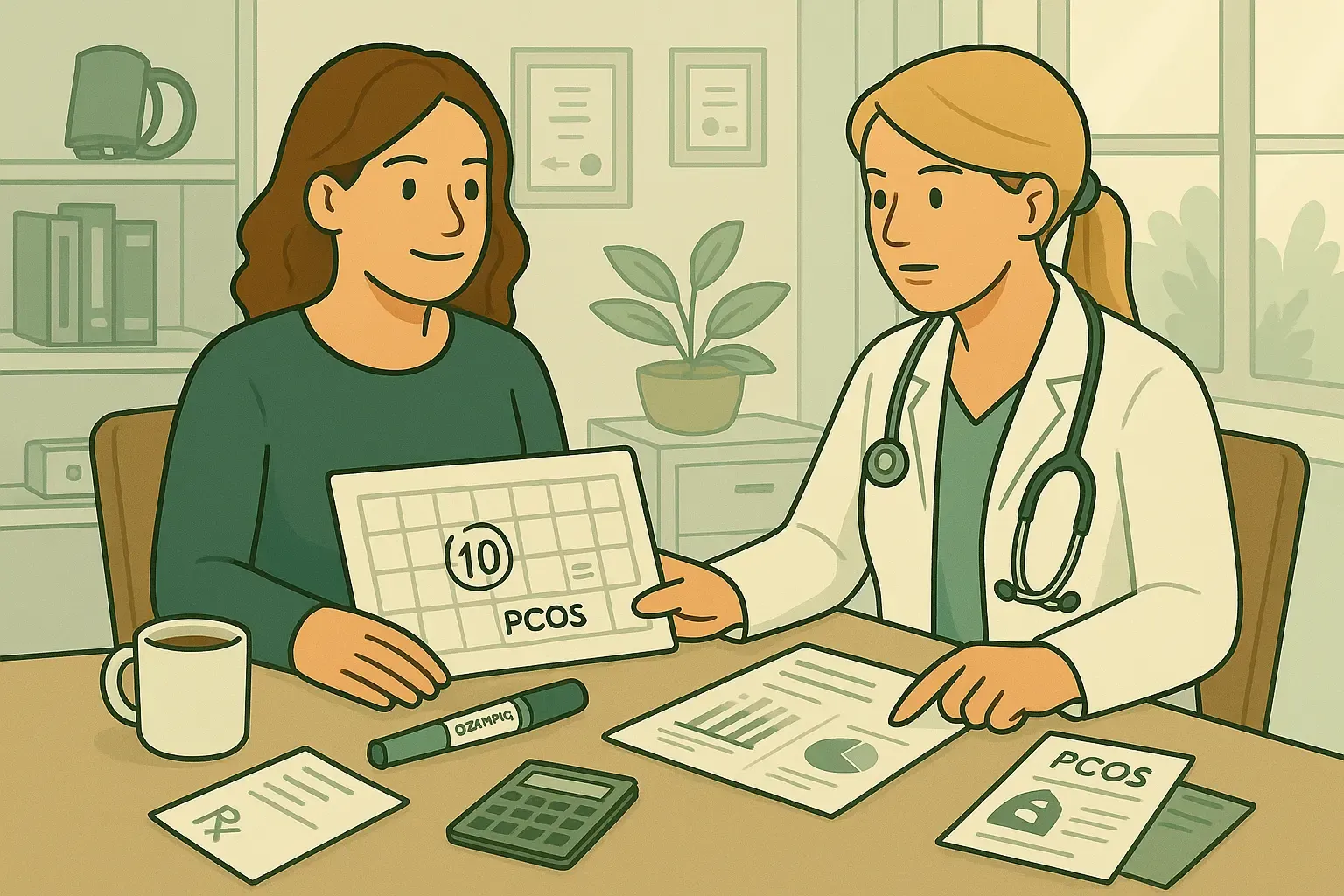
Ozempic can help manage PCOS by promoting weight loss, improving insulin sensitivity, and regulating menstrual cycles. Common risks include nausea, vomiting, and potential thyroid tumors. Ozempic is not FDA-approved specifically for PCOS but may be prescribed off-label. Consult a doctor for tailored treatment based on symptoms and metabolic health.
Key Takeaways
- Ozempic shows promise for PCOS management through weight loss and improved insulin sensitivity
- This is an off-label use not FDA-approved for PCOS, with limited insurance coverage
- Clinical studies show significant improvements in weight, testosterone levels, and menstrual regularity
Polycystic Ovary Syndrome (PCOS) affects millions of women worldwide, presenting a complex web of symptoms that can impact weight, hormones, fertility, and overall quality of life. From insulin resistance to irregular periods, from stubborn weight gain to elevated androgen levels, managing PCOS often feels like an uphill battle with limited treatment options.
Enter Ozempic for PCOS — a medication originally designed for diabetes that’s gaining attention in the PCOS community for its potential to address several core symptoms of the condition. While not yet FDA-approved for this purpose, growing research and clinical experience suggest that Ozempic may offer new hope for women struggling with the metabolic and reproductive aspects of PCOS.
This comprehensive guide explores the potential benefits, risks, and practical considerations of using Ozempic for PCOS, helping you understand whether this off-label treatment might be worth discussing with your healthcare provider. We’ll examine the science, weigh the evidence, and provide the balanced information you need to make informed decisions about your PCOS management strategy.
What Is Ozempic?
Ozempic is the brand name for semaglutide, a prescription medication that belongs to a class of drugs called GLP-1 receptor agonists (glucagon-like peptide-1 receptor agonists). The FDA has approved Ozempic specifically for treating type 2 diabetes in adults, where it helps control blood sugar levels when combined with diet and exercise.
Here’s how Ozempic works in your body: It mimics a naturally occurring hormone called GLP-1, which plays several important roles in glucose metabolism and appetite regulation. When you eat, GLP-1 signals your pancreas to release insulin (but only when blood sugar levels are elevated), tells your liver to reduce glucose production, and slows down how quickly food moves through your stomach.
This multi-faceted approach leads to better blood sugar control and, as a notable side effect, significant weight loss for many users. The weight loss occurs because GLP-1 affects areas of the brain involved in appetite regulation, leading to increased feelings of fullness and reduced food cravings.
Understanding “off-label” use is crucial when discussing Ozempic for PCOS. Off-label prescribing means a doctor is prescribing an FDA-approved medication for a condition or purpose different from what it was originally approved to treat. This practice is legal and common in medicine when healthcare providers believe a medication may benefit their patients, even though the specific use hasn’t received formal FDA approval.
For PCOS, doctors are increasingly prescribing Ozempic off-label because many of the metabolic improvements it provides — weight loss, better insulin sensitivity, and hormonal balance — directly address core PCOS symptoms.
How Ozempic May Help with PCOS
The potential benefits of Ozempic for PCOS stem from its ability to address several underlying metabolic dysfunction patterns that drive PCOS symptoms. Rather than targeting PCOS directly, Ozempic’s primary mechanisms create downstream effects that may significantly improve the condition’s most challenging aspects.
Research shows that the medication’s impact on weight, insulin sensitivity, and hormonal balance can create a positive cascade of improvements for women with PCOS. Understanding these mechanisms helps explain why endocrinologists and reproductive specialists are increasingly considering GLP-1 receptor agonists as valuable tools in comprehensive PCOS management.
Weight Management
Weight management represents one of the most significant challenges for women with PCOS, and it’s an area where Ozempic shows particular promise. Studies demonstrate that GLP-1 receptor agonists can lead to substantial weight loss in PCOS patients, with research showing average BMI reductions of 2.42 kg/m² and waist circumference decreases of 5.16 cm compared to placebo.
For women with PCOS, this weight loss is especially important because excess weight, particularly abdominal fat, worsens insulin resistance and increases androgen production. The medication works by increasing feelings of fullness, reducing appetite, and slowing gastric emptying, making it easier to maintain a caloric deficit.
Even modest weight loss — as little as 5-10% of total body weight — can have profound effects on PCOS symptoms. Clinical evidence shows that this level of weight reduction can restore ovulation, improve menstrual regularity, reduce testosterone levels, and enhance insulin sensitivity. For many women with PCOS, achieving and maintaining this level of weight loss through diet and exercise alone proves extremely difficult due to underlying metabolic dysfunction.
Insulin Resistance
Insulin resistance affects approximately 70% of women with PCOS and represents a cornerstone of the condition’s pathophysiology. Ozempic’s ability to improve insulin sensitivity addresses this fundamental issue directly.
When insulin resistance is present, the body requires increasingly higher levels of insulin to manage blood glucose. These elevated insulin levels stimulate the ovaries to produce more androgens (male hormones like testosterone), creating a vicious cycle that perpetuates PCOS symptoms. High insulin also reduces the production of sex hormone-binding globulin (SHBG), allowing more free testosterone to circulate and cause symptoms like hirsutism and acne.
Recent meta-analyses show that GLP-1 receptor agonists significantly improve insulin sensitivity in women with PCOS, with studies demonstrating meaningful reductions in HOMA-IR (a marker of insulin resistance). By improving how efficiently cells respond to insulin, Ozempic helps break the cycle of hyperinsulinemia and hyperandrogenism that characterizes many PCOS cases.
This improvement in insulin function often translates into better energy levels, reduced cravings (particularly for carbohydrates), and improved metabolic flexibility — the body’s ability to efficiently switch between burning glucose and fat for fuel.
Hormonal Balance and Fertility
The hormonal improvements associated with Ozempic use can have significant implications for women with PCOS seeking to restore reproductive function. Clinical studies show that GLP-1 receptor agonists are associated with a 72% improvement in natural pregnancy rates and significant improvements in menstrual regularity compared to placebo.
The mechanism behind these reproductive benefits is multifaceted. As insulin resistance improves and weight decreases, testosterone levels often decline significantly. Research demonstrates that Ozempic treatment leads to meaningful reductions in total testosterone levels, addressing one of the primary drivers of PCOS symptoms.
Lower androgen levels combined with improved insulin sensitivity can restore normal ovulation patterns. Studies show that many women experience more regular menstrual cycles within months of starting GLP-1 therapy, with some achieving spontaneous ovulation for the first time in years.
However, it’s crucial to understand that Ozempic is not a fertility treatment per se. Rather, by addressing underlying metabolic dysfunction, it may create conditions that allow natural reproductive function to resume. Women actively trying to conceive should work closely with reproductive specialists, as Ozempic use requires careful timing considerations around pregnancy planning.
Risks and Side Effects of Ozempic for PCOS
While Ozempic shows promise for PCOS management, understanding its potential risks and side effects is essential for making informed treatment decisions. Like all medications, GLP-1 receptor agonists can cause adverse effects, and the off-label nature of this use adds additional considerations.
Common side effects affect a significant portion of users and typically include gastrointestinal symptoms such as nausea (affecting up to 20% of users), diarrhea, constipation, vomiting, and abdominal pain. These effects are usually most pronounced when starting the medication or increasing doses, and they often improve as the body adjusts to treatment.
Other frequently reported side effects include fatigue, dizziness, and decreased appetite (which, while contributing to weight loss, can sometimes become excessive). Some users also experience injection site reactions, including redness, swelling, or itching where the medication is administered.
Serious but less common risks require careful consideration. The FDA has issued a black box warning regarding the potential risk of thyroid C-cell tumors, based on findings in animal studies. While human cases are extremely rare, patients with a personal or family history of medullary thyroid carcinoma or multiple endocrine neoplasia syndrome type 2 should not use Ozempic.
Other serious potential complications include pancreatitis (inflammation of the pancreas), gallbladder problems, kidney issues, and in rare cases, severe gastroparesis (delayed stomach emptying). Patients should be monitored regularly for symptoms such as persistent severe abdominal pain, especially if it radiates to the back.
Cost and insurance considerations represent significant practical barriers for many patients. Without insurance coverage, Ozempic costs between $900-$1,300 per month. Most insurance plans do not cover Ozempic for PCOS because it’s an off-label use. Coverage typically requires a diabetes diagnosis, leaving many PCOS patients to pay out-of-pocket or seek alternative arrangements.
Some patients may qualify for manufacturer assistance programs, but these often have income and insurance status requirements. The high cost can make long-term treatment financially unsustainable for many women, which is particularly problematic since PCOS is a chronic condition requiring ongoing management.
Ozempic vs. Other PCOS Treatments
Understanding how Ozempic for PCOS compares to established treatments helps contextualize its role in comprehensive PCOS management. Each treatment approach has distinct mechanisms, benefits, and limitations that make them more or less suitable for different patients and treatment goals.
Ozempic versus Metformin represents the most direct comparison, as both medications address insulin resistance — a core feature of PCOS. Metformin, a diabetes medication that’s been used off-label for PCOS for decades, improves insulin sensitivity and can provide modest weight loss benefits.
Recent head-to-head studies show that GLP-1 receptor agonists like Ozempic are superior to metformin for both weight loss and insulin sensitivity improvement in PCOS patients. Meta-analyses demonstrate that Ozempic produces significantly greater BMI reduction (−1.02 vs minimal change) and better insulin sensitivity improvements compared to metformin alone.
However, metformin has several advantages: it’s much more affordable (often under $10-20 monthly with insurance), has a longer safety track record in PCOS, is widely accepted by insurance for off-label PCOS use, and can be safely continued during pregnancy when prescribed by a healthcare provider familiar with its use.
Hormonal contraceptives remain a mainstay of PCOS treatment, particularly for managing irregular periods, reducing androgen levels, and controlling hirsutism and acne. Birth control pills can effectively regulate menstrual cycles and reduce testosterone levels, but they don’t address underlying insulin resistance or promote weight loss — and may even contribute to weight gain in some women.
The combination approach of hormonal contraceptives with Ozempic may offer complementary benefits: hormonal regulation from contraceptives and metabolic improvement from GLP-1 therapy. However, this requires careful coordination and monitoring by healthcare providers.
Anti-androgen medications like spironolactone specifically target the effects of excess male hormones, effectively treating hirsutism, acne, and male-pattern hair loss. While these medications address symptom management effectively, they don’t improve the underlying metabolic dysfunction that drives androgen excess in PCOS.
Lifestyle interventions — including structured nutrition plans and regular exercise — remain the foundational treatment for PCOS across all clinical guidelines. The challenge is that PCOS-related insulin resistance and metabolic dysfunction make it significantly more difficult to achieve and maintain weight loss through lifestyle changes alone.
Ozempic may serve as a valuable tool to enhance the effectiveness of lifestyle interventions, helping patients achieve the level of weight loss needed to see meaningful symptom improvement while developing sustainable healthy habits.
Should You Consider Ozempic for PCOS?
Determining whether Ozempic for PCOS might be appropriate requires careful evaluation of your individual circumstances, treatment history, and goals. This decision should always be made in partnership with qualified healthcare providers who understand both your medical history and the complexities of PCOS management.
You might be a candidate for Ozempic if you have PCOS with:
- Significant insulin resistance confirmed through testing (elevated fasting insulin, abnormal glucose tolerance, or elevated HOMA-IR)
- BMI over 27-30, particularly with central/abdominal weight distribution
- Difficulty achieving meaningful weight loss through lifestyle interventions alone
- Metabolic complications such as prediabetes or metabolic syndrome
- Poor response to first-line treatments like metformin
- Strong motivation for addressing metabolic aspects of PCOS rather than focusing solely on reproductive symptoms
Ozempic may be less suitable if you:
- Are actively trying to conceive (due to the need for discontinuation before pregnancy)
- Have a history of thyroid cancer, pancreatitis, or severe gastroparesis
- Cannot afford long-term treatment without insurance coverage
- Prefer to focus primarily on reproductive symptom management rather than metabolic improvement
- Have not yet tried established first-line treatments like lifestyle modification and metformin
Questions to discuss with your healthcare provider:
- What are my specific PCOS phenotype and dominant symptoms that need addressing?
- Have we optimized first-line treatments like lifestyle interventions and metformin?
- What are my insulin resistance markers and metabolic risk factors?
- How would Ozempic fit into my overall PCOS management strategy?
- What monitoring and follow-up would be needed during treatment?
- What are the realistic expectations for symptom improvement in my case?
- How would this affect my family planning timeline if I’m considering pregnancy?
- What are alternative treatments if Ozempic isn’t suitable or accessible?
The decision to use Ozempic for PCOS shouldn’t be taken lightly. While research shows promising results, it represents a significant commitment in terms of cost, potential side effects, and long-term treatment adherence. Success requires ongoing medical supervision, lifestyle support, and realistic expectations about outcomes.
Conclusion
Ozempic for PCOS represents an exciting development in the treatment landscape for this complex condition, offering new hope for women who have struggled with traditional management approaches. The growing body of clinical evidence demonstrates significant benefits for weight management, insulin resistance, and hormonal balance — addressing core aspects of PCOS pathophysiology that have been notoriously difficult to treat.
However, this promise comes with important caveats. As an off-label treatment, Ozempic for PCOS requires careful consideration of costs, insurance limitations, potential side effects, and the need for ongoing medical supervision. It’s not a cure-all solution, but rather one tool in a comprehensive approach to PCOS management that should still include lifestyle interventions and other evidence-based treatments.
The key message is clear: PCOS management must be individualized, and no single treatment works for everyone. Some women may find tremendous benefit from GLP-1 therapy, while others may achieve better results with traditional approaches or combination strategies.
Take action today: If you’re struggling with PCOS symptoms despite current treatments, schedule a consultation with an endocrinologist or reproductive specialist familiar with metabolic approaches to PCOS. Come prepared with questions about your specific situation, treatment history, and goals. Together, you can evaluate whether Ozempic might fit into your personalized PCOS management plan, ensuring you have access to the most effective treatments available while managing the condition’s complex challenges.
Remember that PCOS management is a marathon, not a sprint. The best treatment approach is one that’s sustainable, addresses your individual symptoms, and fits within your lifestyle and resources while providing meaningful improvements in your quality of life.
Frequently Asked Questions
Does Ozempic help with hormone imbalance?
Yes, Ozempic can help improve hormone imbalance in PCOS by reducing insulin resistance, which often leads to lower testosterone levels and improved SHBG production. Clinical studies show significant reductions in total testosterone levels with GLP-1 treatment.
Is Ozempic FDA-approved for PCOS?
No, Ozempic is not FDA-approved for PCOS treatment. It’s only approved for type 2 diabetes management. When prescribed for PCOS, it’s considered off-label use, which is legal but may limit insurance coverage.
How long does it take for Ozempic to show results in PCOS?
Many women begin seeing improvements in weight and metabolic markers within 3-6 months of starting treatment. Hormonal improvements and menstrual regulation may take 3-6 months or longer, as the body needs time to respond to metabolic changes.