Egg White Discharge: What It Means for Fertility
<p>Key Takeaways If you’ve noticed clear, stretchy, slippery discharge that resembles raw egg whites, you’re observing one of your body’s most important fertility signals. This distinctive egg white…
- Published
- Written by
- Women In Balance Team
- Reading time
- 15 minutes
Key Takeaways
- Egg white cervical mucus (clear, stretchy, slippery discharge) appears around ovulation and indicates your most fertile days
- This type of discharge helps sperm survive and travel through the reproductive tract, creating optimal conditions for conception
- Tracking cervical mucus changes throughout your cycle can help you identify your fertile window and improve chances of pregnancy
If you’ve noticed clear, stretchy, slippery discharge that resembles raw egg whites, you’re observing one of your body’s most important fertility signals. This distinctive egg white discharge—officially called fertile cervical mucus—is your body’s way of preparing for ovulation and creating the ideal environment for conception.
Cervical mucus changes throughout your menstrual cycle in response to hormonal fluctuations. These changes aren’t random—they serve important purposes in your reproductive health. When you see egg white-like discharge, your body is telling you that ovulation is near or happening, and these are your most fertile days of the month.
Understanding what egg white discharge means, when it appears, and how to identify it can be incredibly valuable whether you’re trying to conceive, avoiding pregnancy naturally, or simply want to understand your body’s signals better. This natural fertility sign is free, always available, and remarkably accurate when you learn to recognize it.
This article explains what egg white cervical mucus is, why it appears, how to identify it, what it means for your fertility, and how to track it effectively as part of understanding your menstrual cycle.
What Is Egg White Discharge?
Egg white cervical mucus (EWCM) is a specific type of vaginal discharge produced by your cervix during your most fertile days. The name comes from its appearance and consistency—it looks and feels remarkably similar to raw egg whites.
This discharge is clear or slightly cloudy, very stretchy (you can stretch it between your fingers for several inches without it breaking), slippery (similar to the texture of raw egg whites), and wet rather than sticky or tacky. When you observe it on toilet paper or underwear, it may look glossy or shiny.
Cervical mucus is produced by glands in your cervix and its characteristics change throughout your menstrual cycle in response to estrogen and progesterone levels. During most of your cycle, cervical mucus is thicker and creates a barrier that makes it difficult for sperm to enter the uterus. This protects against infection and prevents sperm from traveling when you’re not fertile.
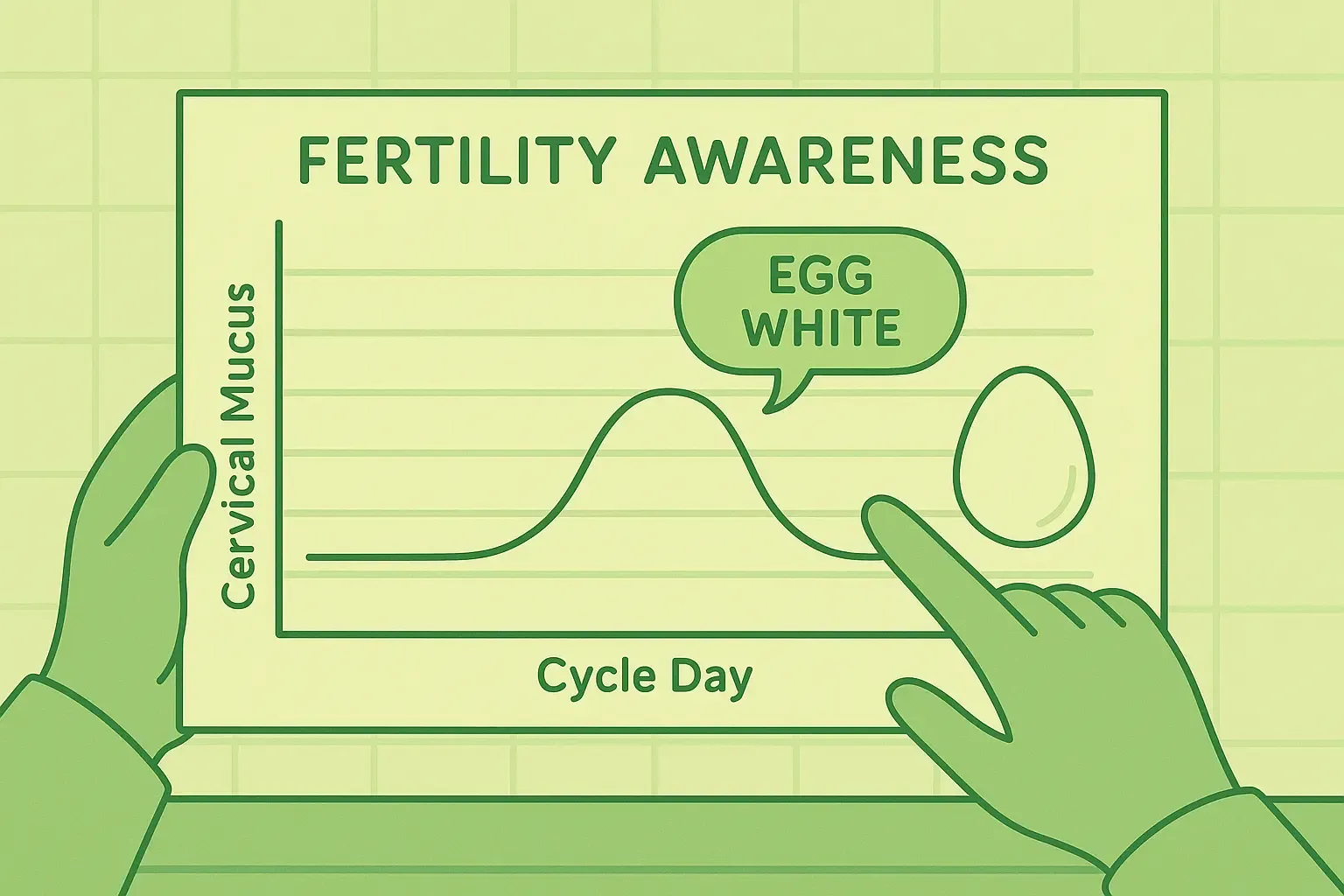
However, as ovulation approaches and estrogen rises, your cervical mucus transforms into the egg white consistency. This change serves a crucial purpose: egg white cervical mucus creates an optimal environment for sperm survival and transport. Its slippery, alkaline nature protects sperm from the acidic vaginal environment and actually helps guide sperm toward the egg.
Egg white discharge typically appears for 1-5 days during your cycle, usually in the days immediately before and potentially on the day of ovulation. For most women with regular 28-30 day cycles, this occurs around days 12-16, though timing varies based on your individual cycle length.
Not everyone produces noticeable amounts of egg white discharge, and the quantity can vary from month to month. Some women have abundant, obvious egg white mucus, while others produce only small amounts that require checking internally to observe.
Why Egg White Discharge Appears
The appearance of egg white cervical mucus is driven by hormonal changes and serves important reproductive purposes.
Hormonal Triggers
Rising estrogen levels in the days before ovulation stimulate the cervix to produce increasing amounts of mucus with a progressively more fertile quality. As your ovarian follicle (containing the developing egg) matures, it produces more estrogen, which signals your cervix to create the most fertile mucus.
Peak estrogen occurs just before ovulation, which is when you typically see your most abundant, stretchiest egg white mucus. After ovulation, progesterone becomes the dominant hormone, and cervical mucus quickly changes back to a thicker, non-fertile type or may dry up entirely.
Fertility Functions
Egg white cervical mucus serves several critical fertility functions:
Sperm survival: The acidic vaginal environment normally kills sperm within a few hours. Egg white mucus is more alkaline, neutralizing vaginal acidity and allowing sperm to survive for up to 5 days inside your reproductive tract.
Sperm transport: The slippery, fluid texture of egg white mucus creates channels that help sperm swim more efficiently through the cervix and into the uterus toward the fallopian tubes where fertilization occurs.
Sperm nourishment: Fertile cervical mucus contains nutrients that support and energize sperm during their journey to the egg.
Filtering: While helping healthy sperm, egg white mucus also filters out abnormal or damaged sperm, improving the quality of sperm that reach the egg.
Timing signal: The presence of egg white discharge tells you that your body is preparing for ovulation, giving you advance notice of your most fertile days.
This is why timing intercourse during egg white cervical mucus days significantly increases the chances of conception. Having sex when this type of discharge is present means sperm can survive in your reproductive tract until the egg is released, maximizing the opportunity for fertilization.
How to Identify Egg White Cervical Mucus
Learning to recognize egg white discharge takes practice, but most women can master it within 1-2 cycles of observation.
Visual Characteristics
Look at the discharge on toilet paper, underwear, or your fingers. Egg white cervical mucus is:
- Clear or slightly white/cloudy
- Glossy or shiny appearance
- Abundant (though amount varies between women)
- Leaves a wet sensation
Compare this to other types of cervical mucus you might see during your cycle:
- Sticky or tacky (early in cycle) – white or cream colored, breaks easily
- Creamy (transitioning to fertile) – lotion-like, white or cream
- Watery (approaching fertile) – clear but thin, not stretchy
- Egg white (most fertile) – clear, very stretchy
- Dry or minimal (after ovulation) – little to no observable mucus
The Stretch Test
The stretch test is the most reliable way to identify egg white mucus. Take a sample between your thumb and index finger and slowly pull your fingers apart.
Egg white cervical mucus stretches 1-4+ inches without breaking, maintaining a clear, smooth strand between your fingers. It’s remarkably elastic and doesn’t break easily.
Non-fertile mucus either won’t stretch at all (sticky type), stretches only slightly before breaking (creamy type), or is too watery to test (watery type, which can still indicate approaching fertility but isn’t quite peak fertile quality).
The Feel Test
Pay attention to sensation throughout the day. When egg white mucus is present, you’ll notice:
- Wet, slippery feeling (similar to being aroused)
- May feel like discharge is “flowing” or abundant
- Underwear may be damp or wet
This is distinctly different from the dry or barely-there feeling after ovulation, or the thicker, less noticeable sensation of non-fertile mucus types.
Where to Check
External observation: Check discharge on toilet paper after urinating or on your underwear throughout the day.
Internal check: Some women prefer to check internally, especially if they don’t see obvious external discharge. Wash your hands, insert a clean finger into your vagina, and examine the mucus you collect. Internal checks often reveal mucus that hasn’t yet emerged externally.
Best timing: Check at least 2-3 times daily at consistent times (morning, midday, evening) for the most accurate picture of your mucus patterns.
What It Feels Like
Beyond appearance, egg white mucus has a distinctive slippery, lubricative feeling. Some women describe it as feeling similar to being sexually aroused. You might notice increased wetness throughout the day or see discharge on toilet paper each time you use the bathroom during your fertile window.
Egg White Discharge and Your Fertile Window
Understanding when egg white discharge appears helps you identify your fertile window—the days when conception is possible.
Timing in Your Cycle
For most women with regular cycles:
- Early cycle (days 1-7): Menstrual bleeding, followed by dry or minimal discharge
- Pre-ovulation (days 8-11): Sticky or creamy discharge begins
- Approaching ovulation (days 12-14): Discharge becomes increasingly watery, then transitions to egg white
- Peak fertility (days 13-15): Abundant egg white mucus
- Ovulation day: May still have egg white mucus or it may begin drying up
- Post-ovulation (days 16-28): Mucus quickly becomes thick or dries up, little observable discharge
These day ranges are examples based on a 28-day cycle. Your personal timing depends on your cycle length. The key is that egg white mucus appears in the days immediately before ovulation, regardless of when in your cycle that occurs.
The Fertile Window
Your fertile window includes the 5 days before ovulation plus ovulation day itself—a total of 6 days each cycle. Egg white cervical mucus typically appears during the last 1-5 days of this window, signaling your most fertile time.
You can get pregnant from intercourse during any of these fertile days because sperm can survive up to 5 days in the presence of fertile cervical mucus, waiting for the egg to be released.
Research shows that conception is most likely when intercourse occurs during the 3 days before ovulation through ovulation day. Egg white mucus signals exactly these high-probability days, making it an invaluable fertility awareness tool.
For Trying to Conceive
If you’re trying to get pregnant, have intercourse when you observe egg white mucus. You don’t need to wait for the “peak” day—any day you see this fertile-quality discharge offers good conception chances.
Many couples aim for every other day during the fertile window, though daily intercourse during this time is fine too if preferred. The presence of egg white mucus tells you timing is right.
For Avoiding Pregnancy
If you’re using the fertility awareness method (FAM) for natural birth control, abstain from intercourse or use barrier methods from the first appearance of any wet or egg white sensation through 3-4 days after your peak mucus day (the last day of egg white or wet sensation).
This method requires careful observation and isn’t as reliable as other forms of contraception, but when used correctly, it can be effective. Consider working with a fertility awareness educator to learn the method thoroughly.
What If You Don’t See Egg White Discharge?
Not seeing obvious egg white cervical mucus doesn’t necessarily mean you’re not ovulating or can’t get pregnant, but it may indicate factors worth exploring.
Checking Internally
Some women produce fertile mucus that’s primarily internal and doesn’t emerge obviously. Try checking internally around your expected fertile days—you may find egg white mucus at your cervix even when you don’t see it externally.
Hydration
Dehydration can reduce cervical mucus production. Ensure you’re drinking adequate water—at least 8 glasses daily. Some women notice improved mucus quality when they increase water intake.
Medications
Certain medications reduce cervical mucus production:
- Antihistamines and decongestants (they dry all mucus membranes)
- Some fertility medications (Clomid can reduce mucus)
- Certain antidepressants
- Hormonal birth control (by design, it prevents fertile mucus)
If you’re on medications and concerned about mucus, discuss with your doctor. Don’t stop prescribed medications without medical guidance.
Low Estrogen
Lower estrogen levels can result in less abundant or less fertile-quality cervical mucus. This can occur with:
- Age (fertility and estrogen decline, especially after 35)
- Recent discontinuation of hormonal birth control
- Approaching menopause (perimenopause)
- Certain medical conditions affecting hormones
Cervical Issues
Cervical problems like infections, previous cervical procedures (LEEP, cone biopsy), or inflammation can affect mucus production. If you’ve had cervical treatments and notice minimal mucus, mention this to your healthcare provider.
Supplements and Support
Some women find certain supplements may help improve cervical mucus quality:
- Evening primrose oil (taken before ovulation only, stop at ovulation)
- L-arginine may improve blood flow to reproductive organs
- Vitamin E supports mucus membrane health
- Adequate healthy fats in diet support hormone production
Always consult with a healthcare provider before starting supplements, especially when trying to conceive.
Multiple Types of Mucus
You may ovulate even if you never see the classic stretchy egg white type. Some women’s fertile mucus is more watery than egg white, but still wet and slippery. Any wet, slippery sensation indicates potential fertility, even if the mucus doesn’t stretch dramatically.
If you’re concerned about lack of cervical mucus and having difficulty conceiving, consult a fertility specialist. They can evaluate your hormone levels and overall fertility.
Tracking Cervical Mucus for Fertility Awareness
Systematic tracking of cervical mucus patterns provides valuable fertility awareness and can improve conception chances.
How to Track
Record daily observations in a fertility tracking app, chart, or journal. Note:
- Date
- Type/quality of mucus (dry, sticky, creamy, watery, egg white)
- Quantity (none, scant, moderate, abundant)
- Sensation (dry, damp, wet, slippery)
- Any other relevant notes
Use consistent terminology so you can compare cycles over time. Many women use simple descriptors:
- D = Dry
- St = Sticky
- Cr = Creamy
- W = Watery
- EW = Egg White
Track for at least 3 months to understand your personal patterns. Each woman’s cycle is unique—tracking helps you learn your normal.
Combining with Other Fertility Signs
Basal body temperature (BBT): Taking your temperature first thing each morning can confirm ovulation occurred (temperature rises after ovulation). Use mucus to predict ovulation and temperature to confirm it.
Ovulation predictor kits (OPKs): These detect the LH surge that triggers ovulation, usually 24-36 hours before ovulation. Use alongside mucus tracking for more precision.
Cervical position: Your cervix changes position and texture throughout your cycle. During fertile days, it becomes soft, high, open, and wet (SHOW). This can confirm what your mucus is telling you.
Mittelschmerz: Some women feel ovulation pain (a twinge or ache on one side). This can help pinpoint ovulation day.
Tracking apps: Many fertility apps (Fertility Friend, Kindara, Natural Cycles) allow you to log multiple fertility signs and can help identify patterns.
Understanding Your Pattern
After tracking for several cycles, you’ll notice:
- How many days of egg white mucus you typically have
- When in your cycle it appears
- What your mucus looks like in the days before and after
- Whether you have a clear pattern or more variable cycles
Irregular cycles may have less predictable mucus patterns. Track consistently and you’ll still likely notice fertile mucus before ovulation, even if timing varies month to month.
When to Consult a Healthcare Provider
While egg white discharge is normal and healthy, certain situations warrant medical guidance.
See your doctor if:
- You never observe egg white or fertile-quality mucus after several months of tracking
- You’re trying to conceive for 12 months (or 6 months if over 35) without success
- Your discharge has a strong, foul odor (suggests infection)
- Discharge is yellow, green, or gray (possible infection)
- You experience itching, burning, or irritation with discharge
- You have unusual bleeding between periods along with discharge changes
- You’re concerned about your fertility or cycle patterns
Fertility specialists can evaluate:
- Hormone levels through blood tests
- Whether you’re ovulating (through various tests)
- Cervical mucus quality and quantity
- Other fertility factors
- Treatment options if issues are identified
Don’t hesitate to seek help if you’re concerned. Early evaluation and intervention can make a significant difference in fertility outcomes.
Common Myths About Egg White Discharge
Let’s clarify some misconceptions about egg white cervical mucus and fertility.
Myth: Egg white mucus means you’re ovulating right now
Truth: Egg white mucus typically appears in the 1-5 days before ovulation, not on ovulation day itself. It signals approaching ovulation. By the time you ovulate, the mucus may already be drying up.
Myth: More egg white mucus means higher fertility
Truth: The presence of egg white mucus indicates fertility, but quantity doesn’t correlate with how fertile you are or your chances of conception. Some highly fertile women produce minimal amounts.
Myth: You can only get pregnant on the day you see egg white mucus
Truth: You can conceive from intercourse on any day during your fertile window (5 days before through ovulation day) because sperm can survive up to 5 days in fertile mucus.
Myth: No egg white mucus means you’re not ovulating
Truth: Some women ovulate normally but don’t produce obvious external egg white mucus. Internal checking or other ovulation signs can confirm ovulation.
Myth: Cervical mucus is the same as arousal fluid
Truth: These are different fluids. Arousal fluid is produced during sexual stimulation, appears quickly, and dries quickly. Cervical mucus is present throughout the day, changes gradually over days, and is produced by the cervix, not in response to arousal.
Myth: Seeing egg white mucus guarantees pregnancy if you have sex
Truth: Having intercourse during fertile mucus days increases conception chances, but many factors affect fertility. Even perfectly timed intercourse during optimal fertility results in pregnancy only 20-30% of cycles in healthy couples.
Conclusion
Egg white cervical mucus is one of your body’s most reliable fertility signals, indicating that ovulation is approaching and these are your most fertile days of the month. This clear, stretchy, slippery discharge creates optimal conditions for sperm survival and transport, significantly increasing conception chances when intercourse is timed accordingly.
Learning to identify and track egg white discharge empowers you with free, always-available fertility awareness. Whether you’re trying to conceive, avoiding pregnancy naturally, or simply want to understand your body’s rhythms better, paying attention to cervical mucus changes provides valuable insights into your menstrual cycle.
Start observing your cervical mucus at least 2-3 times daily throughout your cycle. Notice how it changes from dry or sticky after your period, gradually becomes more wet and slippery approaching ovulation, reaches the classic egg white consistency at peak fertility, and then quickly dries up after ovulation. Within a few cycles, you’ll recognize your personal pattern.
Remember that every woman’s body is unique. Some produce abundant, obvious egg white mucus, while others have more subtle signs. Both patterns can be normal and fertile. If you’re concerned about your cervical mucus or fertility, don’t hesitate to consult with a healthcare provider or fertility specialist.
Understanding your fertility signals, including egg white discharge, puts you in tune with your body’s natural rhythms and empowers you to make informed decisions about your reproductive health. Your body is constantly communicating—learning this language is a valuable tool for your health journey.
Frequently Asked Questions
How many days of egg white discharge before ovulation?
Most women see egg white cervical mucus for 1-5 days before ovulation, typically with the most abundant, stretchiest mucus appearing 1-2 days before ovulation. The exact duration varies between individuals and even between cycles for the same person.
Can you get pregnant without seeing egg white discharge?
Yes, you can conceive without obvious egg white discharge. Some women produce fertile mucus that’s more watery than egg white, or primarily internal rather than external. Other women ovulate normally but don’t produce much cervical mucus. Pregnancy is still possible with less obvious fertile signs.
Does egg white discharge mean you’re ovulating right now?
No, egg white mucus typically appears in the days before ovulation, not during ovulation itself. It signals that ovulation is approaching—usually within 1-3 days. By the time you actually ovulate, the mucus may already be changing or drying up.
How long after egg white discharge do you ovulate?
Ovulation typically occurs within 1-3 days after you first see egg white mucus, often around the last day of egg white discharge or the day after it ends. Using ovulation predictor kits or tracking basal body temperature alongside mucus can help pinpoint ovulation more precisely.
Is watery discharge the same as egg white?
Watery discharge indicates approaching fertility but isn’t quite the same as egg white mucus. Watery mucus is thinner and less stretchy, while egg white mucus is more viscous and highly elastic. Both can indicate fertility, but egg white is the highest quality fertile mucus, typically appearing closer to ovulation.
Can you have egg white discharge and not be ovulating?
This is uncommon but possible. Certain medications or hormonal conditions can cause cervical mucus changes without ovulation occurring. If you consistently see egg white mucus but suspect you’re not ovulating (confirmed with OPKs or temperature tracking), consult a fertility specialist for evaluation.