CoQ10 and Fertility: What to Know Before You Try It
<p>CoQ10 may improve fertility by enhancing egg quality, increasing mitochondrial function, and supporting sperm health. In women over 35, CoQ10 can help counter age-related fertility decline. In…
- Published
- Written by
- Women In Balance Team
- Reading time
- 11 minutes
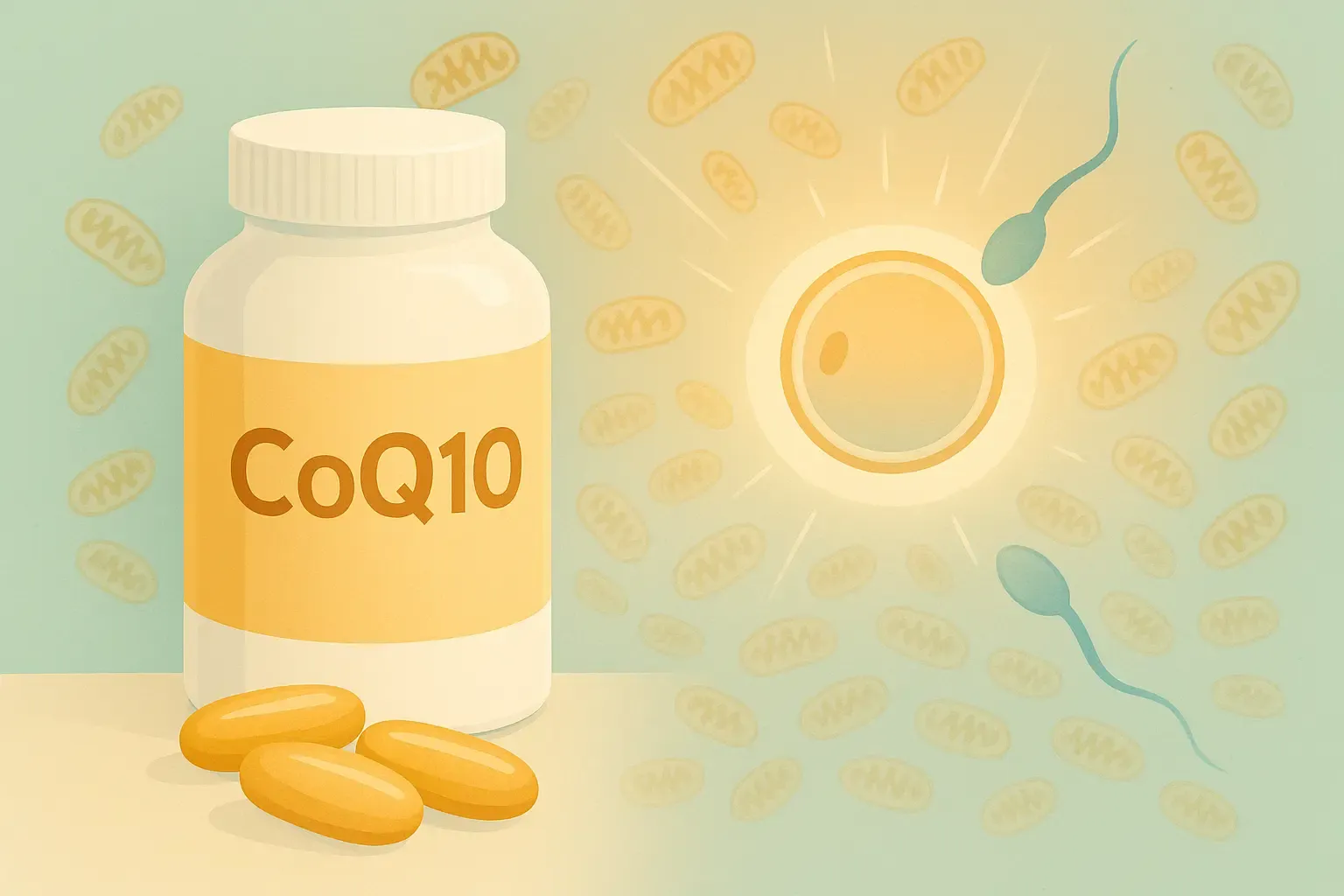
CoQ10 may improve fertility by enhancing egg quality, increasing mitochondrial function, and supporting sperm health. In women over 35, CoQ10 can help counter age-related fertility decline. In men, it may improve sperm motility and count. Consult a doctor before using CoQ10 during fertility treatments.
Key Takeaways
- CoQ10 may improve egg and sperm quality – Research suggests it supports cellular energy production in reproductive cells, potentially enhancing fertility outcomes
- Timing matters for maximum benefit – Most studies show benefits after 2-3 months of consistent use, aligning with the natural cycle of egg and sperm development
- Not all CoQ10 supplements are equal – Ubiquinol form may be better absorbed than ubiquinone, especially for people over 35
Fertility challenges affect millions of couples worldwide, leading many to explore natural supplements that might support their conception journey. CoQ10 fertility support has gained significant attention in recent years as researchers uncover its potential role in reproductive health. This powerful antioxidant, naturally produced by your body, plays a crucial role in cellular energy production – and emerging evidence suggests it may help improve both egg and sperm quality. Whether you’re just starting to try for a baby or have been on this journey for a while, understanding how CoQ10 works and whether it might benefit your specific situation can help you make informed decisions about your fertility support strategy.
What Is CoQ10?
Coenzyme Q10, commonly known as CoQ10, is a naturally occurring antioxidant that your body produces to support cellular energy production. Found in every cell throughout your body, CoQ10 plays a vital role in the mitochondria – often called the “powerhouses” of cells – where it helps convert nutrients into the energy your cells need to function properly.
As we age, our natural CoQ10 production gradually declines, typically beginning around age 20 and becoming more noticeable after 35. This decline coincides with the natural decrease in fertility that occurs with advancing age, particularly in women. The connection isn’t coincidental – reproductive cells, including eggs and sperm, require enormous amounts of energy to develop properly, mature, and function optimally.
CoQ10 exists in two main forms in the body: ubiquinone (the oxidized form) and ubiquinol (the reduced, active form). Your body naturally converts between these forms as needed, but this conversion process can become less efficient with age. This is why many fertility specialists recommend CoQ10 supplementation, particularly for individuals over 35 who are trying to conceive.
Beyond its role in energy production, CoQ10 serves as a powerful antioxidant, protecting cells from damage caused by free radicals. This protective function is especially important for reproductive cells, which are particularly vulnerable to oxidative stress that can impair their function and reduce fertility potential.
How CoQ10 May Improve Fertility
The relationship between CoQ10 and fertility centers on its dual role as an energy booster and cellular protector, making it particularly valuable for reproductive health in both men and women.
CoQ10 for Female Fertility
For women, CoQ10 fertility benefits primarily focus on improving egg quality, which is crucial for successful conception and healthy pregnancy outcomes. As women age, their eggs accumulate more cellular damage and have decreased energy production capacity, leading to reduced fertility and increased risk of chromosomal abnormalities.
Egg quality enhancement occurs because eggs are among the largest cells in the human body and require substantial energy for proper development and maturation. During ovulation, eggs must complete complex processes including chromosome division and cellular reorganization. CoQ10 helps ensure these energy-intensive processes occur properly by supporting mitochondrial function within the egg cells.
Advanced maternal age benefits are particularly significant, as women over 35 experience more rapid declines in egg quality. Studies suggest that CoQ10 supplementation may help slow this decline by protecting eggs from oxidative damage and maintaining their energy production capacity. This protection may translate to better embryo quality and higher pregnancy rates in older women.
Ovarian response may also improve with CoQ10 supplementation, particularly for women undergoing fertility treatments. Some research indicates that women taking CoQ10 may produce more eggs during ovarian stimulation cycles and have better-quality embryos for transfer.
CoQ10 for Male Fertility
Male fertility benefits from CoQ10 supplementation are well-documented, with multiple studies showing improvements in various sperm parameters that directly impact conception chances.
Sperm concentration and count often improve with CoQ10 supplementation. Research has shown that men taking CoQ10 supplements may experience increases in total sperm count and concentration, which can significantly impact fertility potential, especially for men with low sperm counts.
Sperm motility enhancement is one of the most consistently reported benefits. Sperm need substantial energy to swim through the female reproductive tract to reach and fertilize an egg. CoQ10’s role in cellular energy production directly supports this energy-intensive process, potentially improving the percentage of sperm that move forward progressively.
DNA protection represents another crucial benefit, as sperm DNA is vulnerable to oxidative damage that can lead to fertility problems and increased miscarriage risk. CoQ10’s antioxidant properties help protect sperm DNA from damage, potentially improving fertility outcomes and supporting healthy pregnancies.
Morphology improvements have also been observed, with some studies showing that CoQ10 supplementation may increase the percentage of normally shaped sperm, which is important for successful fertilization.
What the Research Says
The scientific evidence supporting CoQ10 for fertility has grown substantially over the past decade, with numerous studies investigating its effects on both male and female reproductive health.
Female fertility research has shown promising results, particularly for women of advanced maternal age. A landmark 2018 study published in Fertility and Sterility found that women over 35 who took 600mg of CoQ10 daily for up to 60 days before fertility treatment had significantly better egg and embryo quality compared to controls. Another study demonstrated that CoQ10 supplementation improved ovarian response in women with poor ovarian reserve.
Male fertility studies have been even more robust, with multiple randomized controlled trials showing consistent benefits. A comprehensive review of studies found that CoQ10 supplementation significantly improved sperm concentration, motility, and morphology. One notable study showed that men taking 300mg of CoQ10 daily for six months experienced significant improvements in all major sperm parameters.
IVF outcomes research suggests that CoQ10 may improve success rates for couples undergoing assisted reproductive technologies. Studies have found higher pregnancy rates and better embryo quality in couples where one or both partners supplemented with CoQ10 before and during treatment cycles.
Limitations and ongoing research should be acknowledged. While results are encouraging, most studies have been relatively small, and optimal dosing protocols are still being refined. Additionally, individual responses to supplementation can vary significantly, and CoQ10 is not effective for all types of fertility issues.
Current research continues to explore optimal timing, dosing, and combination therapies that might enhance CoQ10’s fertility benefits.
How to Take CoQ10 for Fertility
Getting the most benefit from CoQ10 supplementation requires understanding proper dosing, timing, and form selection based on current research and clinical experience.
Recommended Dosage
General dosing guidelines for fertility support typically range from 100-600mg daily, depending on individual circumstances and specific fertility challenges. Most fertility specialists recommend starting with 200-300mg daily for general fertility support, with higher doses reserved for specific situations or under medical supervision.
Gender-specific recommendations may vary slightly. Women often benefit from 200-600mg daily, particularly those over 35 or with known egg quality issues. Men typically see benefits with 200-300mg daily, though those with severe sperm quality issues may require higher doses.
Treatment-specific dosing might be adjusted for couples undergoing fertility treatments. Some clinics recommend increasing CoQ10 doses to 600mg daily for 1-2 months before IVF cycles to maximize potential benefits.
Always consult with your healthcare provider before starting CoQ10 supplementation, especially if you’re taking other medications or have underlying health conditions.
Best Form to Take (Ubiquinone vs. Ubiquinol)
Understanding the difference between CoQ10 forms can help you choose the most effective option for your needs.
Ubiquinone is the traditional, oxidized form of CoQ10 that has been used in most research studies. It’s generally less expensive and widely available, but requires conversion to the active ubiquinol form in your body.
Ubiquinol is the reduced, active form that’s ready for immediate use by your cells. It may be better absorbed, particularly in people over 35 whose natural conversion efficiency has declined. However, ubiquinol supplements are typically more expensive than ubiquinone.
Absorption considerations suggest that ubiquinol may be superior for fertility applications, especially for older individuals. Some studies indicate that ubiquinol achieves higher blood levels with lower doses compared to ubiquinone.
Taking with fats improves absorption of both forms since CoQ10 is fat-soluble. Consider taking your supplement with a meal containing healthy fats for optimal absorption.
How Long to Take It
Minimum timeframe for CoQ10 fertility benefits typically requires 2-3 months of consistent use. This timeline aligns with the natural development cycles of both eggs (about 90 days from early development to ovulation) and sperm (approximately 74 days for complete development).
Pre-conception planning should ideally begin 3-4 months before actively trying to conceive to allow sufficient time for CoQ10 to accumulate in tissues and exert its beneficial effects on developing reproductive cells.
Treatment cycle timing for couples undergoing fertility treatments often involves starting CoQ10 at least 2-3 months before beginning treatment cycles to maximize potential benefits for egg and sperm quality.
Continuation during pregnancy should be discussed with your healthcare provider, as some recommend continuing CoQ10 through the first trimester, while others suggest discontinuing once pregnancy is confirmed.
Safety and Side Effects
CoQ10 is generally considered safe for most people, with an excellent safety profile established through decades of use and research.
Common side effects are typically mild and may include digestive upset, nausea, diarrhea, or stomach irritation. These effects are usually temporary and often resolve by taking the supplement with food or reducing the dose temporarily.
Rare side effects may include headaches, dizziness, insomnia, or skin rash. These typically occur with higher doses and resolve when the dose is reduced or the supplement is discontinued.
Drug interactions are relatively few but important to consider. CoQ10 may interact with blood-thinning medications like warfarin, potentially affecting clotting times. It may also interact with some blood pressure medications and could affect blood sugar levels in people with diabetes.
Pregnancy and breastfeeding safety data is limited, so many healthcare providers recommend discontinuing CoQ10 once pregnancy is confirmed, though some support continued use through the first trimester. Always discuss this with your healthcare provider.
Quality considerations are crucial since supplement quality can vary significantly between manufacturers. Look for third-party tested products and reputable brands to ensure you’re getting the stated dose and purity.
Who Should Consider Taking CoQ10?
While CoQ10 may benefit many people trying to conceive, certain groups are most likely to see significant improvements from supplementation.
Women over 35 are prime candidates for CoQ10 supplementation due to the natural decline in egg quality that accelerates after this age. The combination of decreased natural CoQ10 production and declining egg quality makes supplementation particularly valuable for this group.
Men with sperm quality issues including low count, poor motility, or abnormal morphology may benefit significantly from CoQ10 supplementation. Multiple studies have shown improvements in these parameters with consistent use.
Couples undergoing fertility treatments such as IUI, IVF, or other assisted reproductive technologies may see improved outcomes with CoQ10 supplementation, particularly in terms of egg and embryo quality.
Individuals with unexplained infertility might benefit from CoQ10 as part of a comprehensive approach to optimizing fertility, especially when other obvious causes have been ruled out.
People with specific medical conditions such as PCOS, endometriosis, or varicocele might find CoQ10 helpful as an adjunct to other treatments, though it should never replace proven medical therapies.
Those with high oxidative stress due to lifestyle factors, environmental exposures, or chronic stress may particularly benefit from CoQ10’s antioxidant properties.
Consider consulting with a fertility specialist or healthcare provider to determine if CoQ10 supplementation is appropriate for your specific situation and fertility goals.
Conclusion
CoQ10 represents a promising natural approach to supporting fertility for both men and women, with growing research evidence backing its potential benefits for egg and sperm quality. While it’s not a miracle cure for all fertility challenges, CoQ10 may offer valuable support as part of a comprehensive fertility optimization strategy, particularly for individuals over 35 or those with specific sperm quality issues.
Remember that CoQ10 works best as part of a broader approach to fertility health that includes proper nutrition, regular exercise, stress management, and appropriate medical care. The supplement requires patience and consistency, with most benefits becoming apparent after 2-3 months of regular use.
Take the first step toward potentially improving your fertility by discussing CoQ10 supplementation with your healthcare provider or fertility specialist today. They can help determine the right dose and form for your specific needs, ensure it won’t interact with any medications you’re taking, and develop a comprehensive plan that gives you the best chance of achieving your family-building goals.
Frequently Asked Questions
How long does it take for CoQ10 to affect fertility?
CoQ10 typically requires 2-3 months of consistent use to show fertility benefits, aligning with the natural development cycles of eggs and sperm. Eggs take approximately 90 days to mature from early development to ovulation, while sperm development takes about 74 days. This means you need to allow at least one full cycle for CoQ10 to influence the quality of newly developing reproductive cells. Some people may notice improvements in energy levels or overall well-being sooner, but fertility-specific benefits require this longer timeframe. For couples undergoing fertility treatments, many specialists recommend starting CoQ10 at least 3 months before beginning treatment cycles.
Can I get enough CoQ10 from food?
While CoQ10 is found naturally in foods like organ meats, fatty fish, whole grains, and nuts, it’s difficult to obtain fertility-supportive levels through diet alone. Foods typically contain only small amounts of CoQ10 – for example, a serving of beef heart (one of the richest sources) contains about 11mg, while fertility studies often use doses of 200-600mg daily. Additionally, CoQ10 content in foods decreases with cooking and processing. Your body also produces less CoQ10 as you age, making dietary sources even less sufficient. For fertility support, supplementation is generally necessary to achieve the therapeutic levels shown to be beneficial in research studies.
Can I take CoQ10 during IVF treatment?
Many fertility specialists recommend CoQ10 supplementation before and during IVF treatment, as studies suggest it may improve egg quality, embryo quality, and overall treatment outcomes. However, timing and dosing should always be coordinated with your fertility clinic. Some clinics recommend starting CoQ10 2-3 months before beginning an IVF cycle to allow time for egg quality improvements. During the actual treatment cycle, most providers are comfortable continuing CoQ10 through egg retrieval, though some may recommend stopping it before embryo transfer or once pregnancy is confirmed. Always inform your fertility team about all supplements you’re taking, as they may want to adjust protocols based on your specific treatment plan.