How Long After LH Surge Do You Ovulate? Expert Insight
<p>Ovulation typically occurs 24 to 36 hours after the LH surge. The LH (luteinizing hormone) spike triggers the release of an egg from the ovary. Most women ovulate the day after a positive LH test…
- Published
- Written by
- Women In Balance Team
- Reading time
- 11 minutes
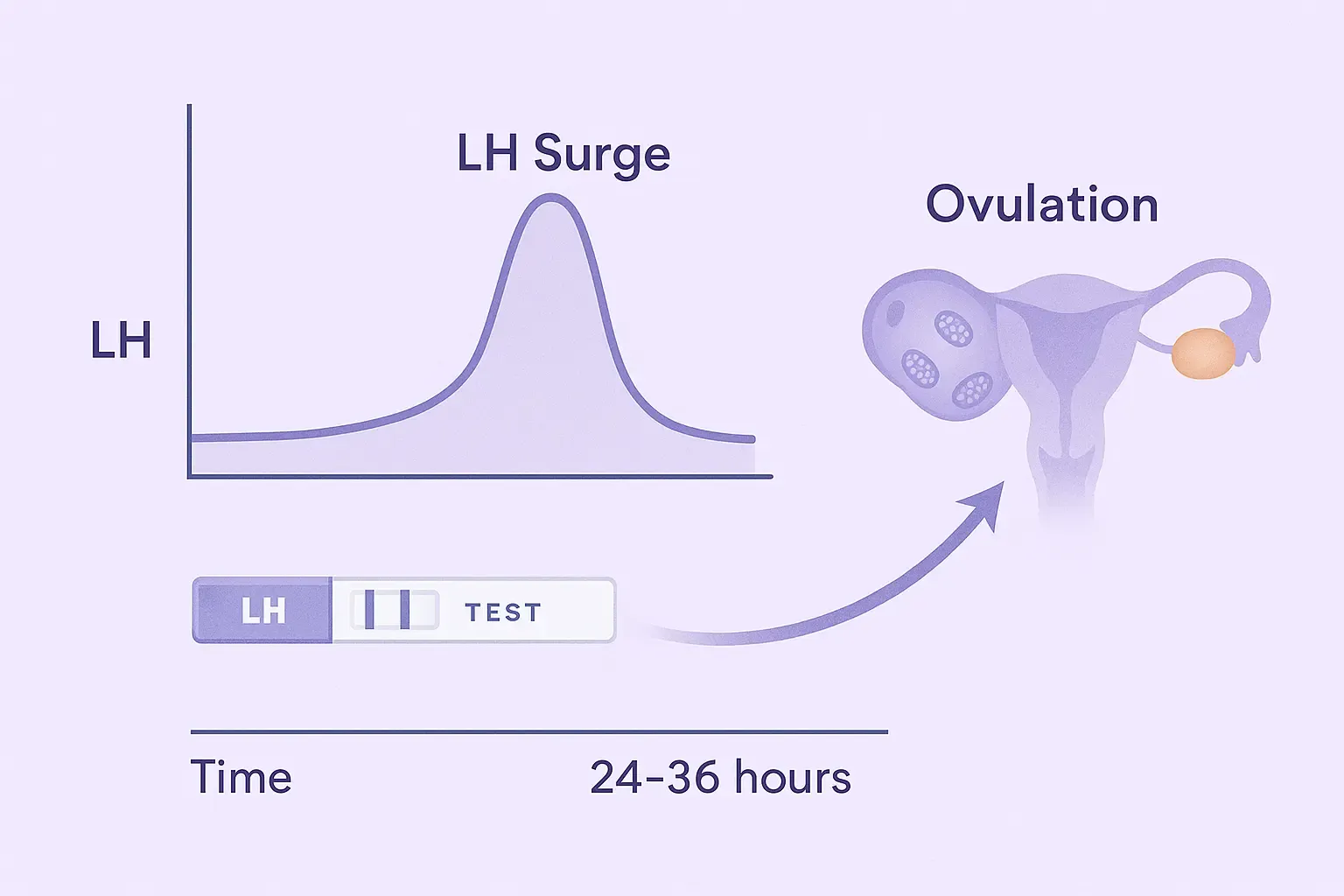
Ovulation typically occurs 24 to 36 hours after the LH surge. The LH (luteinizing hormone) spike triggers the release of an egg from the ovary. Most women ovulate the day after a positive LH test. Timing intercourse during this window increases the chance of conception.
Key Takeaways
- Ovulation occurs 24-36 hours after LH surge begins – This narrow window is crucial for timing intercourse when trying to conceive
- Individual timing can vary by several hours – Some women ovulate as early as 12 hours or as late as 48 hours after their LH surge
- Peak fertility window spans 3 days – The day before, day of, and day after ovulation offer the highest conception chances
If you’re trying to conceive, understanding the precise timing between your LH surge and ovulation can significantly improve your chances of getting pregnant. The question “how long after LH surge do you ovulate” is one of the most important aspects of fertility tracking, as it helps you identify your most fertile days each cycle. Luteinizing hormone (LH) serves as your body’s natural signal that ovulation is imminent, making it a reliable predictor for timing intercourse. However, the exact timing can vary between individuals and even between cycles, making it essential to understand both the general patterns and your personal ovulation timeline.
What Is an LH Surge?
An LH surge is a rapid, dramatic increase in luteinizing hormone levels that triggers ovulation in your menstrual cycle. This hormonal event represents one of the most important biological signals in human reproduction, essentially serving as your body’s countdown timer to egg release.
Luteinizing hormone is produced by your pituitary gland and plays a crucial role in reproductive function. Throughout most of your cycle, LH levels remain relatively low and stable. However, when your body prepares to release an egg, LH levels increase dramatically – sometimes by 3-5 times their baseline levels – creating the characteristic “surge” pattern.
The surge mechanism begins when rising estrogen levels from your developing follicle signal your brain that an egg is ready for release. This triggers your pituitary gland to release a large burst of LH, which travels through your bloodstream to your ovaries. Once LH reaches the ovaries, it causes the mature follicle to rupture and release the egg, completing the ovulation process.
Duration characteristics of an LH surge typically span 12-24 hours, though the surge can be detected for 1-3 days depending on your testing method and individual hormone patterns. The surge usually begins gradually, reaches a peak level, and then declines back to baseline levels. This entire process creates a predictable window that can be tracked using ovulation predictor kits.
Detection timing is crucial because LH appears in your urine several hours after the surge begins in your bloodstream. This means that by the time you detect the surge with a home ovulation test, the hormonal cascade leading to ovulation is already well underway, making timing predictions more precise.
How Long After LH Surge Do You Ovulate?
The timing between LH surge detection and actual ovulation follows a predictable pattern that’s essential for successful conception planning.
Standard timeframe for ovulation is 24-36 hours after the LH surge begins. This means that if you detect your LH surge on Monday morning, you would typically ovulate sometime between Tuesday morning and Tuesday evening. This consistent timing makes LH surge detection one of the most reliable methods for predicting ovulation.
Peak timing usually occurs around 28-32 hours after the surge begins for most women. This represents the most common ovulation timing, though individual variation means your personal pattern might consistently fall earlier or later within the normal range.
Detection vs. onset is an important distinction to understand. Since home ovulation tests detect LH in your urine several hours after the surge begins in your bloodstream, you might detect the surge 4-12 hours after it actually started. This means ovulation typically occurs 12-24 hours after you get a positive ovulation predictor kit result.
Fertile window implications mean that the day you detect your LH surge and the following day represent your highest fertility period. Since sperm can survive in your reproductive tract for up to 5 days, having intercourse on the day of LH surge detection gives sperm time to be present when ovulation occurs.
Why Timing Varies
Individual differences create natural variation in the LH surge to ovulation timeline, making it important to understand your personal patterns over several cycles.
Biological variation exists between women due to differences in hormone sensitivity, follicle development speed, and individual reproductive anatomy. Some women consistently ovulate on the earlier side of the normal range (around 12-20 hours after surge), while others consistently ovulate later (36-48 hours after surge).
Cycle-to-cycle variation can occur even within the same woman. Factors like stress, illness, travel, or changes in sleep patterns can slightly alter the timing between LH surge and ovulation, though most women maintain fairly consistent personal patterns.
Age-related changes may affect timing as women get older. Women over 35 sometimes experience slightly longer intervals between LH surge and ovulation, though this variation is usually minimal and still falls within the normal range.
Hormonal sensitivity differences mean that some women’s ovaries respond more quickly or slowly to the LH signal. This individual characteristic tends to remain consistent across cycles, making personal pattern recognition valuable for timing predictions.
Factors That Affect LH Surge and Ovulation
Several biological and lifestyle factors can influence both the detection of your LH surge and the timing of subsequent ovulation.
Polycystic Ovary Syndrome (PCOS) can significantly affect LH patterns, often causing elevated baseline LH levels that make surge detection challenging. Women with PCOS may experience multiple LH surges per cycle or have difficulty detecting clear surge patterns with standard ovulation predictor kits.
Stress and lifestyle factors can impact both LH surge timing and ovulation. High stress levels, significant weight changes, excessive exercise, or disrupted sleep patterns may delay ovulation or create irregular LH patterns, making prediction more difficult.
Medications can interfere with normal LH patterns. Fertility medications like Clomid may affect surge timing, while certain antidepressants, steroids, or hormonal medications can influence when and how strongly LH surges occur.
Thyroid disorders often affect reproductive hormones, including LH patterns. Both hyperthyroidism and hypothyroidism can create irregular ovulation timing and make LH surge detection less reliable.
Age and reproductive stage influence LH patterns, with women approaching perimenopause sometimes experiencing erratic LH surges or multiple surges per cycle. Very young women may also have less predictable LH patterns as their reproductive systems mature.
Cycle length variations affect when LH surges occur relative to menstruation. Women with longer cycles typically have later LH surges, while those with shorter cycles may surge earlier, though the timing between surge and ovulation remains consistent.
How to Track Your LH Surge Accurately
Effective LH surge tracking requires understanding different detection methods and implementing consistent testing practices for reliable results.
Ovulation predictor kits (OPKs) are the most common and accessible method for detecting LH surges. These urine-based tests work similarly to pregnancy tests, showing positive results when LH levels reach a predetermined threshold. Digital OPKs provide clear positive/negative results, while traditional test strips require interpretation of line darkness.
Testing timing is crucial for accurate results. Most fertility experts recommend testing between 10 AM and 8 PM, as LH is typically released in the morning but doesn’t appear in urine until several hours later. Avoid testing with first morning urine, which may be too concentrated and give false readings.
Testing frequency should increase as you approach your expected ovulation window. Begin testing 2-3 days before you expect to ovulate based on your cycle length, then test once or twice daily. Some women benefit from testing twice daily (morning and evening) when they suspect their surge is beginning.
Test sensitivity varies between brands and types. Some tests detect LH at 20 mIU/mL while others require 40 mIU/mL for a positive result. More sensitive tests may detect surges earlier but could also detect smaller fluctuations that don’t represent true ovulatory surges.
Fertility monitors offer more advanced tracking by measuring multiple hormones or tracking LH patterns over time. These devices can learn your individual patterns and provide more personalized predictions, though they require greater investment and consistent use.
Basal body temperature tracking can confirm ovulation after it occurs, providing valuable information about your LH surge accuracy. Temperature rises 12-24 hours after ovulation, helping you verify whether your LH surge resulted in actual ovulation.
Cervical mucus monitoring complements LH testing by providing additional fertility signs. Peak fertility mucus (clear, stretchy, egg-white consistency) typically appears around the time of LH surge and indicates optimal conditions for conception.
When to Try for Pregnancy
Understanding optimal timing for intercourse relative to your LH surge can significantly improve your conception chances.
Peak fertility window spans the three days surrounding ovulation: the day before, day of, and day after ovulation occurs. Since ovulation typically happens 24-36 hours after LH surge detection, this means your highest fertility period includes the day you detect your surge and the following 1-2 days.
Intercourse timing recommendations suggest having intercourse on the day you detect your LH surge and the following day. This timing ensures sperm are present when ovulation occurs, as sperm can survive in your reproductive tract for up to 5 days while eggs remain viable for only 12-24 hours after release.
Every other day approach works well for couples who prefer less regimented timing. Having intercourse every other day throughout your fertile window (from 2-3 days before expected ovulation through 1 day after) ensures sperm are regularly present without creating pressure around exact timing.
Multiple surge considerations may apply if you experience lengthy LH elevation or multiple peaks. In these cases, continue intercourse throughout the elevated period and for 1-2 days after LH levels return to baseline.
Sperm quality optimization becomes important during your fertile window. Avoiding excessive heat exposure, maintaining good hydration, and limiting alcohol consumption can help ensure optimal sperm function during your most fertile days.
Stress management during your fertile window can improve conception chances. High stress levels can interfere with both ovulation timing and sperm function, so maintaining relaxed intimacy during your fertile window supports optimal conditions for conception.
When to Seek Medical Advice
Certain patterns or symptoms related to LH surge detection warrant professional medical evaluation to address potential fertility concerns.
Absent or irregular LH surges may indicate anovulation (cycles without ovulation) or hormonal imbalances requiring medical evaluation. If you rarely or never detect LH surges despite consistent testing, consult with a healthcare provider about possible underlying causes.
Multiple LH surges per cycle can occur normally but may also indicate hormonal irregularities or conditions like PCOS. If you consistently detect multiple surges or very long periods of elevated LH, medical evaluation can help determine if treatment is needed.
Conception timeline concerns warrant medical consultation if you’ve been tracking LH surges and timing intercourse appropriately for 6-12 months without conceiving (6 months if you’re over 35, 12 months if you’re under 35).
Irregular cycle patterns that make LH surge prediction difficult may benefit from medical evaluation. If your cycles vary significantly in length or you have unpredictable ovulation timing despite careful tracking, hormone testing can identify treatable causes.
Suspected anovulation should be evaluated if your LH surges don’t correlate with other ovulation signs like temperature rises or fertile cervical mucus. Some women experience LH surges without actual egg release, a condition that may require medical treatment.
Age-related concerns become more pressing for women over 35 who are trying to conceive. Earlier medical consultation can help identify and address age-related fertility changes before they significantly impact conception chances.
Conclusion
Understanding how long after LH surge you ovulate – typically 24-36 hours – empowers you to time intercourse optimally and maximize your conception chances each cycle. While individual variation exists, most women can rely on this timing to identify their most fertile days and plan accordingly. The key to success lies in consistent tracking, understanding your personal patterns, and maintaining intercourse timing that accounts for both sperm longevity and egg viability.
Remember that LH surge detection is just one piece of fertility awareness, and combining it with other fertility signs like basal body temperature and cervical mucus provides the most complete picture of your reproductive cycle. What matters most is finding a tracking method that you can maintain consistently and that provides clear, actionable information for your family planning goals.
Take action today by choosing an LH tracking method that fits your lifestyle and budget, whether that’s simple ovulation predictor kits or more advanced fertility monitors. Start tracking your patterns now, even if you’re not immediately trying to conceive, so you’ll have valuable cycle data when you’re ready to start your family.
Frequently Asked Questions
Is ovulation the same day as LH peak?
No, ovulation typically occurs 24-36 hours after the LH peak begins, not on the same day. The LH surge triggers the biological processes that lead to egg release, but ovulation itself happens about a day later. This timing difference is why detecting your LH surge helps predict when ovulation will occur rather than confirming it’s happening immediately.
Do you ovulate after a LH surge goes down?
Yes, ovulation usually occurs as LH levels are declining from their peak, typically 24-36 hours after the surge began. You don’t need to wait for LH to return completely to baseline levels. The egg is typically released while LH levels are still elevated but decreasing from their highest point.
Can ovulation ever occur more than 48 hours after LH surge?
While uncommon, ovulation can occasionally occur up to 48-72 hours after LH surge detection in some women. This extended timing may occur due to individual hormonal variations, slower follicle response, or certain medical conditions. If you consistently experience very late ovulation after LH surge, discuss this pattern with your healthcare provider.
What signs confirm ovulation besides hormone testing?
Basal body temperature rise (0.5-1°F increase that stays elevated) typically occurs 12-24 hours after ovulation and confirms egg release. Changes in cervical mucus from fertile (clear, stretchy) to non-fertile (thick, sticky) also indicate ovulation has occurred. Some women experience mittelschmerz (ovulation pain) on one side during egg release, though this isn’t universal.