How Women Can Balance Career Growth, Continuing Education, and Personal Well-Being
I want to be upfront about something: I almost didn’t write this the way I’m writing it. My first draft included headers such as “Sustainable Success Strategies” and bullet points about “energy…
- Published
- Written by
- Women In Balance Team
- Reading time
- 5 minutes

I want to be upfront about something: I almost didn’t write this the way I’m writing it. My first draft included headers such as “Sustainable Success Strategies” and bullet points about “energy allocation optimization.” It was thorough. It was organized. It was completely useless.
So let me just talk to you instead.
The planner phase
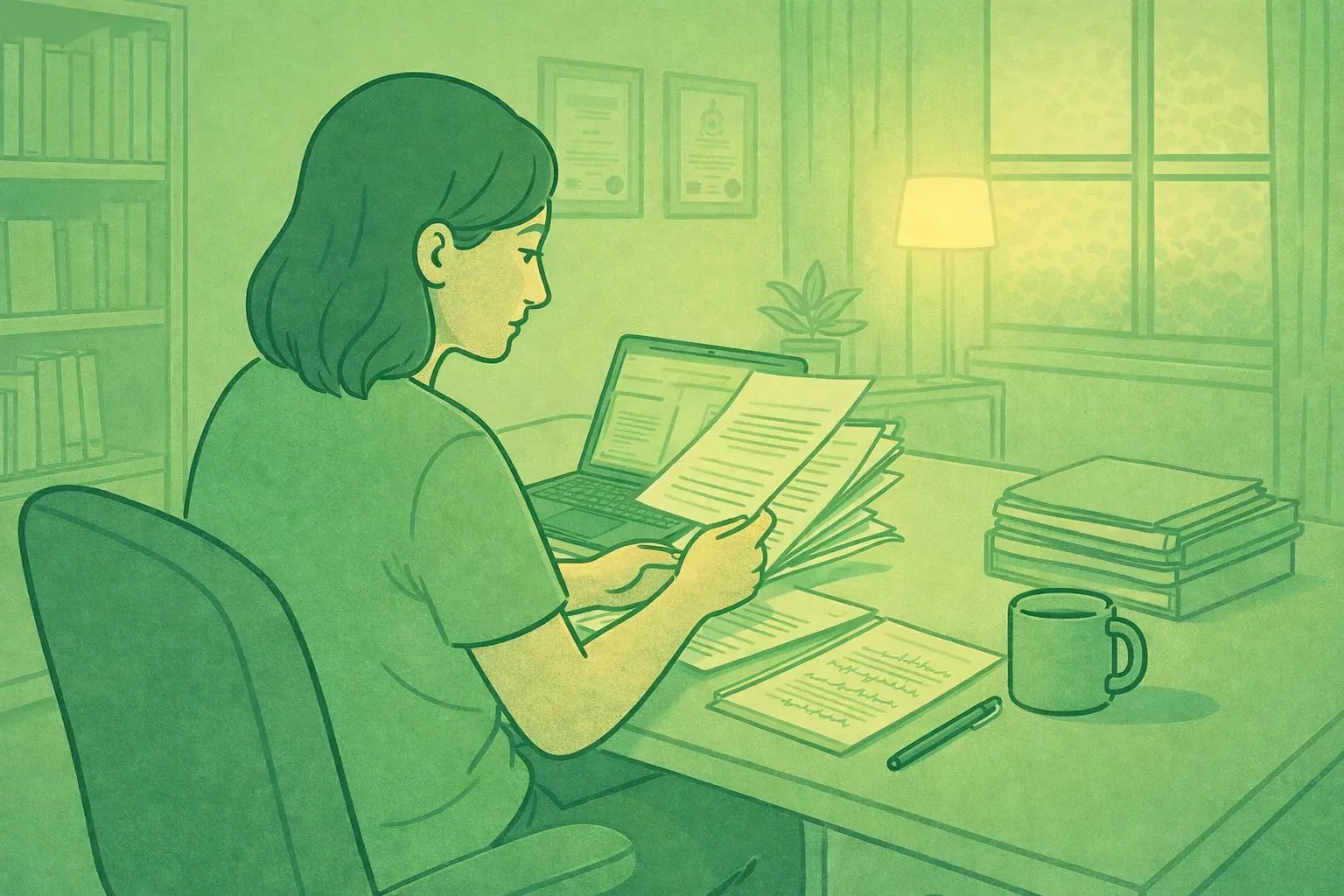
At one point, I was finishing a certificate program, working full-time, and trying to remember to water my plants. During this time, I became briefly obsessed with finding the right productivity system. I bought a planner. Then a different planner. I downloaded apps. I watched YouTube videos made by people whose apartments were inexplicably spotless.
None of it worked, obviously. Not because the advice was bad, exactly. But because the problem wasn’t that I needed a better system. I had a problem. I was carrying three heavy items at once. No tool could lighten that load.
Career. Education. Not completely losing yourself in the process. These don’t compress neatly. And the sooner I stopped looking for the hack that would make it frictionless, the better off I was.
The specific exhaustion of switching between roles
There’s a kind of tiredness I didn’t have a name for until a few years ago. It’s not the tiredness from working too hard or staying up too late. It’s tiring from being several different people in one day.
Morning: professional who has it together. Lunch: quietly panicking about an assignment due Thursday. Evening: you’re still a student, but your mind has checked out. It feels like it’s barely connected to your body now.
That context-switching costs something real. What helped me wasn’t better scheduling. It was being honest about why I was learning in the first place. Not the version I’d say in a job interview. The actual reason. When the reason is real, showing up at 9 PM with a textbook feels less like punishment. It feels more like a choice you’re making. That distinction matters more than I expected.
What really worked was blocking study time in my calendar like I do for meetings. Not “I’ll get to it.” An actual slot with an actual time. When it has a place, it happens. When it’s floating, it disappears — every time, without exception.
The spreadsheet problem
When I started a business program, I was not prepared for how much of it would be Excel. Just genuinely did not see that coming. I think I did what many do. I sat with my discomfort for a bit. I figured I wasn’t a “numbers person” and fell further behind.
What helped was letting go of the belief that needing help meant I was flawed.
Balancing a career with continuing education means carrying a lot at once — and technical coursework adds its own layer of difficulty. For women returning to school, managing deadlines, data-heavy assignments, and workplace responsibilities at the same time can be overwhelming, which is why many students look for do my excel project for me support when handling complex spreadsheet tasks. Knowing when to ask for help is not a weakness — it’s a form of self-awareness that carries you further in every area of life.
Each technical thing you work through — slowly, imperfectly, with whatever help you need — makes the next one less scary. That actually happens. I’ve watched it happen in myself and in people I know.
Rest, and why I had such a weird relationship with it
For a long time I operated on a belief I didn’t even know I had: that rest was something you earned. You finish the work, then you get to stop. The problem is the work never actually finishes. So I was just permanently behind, permanently owing myself something I never got around to paying back.
I burned out properly once. Not dramatically — I just quietly stopped being able to do things I used to do easily. And the weird thing is, looking back, there were signs for months. I kept reframing them as normal.
Your brain consolidates what you’ve learned during rest. Your ability to handle tough talks, hard choices, and long days doesn’t reset after four hours of sleep and some coffee. An evening where you cook something you like and watch something dumb is not wasted time. It took me an embarrassingly long while to believe that without adding a caveat.
The five-minute thing
Here’s a small idea that really matters: take tiny pauses throughout your day.
Five minutes between closing the work laptop and opening the textbook. A short walk before switching into personal time. Just a small signal that one thing is ending and another is beginning. Without it, everything blends together. You take work stress into study time. Then, study pressure follows you into the evening. By the time you should rest, you’re still stuck in a spreadsheet from three hours ago. I started doing this almost by accident and noticed the difference within about a week.
On saying no
“Let me check my schedule” is a complete answer. You don’t have to elaborate. You’re not required to justify your time to people who haven’t been asked to share theirs.
Many women feel pressure to make their “no” sound important. They think saying no is okay only if the reason is impressive. Your study block counts. Your one free evening counts. You don’t owe anyone a more compelling explanation than that.
What I actually think, at the end of this
The women I’ve known who balance it all — work, growth, and a bit of self-care — aren’t doing more than anyone else. They’ve become clearer about what matters to them. Now, they don’t apologize for protecting it.
Rest makes you a faster learner. Meaningful learning makes work feel less like a grind. Work that fits your values gives you more to bring to everything else. They feed each other, quietly, when you let them.
You don’t have to choose between ambition and being okay. I really believe that. You need to be honest about your needs. You also must be willing to ask for help when it counts. Plus, you should regularly decide to value your own time.
One thing this week: a boundary you keep, a study block on the calendar, an evening free from catch-up tasks. Start there. The rest follows.