Postpartum Home Safety and Calm Checklist for New Moms
<p>The postpartum period demands physical recovery alongside the demands of caring for a newborn. Research shows that stress and the physical environment are deeply connected during these early…
- Published
- Written by
- Women In Balance Team
- Reading time
- 4 minutes
The postpartum period demands physical recovery alongside the demands of caring for a newborn. Research shows that stress and the physical environment are deeply connected during these early weeks, with elevated cortisol levels affecting everything from mood to healing.
Creating a home that actively supports rest rather than adding friction can make the difference between struggling through each day and actually recovering. This checklist focuses on practical adjustments that reduce stress hormones and physical strain during the critical first eight weeks after birth.
Clear Pathways Throughout Living Spaces
Navigation becomes surprisingly challenging when you’re healing from delivery, especially during those bleary-eyed middle-of-the-night trips. Remove furniture that creates tight squeezes, loose rugs that can catch feet, and any items cluttering high-traffic routes between the bedroom, bathroom, and nursery.
The goal is to move safely while carrying your baby without having to think about each step. If you have stairs, ensure handrails are secure and consider keeping basic changing supplies on each level to minimize trips up and down.
Meal Preparation Zones and Storage Systems
Hunger hits hard when you’re feeding another human, yet standing to cook feels impossible some days. Designate a counter space for pre-prepped meals that can be eaten with one hand or quickly reheated. Stock the freezer with labeled portions that don’t require decision-making. Set up a simple system for tracking meals from friends so you know what’s available.
If your kitchen layout makes meal prep difficult with limited mobility or if you’re dealing with significant space constraints, this might be the moment to honestly assess whether your current living situation supports recovery. Some families find that reconfiguring isn’t enough.
When the physical space actively works against healing, exploring a move to a more functional layout becomes worth considering. For families thinking about relocation or major renovations to better support this life phase, it’s worth taking time to explore mortgage options that could make a more suitable home feasible without adding financial stress during an already demanding time.
Non-Slip Surfaces in Bathrooms and Wet Areas
Postpartum recovery often involves managing discomfort from tears, surgical incisions, or hemorrhoids, making bathroom time more frequent and sometimes urgent. Install quality non-slip bath mats both inside the shower and on the floor outside. Check that existing mats have strong suction or grip backing.
The postpartum body experiences different balance points, especially if you’re dealing with the physical aftermath of pregnancy hormones that loosened joints. A slip in the bathroom isn’t just painful; it could seriously compromise healing tissue.
Strategic Lighting for Night Feeding
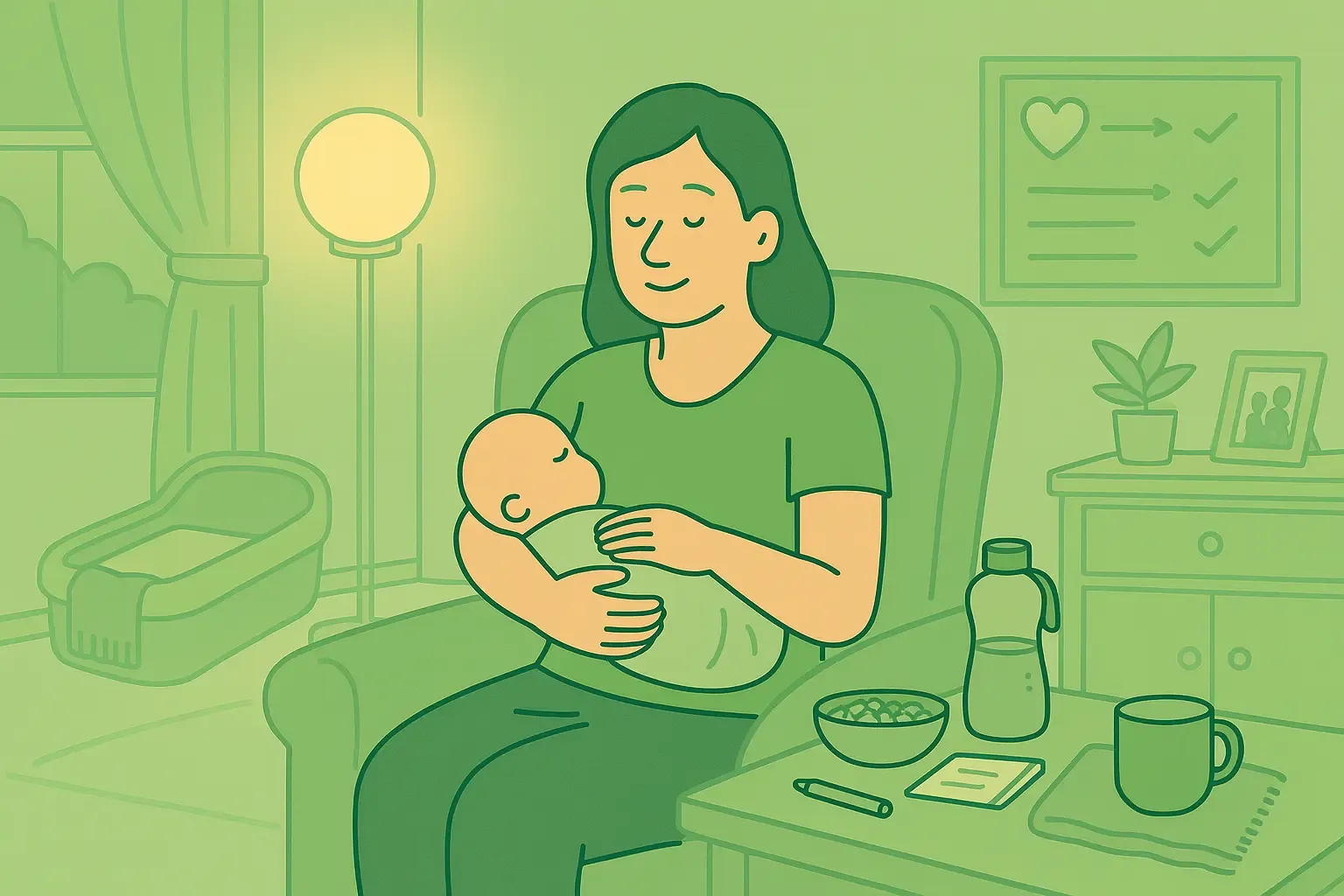
Harsh overhead lights spike cortisol at 3 a.m., making it harder to settle back into sleep after feeding. Place dimmable lamps or soft nightlights along the path from bed to nursing station. Motion-activated nightlights in hallways eliminate fumbling for switches while holding your baby.
The goal is enough light to function safely without fully waking your nervous system. Warm-toned bulbs around 2700K create less alertness than blue-white LED lights. Some mothers find red-spectrum bulbs particularly effective for maintaining drowsiness during feeds.
Ergonomic Nursing Station Setup
Whether breastfeeding or bottle-feeding, you’ll spend hours in one spot during those early weeks. Set up your main feeding area with proper lower back support, a footstool to relieve leg pressure, and side tables within arm’s reach.
Stock this zone with water bottles, snacks, burp cloths, phone charger, and any nipple care products you need. The physical positioning matters more than most expect. Poor posture during feeding contributes to back pain, shoulder tension, and wrist strain that compound the fatigue already present. Position pillows so you’re not hunching forward or twisting to reach essentials.
Recovery Supplies Organized by Room
Scattering postpartum supplies across the house means painful trips to retrieve what you need. Create small caches in bathrooms and bedrooms with peri bottles, pads, pain medication, witch hazel, and whatever else your care team recommended.
Keep a basket near your main feeding station with extra supplies so you’re not caught unprepared during marathon cluster-feeding sessions. The mental load of remembering where things are adds unnecessary stress when you should be conserving energy for healing.
Shared Task Board and Communication System
Postpartum exhaustion makes verbal communication surprisingly difficult. Create a visible system where household tasks, baby needs, and personal needs can be tracked without lengthy explanations. This might be a whiteboard in the kitchen, a shared phone app, or sticky notes on a dedicated wall.
When partners, family, or postpartum doulas ask how they can help, pointing to the board eliminates the mental work of delegating. Include spaces for tracking feedings, diaper changes, and any concerns to discuss with pediatricians or midwives. This external brain reduces the cognitive load when memory feels unreliable.
Endnote
The common thread through all these adjustments is removing friction from your daily movements. Every small obstacle eliminated, every awkward reach prevented, and every decision simplified allows your body and mind to direct energy toward recovery instead of navigation. The postpartum period doesn’t last forever, but how well you heal during these weeks can affect your physical and mental health for years. A home environment that actively supports calm instead of demanding workarounds makes that healing possible.