Signs Perimenopause Is Ending: What to Expect Next
<p>Perimenopause is ending when periods have stopped for 12 consecutive months, hot flashes and night sweats begin to decline, and hormonal fluctuations stabilize. Symptoms like mood swings and sleep…
- Published
- Written by
- Women In Balance Team
- Reading time
- 8 minutes
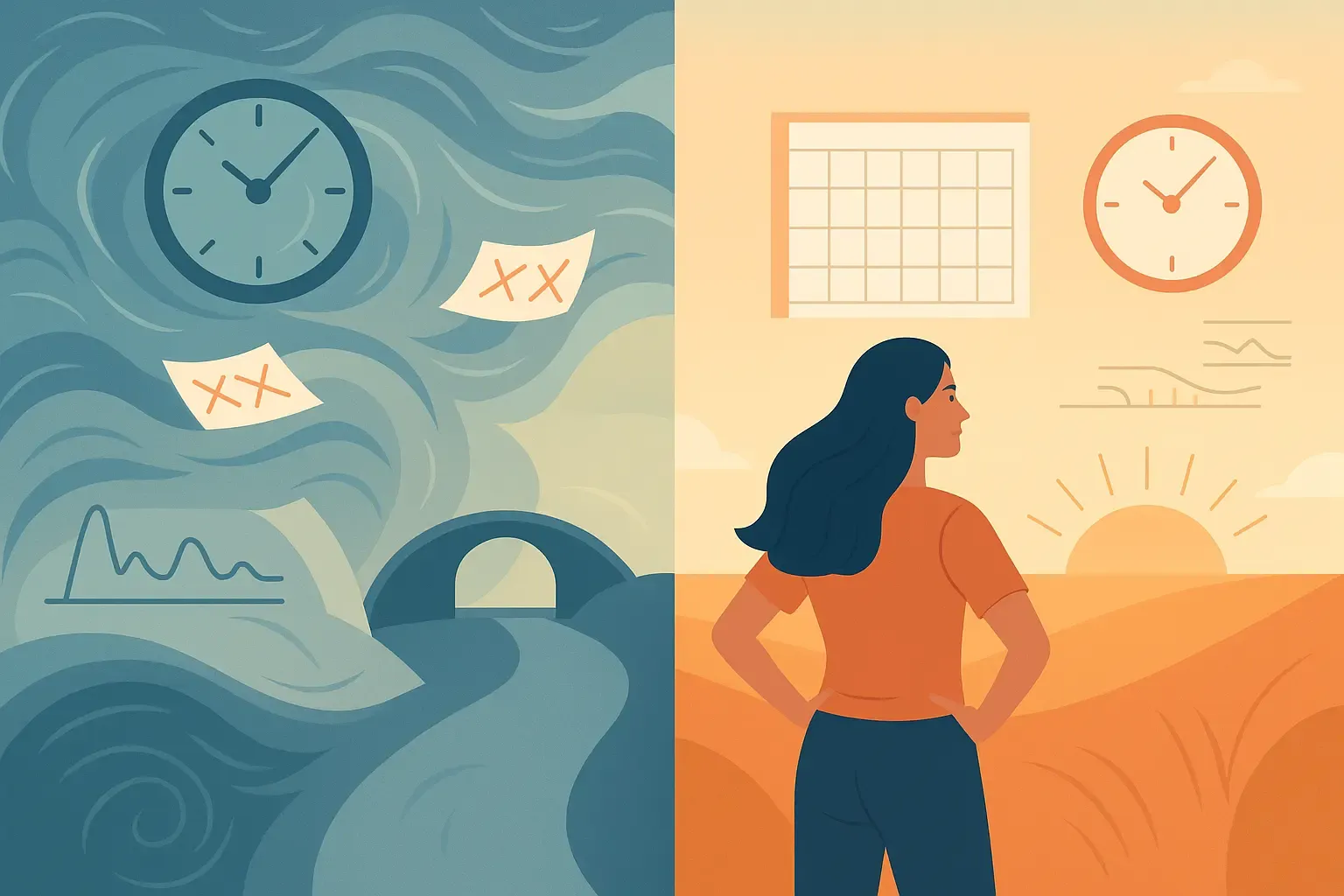
Perimenopause is ending when periods have stopped for 12 consecutive months, hot flashes and night sweats begin to decline, and hormonal fluctuations stabilize. Symptoms like mood swings and sleep disturbances may lessen, signaling entry into menopause—the next phase, which marks the end of reproductive years.
Key Takeaways
- Longer gaps between periods (60+ days apart) are the most reliable sign that perimenopause is ending
- One full year without a period officially marks the transition to menopause
- Hormone levels begin to stabilize as you approach menopause, potentially reducing symptom intensity
The transition from perimenopause to menopause can feel like navigating uncharted waters. If you’ve been experiencing irregular periods, hot flashes, and mood swings for months or years, you’re likely wondering when this phase will end. Understanding the signs perimenopause is ending can help you prepare for what comes next and feel more confident about this natural life transition.
Perimenopause, which literally means “around menopause,” is the transitional period before menopause when hormone levels begin to decline. This phase typically begins in your mid-40s, though it can start earlier or later depending on genetics, lifestyle factors, and overall health. Unlike menopause, which is defined as one specific point in time (12 months after your last period), perimenopause is an extended process that can last anywhere from a few months to over a decade.
How Long Does Perimenopause Last?
Perimenopause typically lasts about 4 to 8 years, though this varies significantly between individuals. Recent research shows that some women may experience symptoms for up to 10 years, while others transition through this phase in just a few months.
During perimenopause, your ovaries gradually produce less estrogen and progesterone. By our late 30s, we don’t produce as much progesterone, and by our 40s, cycle length and menstrual flow may vary with periods becoming irregular. These hormonal fluctuations are responsible for the wide array of symptoms many women experience during this time.
The duration of your perimenopause depends on several factors including your genetics, lifestyle choices, overall health status, and whether you’ve had certain medical treatments. A study published in JAMA Internal Medicine found that the median duration of vasomotor symptoms like hot flashes and night sweats was 7.4 years, with symptoms persisting for a median of 4.5 years after the final menstrual period.
Common Signs Perimenopause Is Ending
Recognizing when perimenopause is ending can help you mentally and physically prepare for menopause. While every woman’s experience is unique, several key indicators suggest you’re approaching the final stage of this transition.
Longer gaps between periods
The only reliablesign that perimenopause is ending is infrequent periods. Doctors consider a person to be nearing the end of perimenopause when their periods are more than 60 days apart. This late perimenopause stage, characterized by increasingly sporadic menstrual cycles, typically lasts 1-3 years.
Unlike early perimenopause, where you might notice your cycle varying by a week or so, late perimenopause brings dramatic changes. You might go two, three, or even four months without a period, then suddenly have one again. In later perimenopause, the menstrual cycle becomes highly irregular, with many people experiencing periods up to 60 days apart or more.
Decrease in hot flashes and night sweats
As counterintuitive as it may seem, many women notice their hot flashes and night sweats beginning to decrease as they approach menopause. This happens because hormone levels, while lower than in your reproductive years, start to stabilize rather than fluctuating wildly.
Hot flashes are the most commonly reported symptom of perimenopause, affecting up to 80% of women during this transition. However, as estrogen levels reach consistently low levels rather than spiking and dropping unpredictably, many women find these vasomotor symptoms become less frequent or intense.
Mood swings become less intense
The emotional roller coaster of perimenopause often begins to level out as you approach menopause. During perimenopause, fluctuating hormone levels can cause significant mood changes, anxiety, and depression-like symptoms. Estrogen receptors are found in areas of the brain that regulate mood and cognition, which explains why hormonal changes can so dramatically affect how you feel.
As hormone levels stabilize at lower levels, many women report feeling more emotionally stable. While you may still experience some mood-related symptoms, the extreme ups and downs characteristic of perimenopause often diminish.
Vaginal dryness or discomfort may persist
Unlike some other perimenopause symptoms that may improve, vaginal dryness and discomfort often persist or even worsen as you approach menopause. Because estrogen plays a vital role in sexual function, its decline as you near menopause can significantly affect your sexual life.
Lower estrogen levels cause the vaginal tissues to become thinner, less elastic, and produce less natural lubrication. This can lead to discomfort during intercourse and increased susceptibility to infections. Understanding that this symptom may continue is important for planning appropriate management strategies.
Lab tests show low estrogen and FSH levels
Medical testing can provide objective evidence that perimenopause is ending. An elevated FSH (>30 mIU/mL) indicates menopause, combined with consistently low estrogen levels. However, it’s important to understand that FSH levels fluctuate during menopause, so a high result one day could be lower the next.
Healthcare providers may order follicle-stimulating hormone (FSH) tests, which check for elevated FSH levels, and estradiol tests, which check for reduced estrogen levels. These tests are most useful when symptoms suggest menopause and when combined with clinical assessment.
One full year without a period
When you have no menstrual cycle for 12 months in a row, you have officially reached menopause. This is the definitive marker that perimenopause has ended. The end of perimenopause is defined as 12 consecutive months without a period, marking the official onset of menopause.
It’s important to note that even light spotting resets this 12-month clock. Some women experience “spotting” rather than full periods, which can be a sign that the body is preparing for the complete end of menstruation.
What Comes After Perimenopause?
Once you’ve gone 12 months without a period, you’ve officially entered menopause. This single day marks the end of your reproductive years, though you’ll continue to live in what’s called the postmenopausal phase for the rest of your life.
Postmenopause is divided into early postmenopause (the first few years after menopause) and late postmenopause. After menopause, a woman cannot become pregnant, except in rare cases when specialized fertility treatments are used.
During postmenopause, you can expect several changes:
Symptom changes: Many symptoms of the menopause transition ease after menopause for many women, but some—like vaginal dryness and bone loss—may persist. Hot flashes may continue for several years after menopause, though they typically become less frequent and intense over time.
Health considerations: Women’s advantage over men in terms of cardiovascular disease gradually disappears with the significant decline in oestrogen levels after menopause. The risk of osteoporosis and heart disease increases as you transition through menopause and into postmenopause.
Physical changes: Body composition and cardiovascular risk can also be affected. Menopause can result in the weakening of pelvic support structures, increasing the risk of pelvic organ prolapse.
When to Talk to a Doctor
While perimenopause is a natural process, certain situations warrant medical attention. Consider consulting your healthcare provider if you experience:
- Heavy bleeding that soaks through a pad or tampon every hour for several hours
- Bleeding that lasts longer than seven days
- Bleeding between periods or after intercourse
- Periods that occur more frequently than every 21 days
- Severe symptoms that interfere with your daily life
- Signs of depression or anxiety that feel overwhelming
A diagnosis of menopause is made on the basis of new onset vasomotor symptoms and a change in the pattern of menstrual bleeding. Your doctor will likely focus on your symptoms rather than relying solely on blood tests, as hormone levels can fluctuate on a daily basis.
If you’re under 40 and experiencing symptoms of perimenopause, it’s particularly important to see a healthcare provider. Women under 40 with symptoms or menstrual changes could indicate premature ovarian insufficiency, which requires medical evaluation and management.
Regular checkups during this life stage are essential for monitoring your overall health and discussing symptom management options. There are a variety of non-hormonal and hormonal interventions that can help alleviate perimenopausal symptoms.
Taking Control of Your Health Journey
Understanding the signs perimenopause is ending empowers you to take control of your health journey. While the 12-month mark without periods is the definitive sign that you’ve reached menopause, the other indicators we’ve discussed can help you prepare mentally and physically for this transition.
Remember that every woman’s experience is unique. Some may sail through late perimenopause with minimal symptoms, while others may find this phase challenging. While perimenopause is a natural process, it’s a good idea to see your GP if symptoms are affecting your quality of life.
As you navigate this transition, focus on maintaining a healthy lifestyle, staying informed about your options, and seeking support when needed. The end of perimenopause marks not just the end of your reproductive years, but the beginning of a new chapter in your life—one that can be just as vibrant and fulfilling as any other.
Frequently Asked Questions
Can perimenopause symptoms come and go?
Yes, perimenopause symptoms can definitely come and go. The process is not always linear—a person may go a long time without having a period and then get periods closer together for a while. Hormone levels fluctuate significantly during this time, which means symptoms like hot flashes, mood changes, and sleep disturbances can vary in intensity and frequency from month to month.
Can you get pregnant during perimenopause?
Even though your menstrual cycles are unpredictable and your hormone levels are declining, it’s still possible to get pregnant in perimenopause. Despite the overall decline in fertility, pregnancy remains possible until menopause is confirmed. Contraception is recommended to avoid unintended pregnancy until after 12 consecutive months without menstruation.
Is weight gain normal during perimenopause?
Weight gain during perimenopause is very common due to hormonal changes, slower metabolism, and changes in how your body stores fat. Body composition and cardiovascular risk can be affected during the menopausal transition. Many women notice they gain weight around their midsection even if their eating habits haven’t changed. Regular exercise, strength training, and attention to nutrition can help manage weight changes during this time.