Will an Ovulation Test Be Positive If Pregnant?
<p>An ovulation test may show a false positive during early pregnancy because both luteinizing hormone (LH) and human chorionic gonadotropin (hCG) share similar structures. However, ovulation tests…
- Published
- Written by
- Women In Balance Team
- Reading time
- 7 minutes
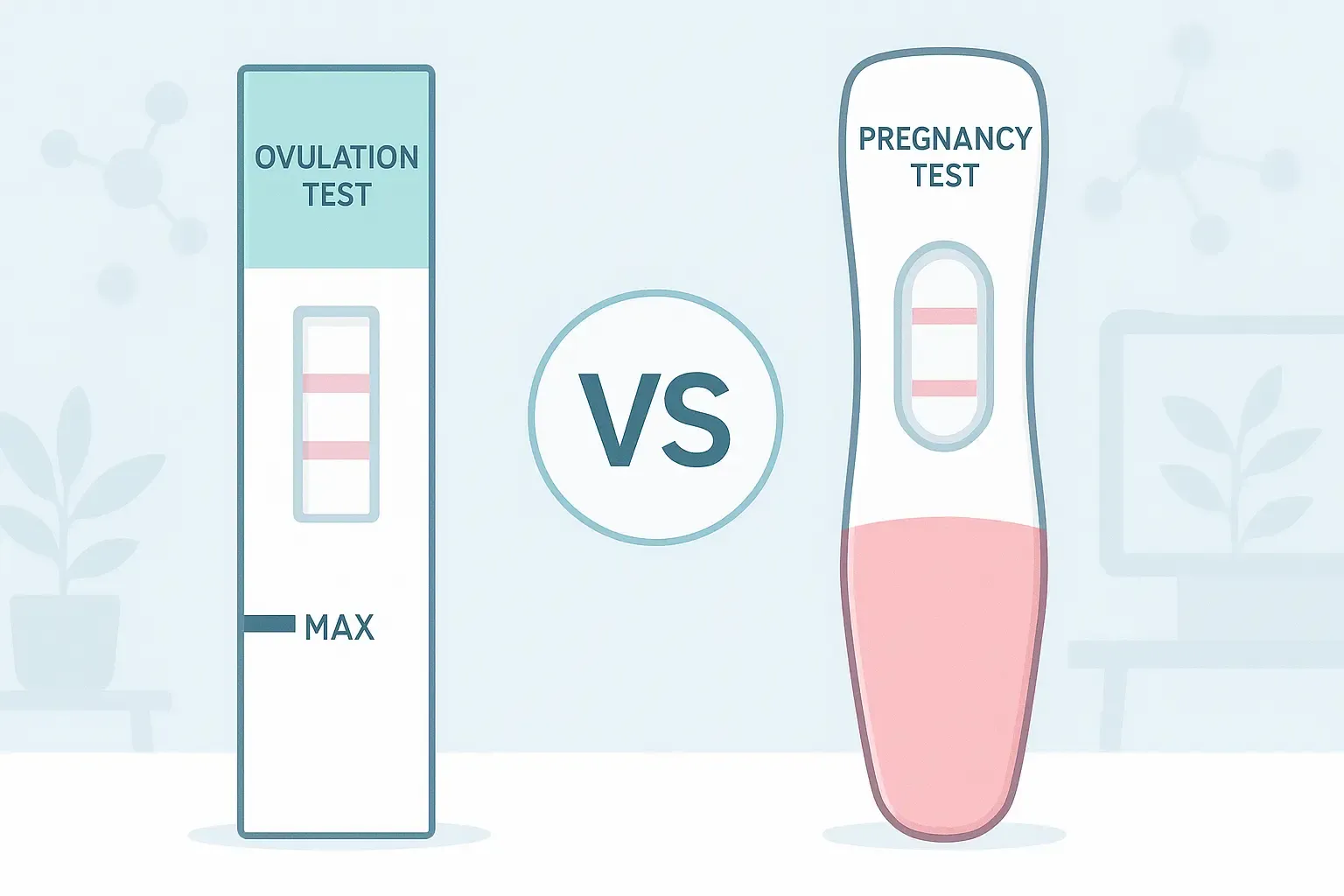
An ovulation test may show a false positive during early pregnancy because both luteinizing hormone (LH) and human chorionic gonadotropin (hCG) share similar structures. However, ovulation tests are not reliable pregnancy detectors. Use a dedicated pregnancy test to confirm pregnancy accurately.
Key Takeaways
- Ovulation tests are not designed to detect pregnancy and should not be used as pregnancy tests
- Cross-reactivity between hormones can occasionally cause misleading results, but this is unreliable
- Dedicated pregnancy tests are specifically designed to detect hCG and provide accurate results
If you’ve been trying to conceive and find yourself wondering, “will ovulation test be positive if pregnant?” you’re not alone. This common question arises from confusion about how different fertility tests work and what hormones they detect.
Many women use ovulation tests to track their fertile window, but when pregnancy might be a possibility, the lines between different types of tests can seem blurred. Understanding the science behind ovulation tests versus pregnancy tests is crucial for getting accurate results and avoiding unnecessary confusion or false hope.
While there are rare instances where ovulation tests might show positive results during pregnancy, relying on them for pregnancy detection is neither accurate nor recommended. Let’s explore why this happens and what you should do instead.
How Ovulation Tests Work
Ovulation tests, also known as ovulation predictor kits (OPKs), are designed to detect the luteinizing hormone (LH) surge that occurs 12-36 hours before ovulation. This hormone spike triggers the release of a mature egg from the ovaries, marking your most fertile time of the month.
Here’s how the process works:
The LH Surge Timeline: LH levels remain relatively low throughout most of your cycle, but about 24-48 hours before ovulation, they spike dramatically. This surge triggers ovulation within 12-36 hours, after which LH levels drop back to baseline.
When to Use Ovulation Tests: You should start testing several days before your expected ovulation and test daily around the same time, preferably in the afternoon. Continue testing until you detect the LH surge, which indicates that peak fertility is approaching.
The test works by comparing the test line to a control line. When the test line is as dark as or darker than the control line, it indicates an LH surge and predicts ovulation is imminent.
Can an Ovulation Test Be Positive If You’re Pregnant?
The short answer is: occasionally, yes – but this doesn’t make it a reliable pregnancy test. Here’s why this cross-reactivity can occur:
Hormonal Similarities: Both LH (luteinizing hormone) and hCG (human chorionic gonadotropin) share similar molecular structures. They belong to the same family of glycoprotein hormones and have identical alpha subunits, which can sometimes cause cross-reactivity in ovulation tests.
When This Might Happen:
- Early pregnancy: When hCG levels are rising rapidly
- Higher hCG concentrations: Later in pregnancy when hCG levels are very elevated
- Test sensitivity: Some ovulation tests may be more prone to cross-reactivity than others
Why This Occurs: The antibodies in ovulation tests are designed to bind specifically to LH, but the structural similarity between LH and hCG can occasionally cause the test to react to pregnancy hormones instead.
Important Reality Check: Even when cross-reactivity occurs, the results are inconsistent and unreliable. You might get a positive ovulation test one day and a negative the next, even if you’re pregnant. This inconsistency makes ovulation tests completely unsuitable for pregnancy detection.
Differences Between Ovulation and Pregnancy Tests
Understanding the key differences between these tests will help you choose the right one for your needs:
Hormones Detected: Ovulation tests detect LH (luteinizing hormone), while pregnancy tests detect hCG (human chorionic gonadotropin). These are completely different hormones with distinct purposes in your reproductive cycle.
Timing of Use: Ovulation tests are used mid-cycle to predict ovulation, whereas pregnancy tests are used after a missed period or 10-14 days post-ovulation. The timing reflects the different hormonal patterns each test is designed to detect.
Purpose and Hormone Patterns: Ovulation tests identify your fertile window for conception timing by detecting LH, which spikes dramatically for 24-48 hours then drops. Pregnancy tests confirm whether conception has occurred by detecting hCG, which starts low and doubles approximately every 48-72 hours in early pregnancy.
Test Design and Sensitivity: Ovulation tests are calibrated to detect LH surge levels (typically 25-40 mIU/ml), while pregnancy tests are designed to detect much lower hCG levels (as low as 10-25 mIU/ml). This difference in sensitivity makes each test optimized for its specific purpose.
Result Interpretation: A positive ovulation test indicates ovulation is approaching within 12-36 hours, while a positive pregnancy test indicates pregnancy hormone is present in your system.
Why You Shouldn’t Use Ovulation Tests as Pregnancy Tests
Using ovulation tests to detect pregnancy is problematic for several important reasons:
Lack of Reliability: The cross-reactivity between LH and hCG is inconsistent and unpredictable. You might get false negatives even when pregnant, leading to incorrect conclusions about your pregnancy status.
Emotional Stress: Misinterpreting ovulation test results can create unnecessary emotional rollercoasters. Getting your hopes up based on unreliable results, or worrying unnecessarily about negative results, adds stress during an already emotionally charged time.
Different Sensitivity Levels: Ovulation tests aren’t calibrated to detect the lower levels of hCG present in early pregnancy. They’re designed for the much higher LH surge levels, making them poorly suited for pregnancy detection.
Missed Early Detection: Pregnancy tests can detect pregnancy earlier and more accurately than ovulation tests. Using the wrong test might cause you to miss the optimal window for early prenatal care.
Medical Decision Making: Inaccurate results can affect important decisions about lifestyle changes, medication use, and seeking medical care. These decisions should be based on reliable test results, not uncertain cross-reactivity.
Cost and Convenience: Pregnancy tests are widely available, affordable, and specifically designed for their purpose. There’s no practical reason to use a less reliable alternative when proper tests are easily accessible.
What to Do if You Think You’re Pregnant
If you suspect you might be pregnant, here’s the best approach:
Take a Dedicated Pregnancy Test:
- Use a pregnancy test designed to detect hCG
- Test with first morning urine for highest hormone concentration
- Wait until after your missed period for most accurate results
- Consider early detection tests if you want to test sooner (10-12 days post-ovulation)
Choose Quality Tests:
- Look for tests with sensitivity levels of 10-25 mIU/ml for early detection
- Digital tests can be easier to read and interpret
- Follow package instructions carefully for timing and reading results
Schedule Medical Confirmation:
- Contact your healthcare provider for a blood test confirmation
- Blood tests can detect pregnancy earlier and more accurately than home tests
- Discuss prenatal care options and next steps
Track Your Symptoms:
- Note any early pregnancy symptoms (nausea, breast tenderness, fatigue)
- Keep track of your menstrual cycle and ovulation timing
- Document any unusual bleeding or cramping
Consider Timing:
- Home pregnancy tests are most accurate when used after a missed period
- If testing early, be prepared for the possibility of false negatives
- Repeat testing in a few days if results are negative but pregnancy is still suspected
Prepare for Next Steps:
- Research prenatal vitamins and begin taking folic acid if not already
- Consider lifestyle modifications (alcohol, caffeine, medications)
- Start thinking about healthcare provider preferences and insurance coverage
Conclusion
While an ovulation test can occasionally be positive if pregnant due to hormonal cross-reactivity, this should never be relied upon for pregnancy detection. The science is clear: ovulation tests are designed to detect LH surges for fertility tracking, not hCG for pregnancy confirmation.
The bottom line: If you think you might be pregnant, use a proper pregnancy test designed specifically for that purpose. These tests are more accurate, reliable, and appropriate for detecting pregnancy hormones.
Don’t let confusion about different test types delay important decisions about your health and potential pregnancy. When in doubt, consult with your healthcare provider who can provide definitive testing and guidance tailored to your specific situation.
Take action today: If pregnancy is a possibility, pick up a dedicated pregnancy test rather than trying to interpret ovulation test results. Your peace of mind and health decisions deserve the accuracy that only proper testing can provide.
Frequently Asked Questions
Can ovulation tests detect early pregnancy?
Ovulation tests are not designed to detect pregnancy and should not be used for this purpose. While rare cross-reactivity with pregnancy hormones can occur, results are unreliable and inconsistent.
Are digital ovulation tests more accurate?
Digital ovulation tests offer clearer result interpretation but aren’t necessarily more accurate at detecting LH surges. They simply display “yes/no” or smiley faces instead of requiring line comparison, reducing interpretation errors.
How soon after a missed period should I use a pregnancy test?
Most pregnancy tests are accurate on the first day of your missed period. For earliest detection, some sensitive tests can detect pregnancy 6-12 days after ovulation, but accuracy increases significantly after a missed period.