8 Types of Abnormal Menstruation and What They Mean
<p>Abnormal menstruation includes eight distinct types: heavy bleeding (menorrhagia), missed periods (amenorrhea), infrequent periods (oligomenorrhea), frequent periods (polymenorrhea), painful…
- Published
- Written by
- Women In Balance Team
- Reading time
- 9 minutes
Abnormal menstruation includes eight distinct types: heavy bleeding (menorrhagia), missed periods (amenorrhea), infrequent periods (oligomenorrhea), frequent periods (polymenorrhea), painful periods (dysmenorrhea), excessive bleeding (hypermenorrhea), spotting between periods (metrorrhagia), and light bleeding (hypomenorrhea). Each type has specific characteristics that can indicate underlying health conditions requiring medical attention.
Key Takeaways
- Nearly 97% of young women experience some form of menstrual disorder, though only 4% recognize it as abnormal
- Heavy menstrual bleeding affects 30-54% of women, making it one of the most common abnormal menstruation types
- Dysmenorrhea (painful periods) impacts 84% of women, with 25% experiencing severe symptoms requiring medication and time off
- Understanding the 8 types of abnormal menstruation helps identify when to seek medical care and prevent complications
A normal menstrual cycle typically occurs every 24-38 days, lasting 2-7 days with moderate flow that doesn’t significantly interfere with daily activities. However, abnormal uterine bleeding has an annual prevalence rate of 53 per 1000 women, making menstrual irregularities remarkably common.
Abnormal menstruation encompasses any deviation from your typical menstrual pattern—whether in timing, flow intensity, duration, or associated symptoms. These changes can signal underlying health conditions, hormonal imbalances, or lifestyle factors that need attention.
“Dysmenorrhea represents a substantial public health burden,” notes research from multiple countries showing prevalence rates ranging from 34% to 94% in different populations. Studies show that 7.7% to 57.8% of adolescents miss school due to dysmenorrhea, highlighting the real-world impact of dismissing menstrual problems as simply “normal.”
These abnormalities are crucial to recognize because untreated menstrual disorders can lead to complications like anemia, fertility issues, and significantly impact your quality of life. Studies indicate that 32-40% of people with severe menstrual pain miss work or school, highlighting the real-world consequences of dismissing menstrual problems as “normal.”
This comprehensive guide covers the 8 types of abnormal menstruation, their warning signs, potential causes, and when professional medical evaluation becomes essential for your reproductive health and overall well-being.
8 Types of Abnormal Menstruation
Menstrual abnormalities manifest differently across individuals, varying in frequency, severity, and health impact. Each type has distinct characteristics that can help you identify patterns and determine when professional intervention is needed. Understanding these variations empowers you to advocate for your reproductive health effectively.
1. Heavy Menstrual Bleeding (Menorrhagia)
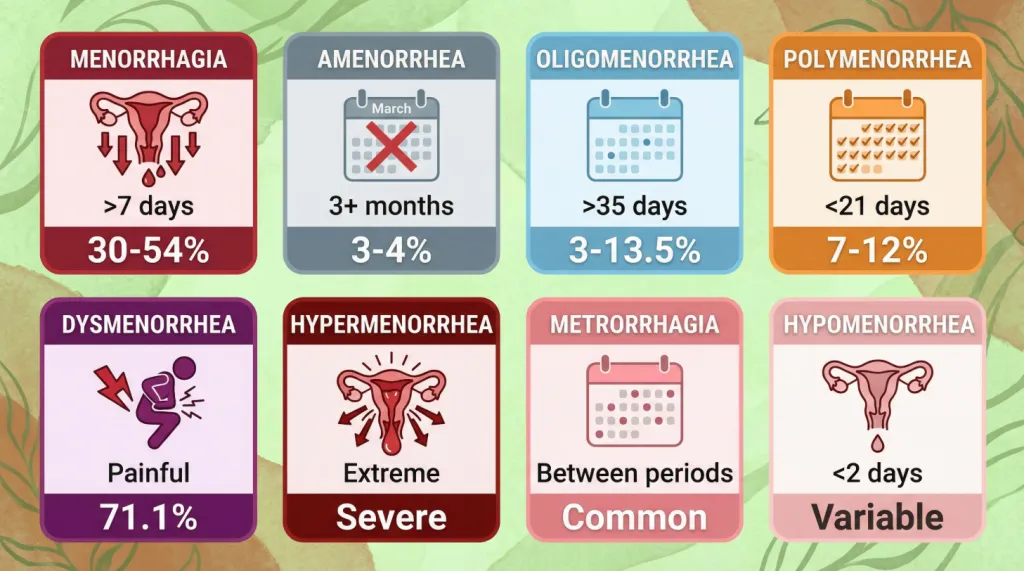
Heavy menstrual bleeding affects a significant portion of menstruating individuals, with studies showing prevalence rates of 36-54% among different populations. This condition is characterized by:
- Soaking through a pad or tampon every hour for several consecutive hours
- Periods lasting longer than 7 days
- Passing blood clots larger than a quarter
- Bleeding so heavy it requires using two pads simultaneously
- Blood loss exceeding 80ml per cycle (normal is around 30ml)
Common causes include hormonal imbalances (especially estrogen dominance), uterine fibroids, polyps, adenomyosis, bleeding disorders like von Willebrand disease, and certain medications including blood thinners.
Health consequences can be serious if left untreated. Bleeding disorders occur in 30% of women with heavy menstrual bleeding overall, with rates reaching 39% in adolescents, making proper medical evaluation critical for this age group. The constant blood loss can lead to iron deficiency, chronic fatigue, and reduced quality of life.
Professional assessment becomes critical when heavy bleeding interferes with daily activities, causes dizziness or weakness, or requires frequent product changes that disrupt sleep or work schedules.
2. Missed Periods (Amenorrhea)
Amenorrhea is the absence of menstruation and comes in two distinct forms, each with different implications for health.
- Primary amenorrhea: No periods by age 15 despite normal secondary sexual characteristics
- Secondary amenorrhea: Absence of periods for 3+ consecutive months in someone who previously menstruated regularly
Research indicates that 9.2% of young women experience amenorrhea, making it relatively common among menstrual disorders.
Potential causes are diverse and include pregnancy (most common in reproductive years), polycystic ovary syndrome (PCOS), thyroid disorders, extreme stress, eating disorders, excessive exercise, significant weight changes, pituitary disorders, and certain medications.
Long-term effects of untreated amenorrhea can include bone density loss (due to low estrogen), increased cardiovascular risk, and fertility challenges. The underlying hormonal imbalances may also affect mood, energy levels, and overall health.
3. Infrequent Periods (Oligomenorrhea)
Oligomenorrhea refers to menstrual cycles occurring more than 35 days apart but less than 6 months apart. Studies show this affects approximately 3.3% of young women, though rates may be higher in certain populations.
This pattern differs from amenorrhea because periods do occur, but they’re irregularly spaced with longer intervals between cycles.
Primary causes include hormonal fluctuations during puberty and perimenopause, PCOS (affecting up to 10% of reproductive-age women), thyroid disorders, stress-related hormonal disruption, and significant weight changes affecting hormone production.
Fertility implications can be significant since infrequent ovulation makes conception timing unpredictable. Over time, this can also affect hormonal balance and may indicate underlying endocrine issues requiring medical evaluation.
4. Frequent Periods (Polymenorrhea)
Polymenorrhea involves menstrual cycles occurring less than 21 days apart. Research indicates this affects about 7.3% of women, making it less common than other menstrual irregularities.
Underlying causes often include ovulation disorders, pelvic inflammatory disease (PID), thyroid dysfunction (both hyper and hypothyroidism), uterine abnormalities like fibroids or polyps, and hormonal contraceptive side effects.
Health concerns arise because frequent bleeding can lead to iron deficiency anemia and significantly disrupt daily life. The shortened cycles may also indicate anovulation (lack of ovulation), which can affect fertility and long-term hormonal health.
5. Painful Periods (Dysmenorrhea)
Dysmenorrhea affects 71.1% of young women, making it one of the most common menstrual disorders. While mild cramping is normal, severe pain that interferes with daily life requires medical attention. 20.1% of students report missing school or university due to dysmenorrhea, and 40.9% report classroom performance or concentration being negatively affected.
Primary dysmenorrhea occurs without underlying pelvic pathology and typically begins 1-2 years after menarche. Secondary dysmenorrhea results from conditions like endometriosis, fibroids, or pelvic inflammatory disease.
Associated symptoms extend beyond cramping to include nausea, vomiting, diarrhea, headaches, lower back pain, and fatigue. Research shows severe dysmenorrhea is significantly more frequent among adolescents with depression, anxiety, self-injury, and suicide ideation.
When to seek help: Severe pain unrelieved by over-the-counter medications, pain that worsens over time, or symptoms that significantly impact daily functioning warrant medical evaluation to rule out underlying conditions.
6. Excessive Menstrual Bleeding (Hypermenorrhea)
Hypermenorrhea specifically refers to abnormally heavy and prolonged menstrual bleeding that goes beyond typical heavy periods. This condition often overlaps with menorrhagia but emphasizes the excessive nature of both flow and duration.
Distinguishing features include bleeding lasting more than 8-10 days, requiring industrial-strength menstrual products, flooding or gushing sensations, and bleeding so heavy it prevents normal activities for extended periods.
Potential causes mirror those of menorrhagia but often involve more severe underlying conditions such as large uterine fibroids, adenomyosis, bleeding disorders, liver disease affecting clotting factors, or hormonal disorders causing extreme estrogen dominance.
Medical urgency increases with hypermenorrhea because the risk of severe anemia and hemodynamic instability is higher. Emergency care may be needed if bleeding causes dizziness, fainting, or signs of severe blood loss.
7. Spotting Between Periods (Metrorrhagia)
Metrorrhagia involves unexpected bleeding between regular menstrual periods. This can range from light spotting to heavier breakthrough bleeding.
Common causes include hormonal fluctuations (especially during ovulation), birth control side effects (particularly in the first 3 months of use), cervical or vaginal infections, uterine polyps or fibroids, pregnancy complications, and certain medications.
When to be concerned: While occasional spotting can be normal, persistent intermenstrual bleeding, spotting after intercourse, or bleeding accompanied by pain, fever, or unusual discharge requires medical evaluation to rule out infections, pregnancy complications, or structural abnormalities.
8. Light Bleeding (Hypomenorrhea)
Hypomenorrhea involves unusually light or short menstrual periods, typically lasting less than 2 days or requiring minimal menstrual products.
Potential causes include hormonal contraceptive use (especially long-acting methods), thyroid disorders, polycystic ovary syndrome, perimenopause, significant weight loss, eating disorders, excessive stress, and uterine scarring (Asherman’s syndrome).
Health implications vary depending on the underlying cause. While often not dangerous, sudden changes to very light periods may indicate hormonal imbalances, ovulation issues affecting fertility, or underlying health conditions requiring evaluation.
When Should You See a Doctor?
Recognizing when menstrual changes require professional medical attention can prevent complications and ensure timely treatment of underlying conditions.
Immediate Medical Attention Needed:
- Bleeding through two or more pads/tampons per hour for 2+ consecutive hours
- Periods lasting longer than 10 days
- Severe pain unrelieved by over-the-counter medications
- Bleeding between periods with pain or fever
- Dizziness, fainting, or signs of anemia (extreme fatigue, pale skin)
- Sudden complete absence of periods (if not pregnant)
Schedule Medical Consultation For:
- Pattern changes: Any significant deviation from your normal cycle lasting 2+ months
- Pain escalation: Menstrual pain that worsens over time or interferes with daily activities
- Quality of life impact: When menstrual symptoms consistently affect work, school, or relationships
- Fertility concerns: Irregular cycles when trying to conceive
The American College of Obstetricians and Gynecologists emphasizes that healthcare providers should treat the menstrual cycle as a vital sign, highlighting the importance of regular monitoring and professional evaluation of concerning changes.
Don’t delay care if symptoms worsen or new symptoms develop. Early intervention can prevent complications like severe anemia, identify treatable underlying conditions, and significantly improve quality of life.
Lifestyle Habits for Good Menstrual Health
Adopting evidence-based lifestyle practices can help regulate menstrual cycles, reduce symptoms, and support overall reproductive health.
Nutritional Support: Eat iron-rich foods to prevent anemia, include vitamin B6 and magnesium for cramps, omega-3s for inflammation, and calcium for bone health. Stay hydrated and limit processed foods.
I
Regular Physical Activity: Exercise 150 minutes weekly through walking, swimming, or cycling. Add strength training twice weekly. Balance is key—excessive exercise (>10 hours weekly) can disrupt cycles.
Stress Management: Practice daily meditation, maintain 7-9 hours of sleep, and create consistent sleep schedules. Chronic stress disrupts hormonal balance leading to irregular cycles and missed periods.
Healthy Lifestyle Choices: Limit alcohol and caffeine, as these can exacerbate hormonal imbalances and increase menstrual symptoms. Avoid smoking, which has been linked to increased dysmenorrhea risk and earlier menopause.
Cycle Tracking: Track your periods for 3-6 cycles using our Period Calculator and Ovulation Calculator. Record flow, pain levels, and symptoms to help healthcare providers diagnose issues.
While healthy habits support menstrual health, they cannot cure endometriosis, PCOS, fibroids, bleeding disorders, or thyroid disease. Medical evaluation is necessary if symptoms don’t improve within 3-6 months.
Conclusion
Understanding the 8 types of abnormal menstruation—heavy bleeding, missed periods, infrequent periods, frequent periods, painful periods, excessive bleeding, spotting between periods, and light bleeding—empowers you to recognize when changes in your menstrual cycle warrant attention.
With nearly 98% of women experiencing some form of menstrual disorder, these conditions are far more common than most people realize. The key lies in distinguishing between normal variations and patterns that indicate underlying health issues requiring professional care.
Remember: Your menstrual cycle serves as a window into your overall health. Persistent changes, severe symptoms, or anything that significantly impacts your quality of life deserves medical evaluation. Early intervention can prevent complications, improve symptoms, and ensure your reproductive health remains optimal throughout your life.
Don’t dismiss menstrual problems as something you simply have to endure. With proper medical care, lifestyle modifications, and appropriate treatment, most menstrual disorders can be effectively managed, allowing you to maintain an active, healthy lifestyle regardless of your cycle.
Frequently Asked Questions
What type of period blood is not normal?
Blood clots larger than a quarter, extremely bright red bleeding that lasts more than 7 days, or very dark, thick blood with a strong odor may indicate underlying issues requiring medical evaluation.
What happens to your body when you have irregular periods?
Irregular periods can disrupt hormone balance, potentially leading to fertility issues, bone density problems, increased cardiovascular risk, and emotional symptoms like mood swings and fatigue due to hormonal fluctuations.
Are home remedies effective for abnormal menstruation?
While some home remedies like heat therapy, gentle exercise, and dietary changes can help manage symptoms, persistent abnormal menstruation requires professional medical evaluation to identify and treat underlying causes effectively.