Discharge Before Period vs Early Pregnancy: Key Differences
<p>Can’t tell if your discharge signals pregnancy or an approaching period? The main difference is consistency and timing. Pre-period discharge is thick, creamy, and white (like lotion), appears only…
- Published
- Written by
- Women In Balance Team
- Reading time
- 10 minutes
Can’t tell if your discharge signals pregnancy or an approaching period? The main difference is consistency and timing. Pre-period discharge is thick, creamy, and white (like lotion), appears only in the days before your period, and stops when bleeding starts. Early pregnancy discharge is thin, milky, and watery, begins 1-2 weeks after conception, continues beyond your missed period, and increases in volume over time. However, discharge alone cannot confirm pregnancy, only a pregnancy test after your missed period can.
Key Takeaways
- Vaginal discharge changes throughout your menstrual cycle due to hormonal fluctuations, making it easy to confuse premenstrual and early pregnancy discharge
- Key differences include timing, texture, duration, and accompanying symptoms, though discharge alone cannot confirm pregnancy
- A pregnancy test after a missed period is the only reliable way to determine if you’re pregnant
Vaginal discharge is a normal part of the female reproductive cycle, serving important functions like keeping the vagina clean and protecting against infections. However, many women wonder whether changes in their discharge signal an approaching period or possible pregnancy, especially when trying to conceive or experiencing cycle irregularities.
The differences between discharge before period vs early pregnancy can help you better interpret your body’s signals. While discharge patterns offer clues about what’s happening hormonally, it’s important to recognize that discharge characteristics alone cannot definitively confirm pregnancy. This guide provides medically-grounded distinctions to help you recognize patterns while emphasizing that proper pregnancy testing remains essential for certainty.
The Science Behind Discharge Changes
The biology behind discharge changes helps you interpret your body’s signals. Vaginal discharge is primarily cervical mucus produced by specialized cervical cells in response to hormones.
How hormones control discharge
Estrogen dominates the first half of your cycle, peaking before ovulation. It creates thin, watery, stretchy mucus (like egg white) that helps sperm travel through the cervix. Scientific studies have measured these physical properties, showing that cervical mucus water content increases significantly during the ovulatory phase, creating optimal conditions for conception.
Progesterone takes over after ovulation, producing thicker, stickier mucus that forms a protective barrier, preventing bacteria from entering the uterus. Research has shown that cervical mucus undergoes cyclic modifications throughout the menstrual cycle, with progesterone creating a dense molecular structure that makes discharge feel thick and paste-like.
Pre-Period Discharge (Luteal Phase)
Discharge before your period reflects the hormonal pattern of the luteal phase, the second half of your menstrual cycle that follows ovulation. After ovulation, progesterone becomes the dominant hormone and signals the cervix to produce thicker, less permeable mucus that acts as a protective barrier against bacteria entering the uterus. The result is the characteristic premenstrual discharge that many women notice in the days leading up to their period.
This discharge typically appears thick, creamy, and white to off-white in color. The texture is often described as paste-like or lotion-like, noticeably different from the clear, stretchy mucus produced during ovulation. Many women experience this type of discharge alongside other common premenstrual symptoms like bloating, mood swings, breast tenderness, and mild cramping. The discharge usually stops or decreases significantly once menstrual bleeding begins.
If you track your cycles for 2-3 months using our Period Calculator, you’ll establish your personal baseline pattern and can predict when to expect pre-period discharge, making it easier to identify any unusual changes that might signal pregnancy.
Early Pregnancy Discharge
Early pregnancy discharge results from increased progesterone levels that remain elevated after conception occurs. This hormonal shift causes the cervix to produce more mucus, creating what’s medically known as leukorrhea, a thin, milky-white discharge that’s typically odorless.
This discharge usually begins within a week or two after conception and tends to increase gradually as pregnancy progresses. Unlike premenstrual discharge that stops when your period starts, pregnancy-related discharge continues and often becomes more noticeable over time. Women experiencing early pregnancy discharge may also notice other early pregnancy signs such as fatigue, nausea, more pronounced breast sensitivity, and a missed period. Fatigue during early pregnancy is particularly common, with many women reporting unusual tiredness or low energy levels even before they realize they are pregnant.
If you’re trying to conceive, using our Ovulation Calculator helps you identify your fertile window and understand when conception most likely occurred, allowing you to anticipate when pregnancy discharge might begin (typically 1-2 weeks after ovulation) and when early pregnancy symptoms could appear.
Key Differences Between Premenstrual and Pregnancy Discharge
While both types of discharge result from progesterone activity, several distinguishing characteristics can help you differentiate between them. However, it’s crucial to understand that individual variation is significant, and many women find these differences subtle or overlapping in their own experience.
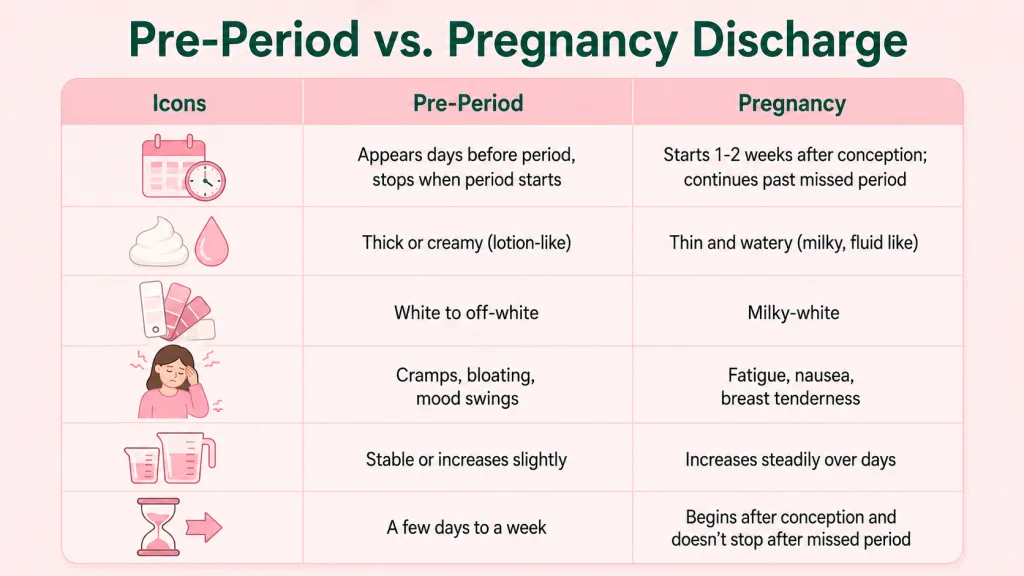
Timing differences
The most reliable distinguishing factor is when the discharge occurs in relation to your menstrual cycle. Premenstrual discharge appears only in the days immediately before your expected period and disappears once menstruation begins. In contrast, pregnancy discharge starts shortly after conception, typically within 1-2 weeks, and continues well past when your period would normally arrive.
If you’re tracking your cycle, pay close attention to whether discharge stops at your expected period date or continues beyond it. Discharge that persists through and after a missed period is more suggestive of pregnancy, though cycle irregularities can also cause delayed periods. Tracking multiple cycles improves your ability to recognize your personal patterns and spot meaningful changes.
Texture and consistency
Hormonal differences between the luteal phase and early pregnancy create noticeable textural variations. Premenstrual discharge tends to be thicker, creamier, and more opaque, similar to hand lotion in consistency. This thickness results from the specific progesterone levels present before menstruation.
Pregnancy discharge is generally thinner and more fluid-like, often described as milky or watery. While both types contain progesterone-influenced mucus, the sustained higher progesterone levels in pregnancy create a more liquid consistency. Pregnancy discharge also remains relatively consistent in texture, whereas premenstrual discharge may become thinner or disappear as your period approaches.
Any unusually thick, cottage cheese-like texture or discharge with chunks may indicate a yeast infection rather than normal hormonal changes and should be evaluated by a healthcare provider.
Color variations
Both premenstrual and pregnancy discharge are typically in the white spectrum, but subtle color differences can provide clues. Premenstrual discharge usually appears white to off-white, sometimes with a slightly yellow tint, especially as your period approaches.
Early pregnancy discharge is characteristically milky white and tends to maintain this color consistently. Some women describe it as having a slightly clearer or more translucent quality compared to premenstrual discharge.
It’s important to note that any discharge that appears green, gray, bright yellow, or has a strong fishy or foul odor indicates abnormal discharge, likely from an infection such as bacterial vaginosis or a sexually transmitted infection, not normal hormonal changes. Blood-tinged or pink discharge could signal either implantation bleeding in early pregnancy or the start of menstruation, depending on timing and other symptoms.
Associated symptoms
The symptoms accompanying discharge often provide more clarity than the discharge itself. Premenstrual discharge typically occurs alongside classic PMS symptoms including abdominal cramping, bloating, mood swings, irritability, food cravings, and moderate breast tenderness. These symptoms intensify in the days before your period and resolve once menstruation begins.
Pregnancy discharge comes with a different symptom cluster: persistent fatigue, nausea (especially morning sickness), food aversions or heightened sense of smell, more intense and sustained breast tenderness, and notably, a missed period. While breast tenderness occurs in both scenarios, pregnancy-related tenderness tends to be more pronounced and doesn’t resolve after a few days.
Mood changes appear in both situations but manifest differently, PMS mood swings are typically more acute and irritable, while early pregnancy may bring persistent emotional sensitivity or mood fluctuations. Importantly, considering your full range of physical and emotional changes provides much better insight than focusing on discharge characteristics alone.
Volume and frequency
The amount of discharge and how often you notice it differs between premenstrual and pregnancy scenarios. Premenstrual discharge volume usually remains stable or increases slightly in the days before your period. Most women notice it consistently but not excessively during this phase.
Early pregnancy discharge tends to increase steadily over days and weeks rather than remaining constant. Many women report becoming more aware of discharge as pregnancy progresses, often requiring panty liners where they previously didn’t. This progressive increase occurs because pregnancy hormone levels continue rising rather than dropping off as they would before menstruation. Research shows that the mean days of peak-type mucus production increases significantly during hormonal changes associated with conception.
Sudden, dramatic increases in discharge volume or discharge that seems unusually heavy may warrant medical evaluation, as these changes could indicate infection or other conditions unrelated to normal hormonal fluctuations.
Duration and cycle context
Knowing where you are in your menstrual cycle is critical for accurate interpretation. Premenstrual discharge lasts only a few days to a week before menstruation and disappears completely once your period starts. The cyclical nature means this pattern repeats monthly with reasonable consistency.
Pregnancy discharge begins after conception and doesn’t stop when your period would normally arrive. Instead, it continues throughout the early weeks and months of pregnancy. If you experience consistent discharge that extends well beyond your expected period date, especially accompanied by a missed period and other pregnancy symptoms, this suggests possible pregnancy rather than a delayed menstrual cycle.
Women with irregular cycles may find duration less helpful as a distinguishing factor. In these cases, combining discharge observation with pregnancy testing provides the clearest answer.
When to Take a Pregnancy Test
While understanding discharge patterns is informative, a pregnancy test is the only reliable way to confirm pregnancy. The most accurate results come from testing after you’ve missed your period, typically at least one day after your expected period date. At this point, pregnancy hormone levels (hCG) are high enough for most home tests to detect.
Early detection pregnancy tests claim to show results a few days before your missed period, but accuracy increases significantly when you wait until after the missed period. Testing too early often produces false negatives because hCG levels haven’t risen sufficiently yet.
Discharge characteristics alone should never be used as a sole pregnancy indicator. Even if your discharge seems consistent with pregnancy, confirm with a proper test. If your first test is negative but your period still doesn’t arrive and pregnancy symptoms persist, wait a few days and test again, as hCG levels continue rising in early pregnancy.
Other Causes of Discharge to Consider
Not all discharge changes relate to your menstrual cycle or pregnancy. Several other conditions can alter discharge characteristics and should be considered when evaluating what you’re experiencing.
Vaginal infections like yeast infections or bacterial vaginosis commonly cause discharge changes. Yeast infections typically produce thick, white, cottage cheese-like discharge with itching, while bacterial vaginosis creates thin, grayish discharge with a fishy odor. Sexually transmitted infections may cause abnormal discharge colors, strong odors, and require immediate medical treatment.
Medications and contraceptives can affect discharge patterns. Hormonal birth control, antibiotics, and other medications sometimes alter normal discharge consistency and volume. Stress and lifestyle factors also impact hormonal balance, potentially causing irregular cycles and unusual discharge patterns unrelated to pregnancy.
Distinguishing between normal hormonal discharge and discharge caused by medical conditions is important for your reproductive health.
Key Warning Signs to Keep in Mind
Schedule an appointment with your healthcare provider if you experience any of the following warning signs:
- Discharge with a strong, foul, or fishy odor
- Itching, burning, or significant irritation accompanying the discharge
- Discharge that’s green, gray, or bright yellow in color
- Pain during urination or intercourse along with discharge changes
- Heavy spotting or bleeding outside your normal period timing
- Sudden discharge changes that persist without clear explanation
These symptoms may indicate infections, hormonal imbalances, or other conditions requiring medical evaluation and treatment. Even if you suspect your discharge is normal, trust your instincts, if something feels wrong or different from your usual patterns, it’s worth having a professional assessment.
Conclusion
Distinguishing between discharge before period vs early pregnancy involves comparing timing, texture, color, volume, duration, and accompanying symptoms. While premenstrual discharge is thicker, shorter-lived, and stops when menstruation begins, pregnancy discharge is thinner, persistent, and continues beyond a missed period. However, individual variation makes these differences sometimes subtle or overlapping.
Remember that discharge alone cannot conclusively confirm pregnancy, only a pregnancy test can provide that certainty. Tracking your body’s patterns through consistent cycle tracking helps you recognize meaningful changes and respond appropriately. Whether you’re trying to conceive or simply monitoring your reproductive health, combining careful observation with proper testing ensures you have accurate information.
Take action today: Start tracking your discharge, cycle timing, and symptoms in a journal or app. This baseline helps you identify your normal patterns and spot significant changes. If you suspect pregnancy, take a test after your missed period for the most reliable results, and don’t hesitate to consult your healthcare provider with any concerns.
Frequently Asked Questions
How to differentiate between normal discharge and pregnancy discharge?
Normal daily discharge varies throughout your cycle, while pregnancy discharge is consistently thin, milky-white, and increases over time. Pregnancy discharge also continues beyond your missed period and occurs alongside other pregnancy symptoms like nausea and fatigue.
Is a thick and white discharge a sign of early pregnancy?
Thick white discharge is actually more characteristic of premenstrual discharge rather than pregnancy. Early pregnancy discharge tends to be thinner and more milky or watery in consistency due to elevated progesterone levels.
Can early pregnancy symptoms feel the same as PMS symptoms?
Yes, many early pregnancy symptoms overlap with PMS, including breast tenderness, fatigue, and mood changes. However, pregnancy symptoms typically persist beyond when your period would start, often accompanied by nausea and more intense breast sensitivity.