10 Estrogen Dominance Symptoms: What They Feel Like and What to Do
Key Takeaways If you’re researching estrogen dominance symptoms, you’re likely experiencing some combination of heavy periods, severe PMS, breast tenderness, mood swings, weight changes, or bloating…
- Published
- Written by
- Women In Balance Team
- Reading time
- 7 minutes
Key Takeaways
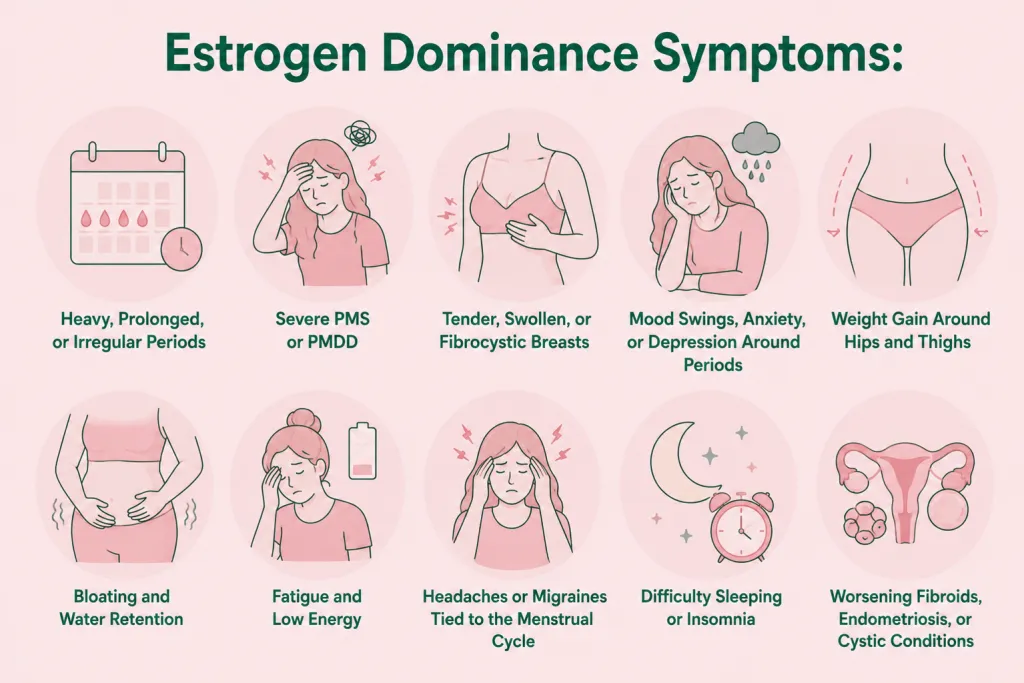
- Estrogen dominance symptoms include heavy or irregular periods, severe PMS, breast tenderness, mood swings, weight gain (especially around hips and thighs), bloating, fatigue, cycle-related headaches, sleep difficulties, and worsening conditions like fibroids or endometriosis.
- Estrogen dominance describes a relative imbalance between estrogen and progesterone — estrogen too high relative to progesterone — not necessarily an absolutely high estrogen level. The concept is widely used in functional medicine but isn’t always how mainstream clinical medicine frames hormonal imbalances.
- Most estrogen dominance symptoms overlap with other hormonal conditions (PCOS, endometriosis, perimenopause, thyroid disorders). The right next step is talking to a healthcare provider for proper hormone testing rather than self-diagnosing.
If you’re researching estrogen dominance symptoms, you’re likely experiencing some combination of heavy periods, severe PMS, breast tenderness, mood swings, weight changes, or bloating that’s started feeling more pronounced than it used to. Here’s the framing worth knowing first: estrogen dominance describes a relative imbalance between estrogen and progesterone — estrogen high relative to progesterone — not necessarily an abnormally high absolute estrogen level.
The concept comes from functional medicine. Mainstream clinical medicine sometimes uses different terminology, but the underlying physiology is real and well-documented in peer-reviewed research. According to a peer-reviewed perimenopause review on PMC, women in perimenopause typically have higher and more erratic estrogen levels alongside lower progesterone, which closely matches what’s described as estrogen dominance. This article walks through the 10 most common signs of estrogen dominance and what to do about them.
10 Estrogen Dominance Symptoms
Each symptom below can have multiple causes, and most are tied to broader hormonal patterns rather than a single condition. Recognizing them is the first step toward an evaluation — not a self-diagnosis.
1. Heavy, Prolonged, or Irregular Periods
Periods that soak through protection every 1 to 2 hours, last longer than 7 days, include large clots, or come at unpredictable intervals are among the most recognizable signs of estrogen dominance.
Mechanism: estrogen builds the uterine lining during the follicular phase. When estrogen is high relative to progesterone, the lining grows excessively, producing heavier and longer periods.
When in cycle: during menstrual flow.
Heavy periods can also signal fibroids, polyps, thyroid disorders, or bleeding disorders — the article on types of abnormal menstruation covers the full medical categories your provider may want to evaluate.
2. Severe PMS or PMDD
PMS intense enough to interfere with daily life — irritability, mood swings, cravings, breast tenderness, bloating — typically intensifying in the 1 to 2 weeks before a period.
Mechanism: in the luteal phase, the estrogen-progesterone ratio drives mood and physical PMS symptoms. When estrogen is relatively high, PMS can be more severe. PMDD (premenstrual dysphoric disorder) is the more severe form and warrants a doctor visit if symptoms significantly disrupt daily life.
When in cycle: 7 to 14 days before period start.
3. Tender, Swollen, or Fibrocystic Breasts
Breast soreness, fullness, or tender lumpy areas, especially in the second half of the cycle.
Mechanism: estrogen stimulates breast tissue growth. Persistent breast tenderness or development of fibrocystic changes can signal high estrogen exposure.
When in cycle: luteal phase, often peaking just before a period.
Safety note: new, persistent, or one-sided breast lumps warrant medical evaluation regardless of suspected cause.
4. Mood Swings, Anxiety, or Depression Around Periods
Emotional volatility, increased anxiety, low mood, irritability, tearfulness — especially in the luteal phase.
Mechanism: estrogen and progesterone both affect neurotransmitter activity (serotonin, GABA). Imbalance can disrupt mood regulation. The article on hormonal imbalance and anxiety covers this connection in depth.
When in cycle: the 1 to 2 weeks before a period, easing once flow starts.
5. Weight Gain (Especially Around Hips and Thighs)
Unexplained weight gain or difficulty losing weight, particularly accumulating around the hips, thighs, and lower abdomen.
Mechanism: estrogen promotes fat storage in the lower body. High estrogen relative to progesterone can drive this pattern. Other contributors include thyroid function, insulin resistance, and cortisol — the article on stress, cortisol, and your hormones covers the cortisol-hormone connection.
6. Bloating and Water Retention
Tight pants in the evening, finger or face puffiness, fluid retention in the lower belly.
Mechanism: estrogen affects sodium and water balance. When estrogen is relatively high, water retention often increases.
When in cycle: most pronounced in the luteal phase, easing after period starts.
7. Fatigue and Low Energy
Feeling tired despite adequate sleep, needing more rest than usual, low motivation that doesn’t lift with caffeine.
Mechanism: estrogen-progesterone imbalance can disrupt sleep quality, blood sugar regulation, and thyroid function — all contributing to fatigue. Other contributors include thyroid disorders and iron deficiency (especially in women with heavy periods).
8. Headaches or Migraines Tied to the Menstrual Cycle
Headaches or migraines that consistently occur in the days before a period or around ovulation.
Mechanism: estrogen affects vascular tone and pain processing. Fluctuating or relatively high estrogen can trigger menstrual migraines.
When in cycle: perimenstrual (just before period) or perimenopausal (during hormonal transitions).
9. Difficulty Sleeping or Insomnia
Trouble falling asleep, frequent waking, or unrefreshing sleep, especially in the luteal phase.
Mechanism: progesterone has a calming, sleep-supportive effect. When estrogen is high relative to progesterone, sleep can suffer. The pattern often worsens 7 to 14 days before a period and is common in perimenopause as progesterone declines. The article on luteal phase changes covers the broader hormonal shifts in this phase.
10. Worsening Fibroids, Endometriosis, or Cystic Conditions
Increasing pelvic pain, heavier bleeding from known fibroids, or worsening endometriosis flares.
Mechanism: fibroids and endometriosis are estrogen-dependent. High estrogen exposure can drive growth and worsen symptoms. These conditions warrant medical management and can affect fertility — the article on signs worth investigating with a healthcare provider covers fertility-relevant patterns in more depth.
What Causes Estrogen Dominance?
Estrogen dominance has several common contributors, often appearing in combination rather than as a single cause:
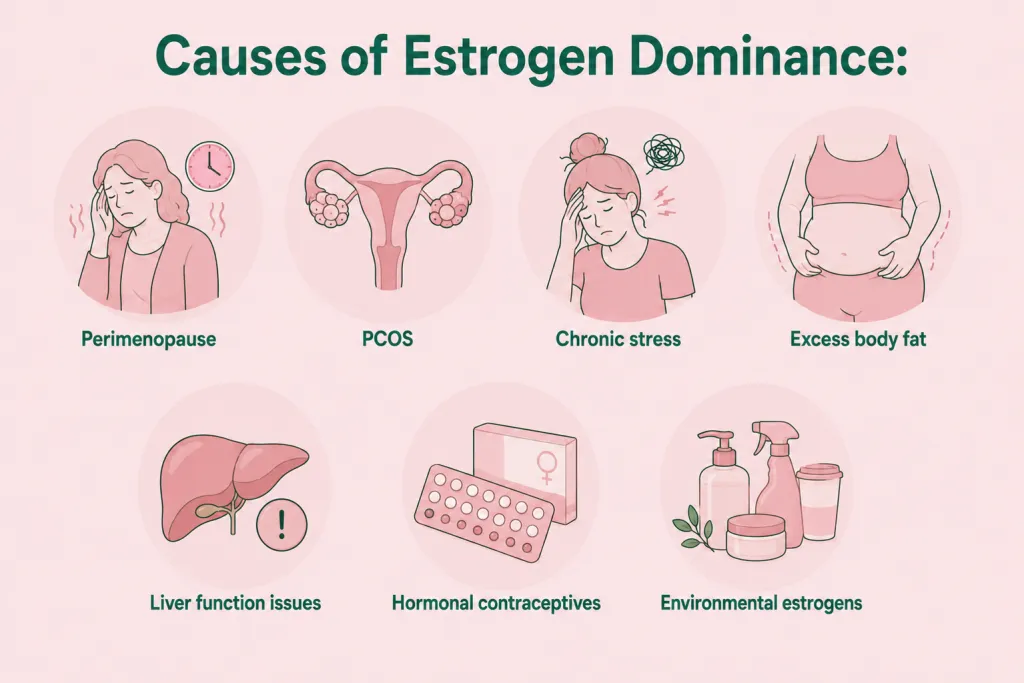
- Perimenopause — progesterone typically drops before estrogen, creating the classic relative imbalance
- PCOS — anovulatory cycles mean no progesterone is produced after ovulation
- Chronic stress — cortisol depletes progesterone precursors
- Excess body fat — adipose tissue produces estrogen
- Liver function issues — the liver clears estrogen from circulation
- Hormonal contraceptives in some women
- Environmental estrogens (xenoestrogens) — from plastics, pesticides, and certain personal care products
Identifying the underlying cause requires medical evaluation. The mix of contributors is rarely the same from one woman to the next.
What to Do About Estrogen Dominance Symptoms
The single most useful first step is tracking your symptoms in relation to your cycle for 2 to 3 months before a healthcare appointment. This gives your provider concrete data to work from. A free cycle-tracking app like Clue or Flo makes this easier than spreadsheet tracking. Note the day of cycle, severity, and symptom type — patterns often emerge quickly.
When you schedule the appointment, ask about hormone testing. A typical workup includes day 21 progesterone, estradiol, FSH, LH, and a thyroid panel. Pelvic ultrasound may be added if heavy bleeding or pain is present. For a deeper authoritative reference on what hormone testing involves, Cleveland Clinic’s page on high estrogen is a useful starting point.
Lifestyle factors that support (not cure) healthy estrogen balance include cruciferous vegetables like broccoli, cauliflower, and Brussels sprouts (which support estrogen metabolism in the liver), adequate fiber intake (which supports estrogen elimination via the gut), stress management, and reducing exposure to xenoestrogens like BPA in plastics. For the opposite end of the estrogen spectrum, the article on foods that increase estrogen covers nutritional support for low-estrogen symptoms. Specific supplements, herbs, and hormone therapies need professional supervision — that’s the doctor’s role, not something to self-prescribe based on a symptom list.
Bringing It All Together
The 10 symptoms above — heavy periods, severe PMS, breast tenderness, mood changes, weight gain, bloating, fatigue, cycle-related headaches, sleep issues, and worsening fibroids or endometriosis — can signal estrogen dominance, meaning a relative imbalance between estrogen and progesterone rather than necessarily abnormally high estrogen.
If 3 or more of these signs of estrogen dominance describe you and have been ongoing for 3 or more months, schedule a healthcare provider visit for proper hormone testing. Bring your cycle-tracked symptom data with you. If you’re trying to conceive and suspect hormonal contributors, women’s health support resources is another starting point for additional support.
Frequently Asked Questions
How do you know if you have estrogen dominance?
You can’t reliably know from symptoms alone — most estrogen dominance symptoms overlap with other hormonal conditions like PCOS, endometriosis, thyroid disorders, and perimenopause. The most reliable answer comes from hormone testing with a healthcare provider, typically including day 21 progesterone, estradiol, FSH, and LH.
Can you have estrogen dominance and still have normal estrogen levels?
Yes. Estrogen dominance describes a relative imbalance — estrogen too high relative to progesterone — not necessarily an abnormally high absolute estrogen level. This is especially common in perimenopause, when progesterone often declines before estrogen.
How is estrogen dominance diagnosed?
There’s no single diagnostic test for estrogen dominance specifically. Your provider will typically run a hormone panel (estradiol, progesterone, FSH, LH, thyroid) and interpret results alongside your symptom history. Imaging like pelvic ultrasound may be added if fibroids or endometriosis are suspected.