10 Foods That Increase Estrogen: A Phytoestrogen-Rich Approach
Key Takeaways If you’re searching for foods that increase estrogen, you’re likely navigating perimenopause symptoms, post-pill hormone shifts, or other low-estrogen experiences. Here’s the science…
- Published
- Written by
- Women In Balance Team
- Reading time
- 6 minutes
Key Takeaways
- Foods don’t directly contain human estrogen, but many contain phytoestrogens — plant compounds that gently mimic estrogen by binding to your body’s estrogen receptors. The three main classes are isoflavones (in soy), lignans (in flax and sesame), and coumestans (in legumes).
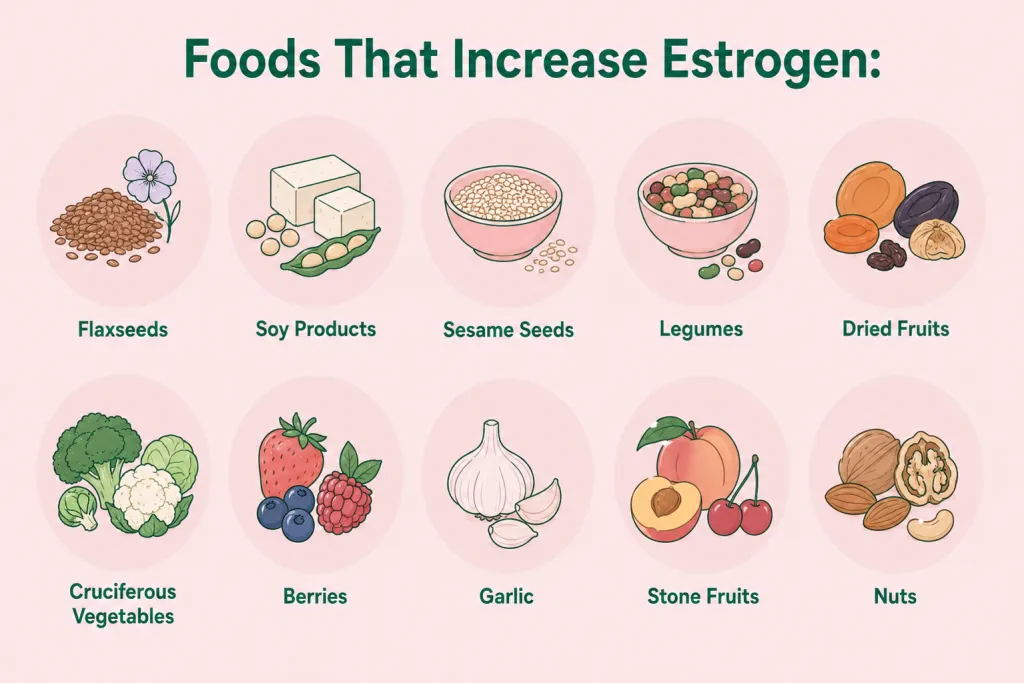
- The 10 most phytoestrogen-rich foods include flaxseeds, soy products, sesame seeds, chickpeas and legumes, dried fruits, cruciferous vegetables, berries, garlic, peaches, and nuts. Most research supports their role in easing perimenopausal symptoms like hot flashes.
- Women with estrogen-sensitive conditions — including a history of hormone-receptor-positive breast cancer, severe endometriosis, or hormone-sensitive fibroids — should talk to their doctor before increasing phytoestrogen intake. Effects depend on individual baseline hormone levels.
If you’re searching for foods that increase estrogen, you’re likely navigating perimenopause symptoms, post-pill hormone shifts, or other low-estrogen experiences. Here’s the science worth knowing first: foods don’t contain bioidentical human estrogen. They contain phytoestrogens — plant compounds that weakly bind to estrogen receptors at roughly 100 to 1,000 times lower affinity than your body’s own estradiol. The three main classes are isoflavones (in soy), lignans (in flax and sesame), and coumestans (in legumes and sprouts).
When natural estrogen is low, phytoestrogens can partially fill that receptor activity; when it’s high, they may have a more modulating effect. This article covers the 10 most phytoestrogen-rich foods, what each one delivers, when to expect noticeable effects (typically 4 to 12 weeks of consistent intake), and important safety considerations for women with certain conditions.
Foods That Increase Estrogen Through Phytoestrogens
The foods below are listed in roughly descending order of phytoestrogen content, with practical serving suggestions and approximate timelines for noticing effects.
1. Flaxseeds
Flaxseeds are the richest dietary source of lignans, providing roughly 85 mg per ounce — orders of magnitude more than most other foods.
Practical serving: 1 to 2 tablespoons of ground flaxseed daily. Whole flax passes through undigested and doesn’t deliver the lignans. Stir into oatmeal, blend into smoothies, sprinkle on yogurt.
Timeline: 8 to 12 weeks for noticeable symptom shifts.
2. Soybeans and Soy Products
The most studied phytoestrogen source. Provides isoflavones (genistein and daidzein). According to a peer-reviewed meta-analysis published in PMC, phytoestrogens — particularly soy isoflavones — appear to reduce the frequency of hot flushes in menopausal women without serious side effects.
Best forms: tofu (firm or silken), tempeh (fermented), edamame, soy milk, miso. Avoid highly processed soy isolates and supplements — whole-food forms have better-studied safety profiles.
Practical serving: 2 to 3 servings of whole-food soy per week.
Timeline: 8 to 12 weeks.
3. Sesame Seeds
Second-richest lignan source after flaxseed.
Practical serving: 1 to 2 tablespoons daily, ground or whole. Tahini in dressings, dukkah on roasted vegetables, sesame-coated proteins.
Bonus: sesame seeds also provide calcium, magnesium, and healthy fats.
Timeline: 8 to 12 weeks.
4. Chickpeas and Other Legumes
Provide isoflavones and coumestans.
Best sources: chickpeas, lentils, black beans, mung beans, kidney beans.
Practical serving: 3 to 4 servings of legumes per week. Hummus, dal, lentil soup, bean salads.
Timeline: 6 to 10 weeks.
5. Dried Fruits
Concentrated source of phytoestrogens after water removal.
Best sources: dates, prunes (dried plums), dried apricots.
Practical serving: small servings (1 to 2 oz) — dried fruits are calorie-dense and high in concentrated sugars. Stewed prunes for breakfast, dates blended into smoothies, apricots in tagines.
Timeline: 6 to 10 weeks.
6. Cruciferous Vegetables
Different mechanism from the above — these support estrogen metabolism, not estrogen mimicry. They contain indole-3-carbinol and DIM, compounds that support healthy estrogen detoxification through the liver.
Best sources: broccoli, cauliflower, Brussels sprouts, cabbage, kale.
Practical serving: 2 to 3 servings per week, lightly cooked to preserve nutrients.
Especially valuable for: women whose hormonal symptoms relate to estrogen metabolism rather than low estrogen. Connected concerns are covered in the article on types of abnormal menstruation.
Timeline: 4 to 8 weeks.
7. Berries
Especially strawberries, raspberries, and blueberries — provide phytoestrogens plus antioxidants.
Practical serving: 1 cup daily, fresh or frozen. Blended into smoothies, on yogurt, in salads.
Bonus: support overall hormonal health through anti-inflammatory effects.
Timeline: 4 to 8 weeks.
8. Garlic
Contains organosulfur compounds that support estrogen balance through liver metabolism pathways — closer in mechanism to cruciferous vegetables than direct estrogen mimicry.
Practical serving: 1 to 2 cloves daily, fresh and crushed (let stand 10 minutes after crushing to activate compounds).
Timeline: 6 to 10 weeks.
9. Peaches and Other Stone Fruits
Source of lignans, particularly secoisolariciresinol.
Best sources: peaches, plums, apricots.
Practical serving: 1 to 2 servings per day in season; frozen works year-round.
Research note: some studies have associated peach and berry consumption with reduced breast cancer risk in postmenopausal women — the link may run through phytoestrogens.
Timeline: 8 to 12 weeks.
10. Nuts
Best sources: walnuts, pistachios, almonds. Provide lignans plus healthy fats (especially omega-3s in walnuts) that support overall hormone synthesis.
Practical serving: 1 oz (small handful) daily as a snack.
Bonus: pair with the cruciferous vegetables and berries above for a comprehensive nutritional foundation.
Timeline: 6 to 10 weeks.
Who Should Talk to Their Doctor First
Phytoestrogens are not universally safe or universally beneficial. Their effects depend on baseline hormone levels, individual sensitivity, and underlying conditions. Talk to your doctor before significantly increasing phytoestrogen-rich foods if you have any of the following:
- A history of hormone-receptor-positive breast cancer.
- Current breast cancer treatment with hormone-blocking medications (tamoxifen, aromatase inhibitors).
- Severe endometriosis.
- Hormone-sensitive fibroids.
- Any other estrogen-sensitive medical condition.
For most women without these conditions, moderate dietary phytoestrogen intake — a few servings of tofu per week, a tablespoon of flaxseeds daily, regular legumes — is generally considered safe. The safe approach is always to confirm with your provider before significantly changing your diet for hormonal reasons.
When to See a Doctor About Low Estrogen Symptoms
Most readers should consider medical evaluation rather than relying on diet alone if they have:
- Severe hot flashes affecting sleep or daily function.
- Vaginal dryness or pain with intercourse.
- Mood changes interfering with work or relationships — the article on hormonal imbalance and anxiety covers this connection in more depth.
- Irregular periods or amenorrhea that aren’t tied to pregnancy or known cycle changes. The article on signs of a period coming late covers the body signals worth tracking.
- Bone density concerns.
- Cognitive changes or brain fog persisting more than a few months. The broader context of how hormones work in the body can help frame what’s shifting during these transitions.
Perimenopause symptoms can begin in the 40s (sometimes earlier) and last 4 to 10 years. Medical evaluation can clarify what’s happening and identify treatment options including hormone replacement therapy (HRT), low-dose vaginal estrogen, SSRIs for hot flashes, and lifestyle interventions. Chronic stress also affects estrogen levels through cortisol — the article on stress, cortisol, and your hormones walks through that connection. For deeper authority context on perimenopause and menopause, ACOG’s page on the menopause years is a useful reference. If you need additional support resources, women’s health support resources is a starting point.
Conclusion
The 10 foods above provide phytoestrogens — plant compounds that gently mimic estrogen by binding to estrogen receptors. The most-studied benefits include reduced perimenopausal hot flashes, particularly from regular soy and flax intake. Effects typically appear after 4 to 12 weeks of consistent intake.
Foods support, but don’t replace, medical care. Women with estrogen-sensitive conditions should talk to their doctor first. If you’re not in that category, pick 2 to 3 foods from the list to start adding to your weekly meals. If you’re experiencing significant low-estrogen symptoms, schedule a conversation with your healthcare provider about evaluation and treatment options.
Frequently Asked Questions
Can food really increase estrogen levels?
Foods don’t directly contain bioidentical human estrogen, but phytoestrogen-rich foods provide plant compounds that bind to estrogen receptors and produce mild estrogenic effects, particularly when natural estrogen levels are low. Most research supports their role in reducing perimenopausal hot flash frequency.
How much soy is safe to eat daily?
For most women without estrogen-sensitive conditions, 2 to 3 servings of whole-food soy per week (tofu, tempeh, edamame, soy milk) is considered safe and is the amount most studies associate with symptom benefits. Highly processed soy isolates and supplements have a less well-studied safety profile.
Should women with breast cancer history avoid phytoestrogens?
Women with a history of hormone-receptor-positive breast cancer or currently taking hormone-blocking medications like tamoxifen should talk to their oncologist before increasing phytoestrogen intake. The interaction is nuanced and depends on individual treatment history.