How Movement Heals: Sports as a Tool for Mental Well‑Being
The connection between physical movement and mental health runs deeper than most women realize. Exercise isn’t simply about cardiovascular fitness or muscle strength—it fundamentally changes how our…
- Published
- Written by
- Women In Balance Team
- Reading time
- 10 minutes
The connection between physical movement and mental health runs deeper than most women realize. Exercise isn’t simply about cardiovascular fitness or muscle strength—it fundamentally changes how our brains process stress, regulate emotions, and maintain resilience through life’s challenges.
For women navigating hormonal fluctuations, life transitions, caregiving responsibilities, and professional demands, movement offers a scientifically-backed pathway to emotional regulation and psychological wellbeing. Understanding how different types of physical activity influence mental health empowers women to choose movement practices that support both body and mind.
The neuroscience of movement and mood
Physical activity creates measurable changes in brain chemistry that directly impact mental health. When you move your body, your brain releases endorphins—neurochemicals that naturally reduce pain perception and create feelings of wellbeing. This isn’t metaphorical; it’s biological.
Exercise also increases production of brain-derived neurotrophic factor (BDNF), a protein that supports the growth of new neurons and protects existing brain cells. Higher BDNF levels correlate with improved mood, better stress resilience, and reduced symptoms of depression and anxiety.
Movement influences neurotransmitter systems beyond endorphins. Regular physical activity helps regulate serotonin, dopamine, and norepinephrine—the same neurochemical systems targeted by many psychiatric medications. This doesn’t mean exercise replaces medication for clinical conditions, but it demonstrates that movement creates real neurological changes that support mental health.
The stress-response system also responds to exercise. Regular physical activity helps calibrate cortisol levels, teaching your body to manage stress more effectively. Women who exercise consistently often report feeling better equipped to handle daily pressures, and this isn’t just perception—their nervous systems literally function differently.
Different movement types for different mental health needs
Not all exercise affects mental health identically. The type of movement you choose matters based on what you’re experiencing mentally and emotionally.
Aerobic exercise for anxiety and depression
Cardiovascular activities—running, cycling, swimming, brisk walking—show the strongest evidence for reducing anxiety and depressive symptoms. The rhythmic, sustained nature of aerobic movement seems particularly effective at regulating mood.
Research suggests that moderate-intensity aerobic exercise for 30-45 minutes, three to five times weekly, produces mental health benefits comparable to some therapeutic interventions. The key is consistency rather than intensity; a regular walking practice often helps mental health more than sporadic high-intensity workouts.
Strength training for self-efficacy and body image
Resistance training offers unique mental health benefits beyond aerobic exercise. Lifting weights, using resistance bands, or practicing bodyweight exercises builds physical strength that translates into psychological empowerment.
Women who engage in regular strength training report improved body image, increased self-confidence, and greater sense of capability. The progressive nature of strength training—gradually lifting heavier weights or performing more challenging variations—creates tangible evidence of growth that reinforces self-efficacy.
Strength training also helps women reconnect with their bodies as functional rather than purely aesthetic. Focusing on what your body can do rather than how it looks shifts perspective in ways that support mental wellbeing.
Yoga and mindful movement for stress regulation
Movement practices that emphasize breath awareness and present-moment attention—yoga, tai chi, qigong—offer distinct mental health advantages. These practices combine physical activity with mindfulness, addressing both body and mind simultaneously.
Yoga particularly shows benefits for stress management, anxiety reduction, and emotional regulation. The combination of physical postures, controlled breathing, and meditative focus activates the parasympathetic nervous system, counteracting stress responses and promoting relaxation.
For women experiencing trauma or significant anxiety, gentle yoga styles that emphasize safety and body awareness can help rebuild trust in physical sensations and gradually increase stress tolerance.
Team sports and group fitness for social connection
Movement in community settings addresses the social dimensions of mental health. Team sports, group fitness classes, or recreational leagues provide both physical activity and human connection—two powerful factors in psychological wellbeing.
Social isolation significantly impacts mental health, and structured group movement creates opportunities for regular social interaction. The shared experience of physical challenge, the accountability of showing up for teammates or classmates, and the simple pleasure of moving alongside others all contribute to emotional health.
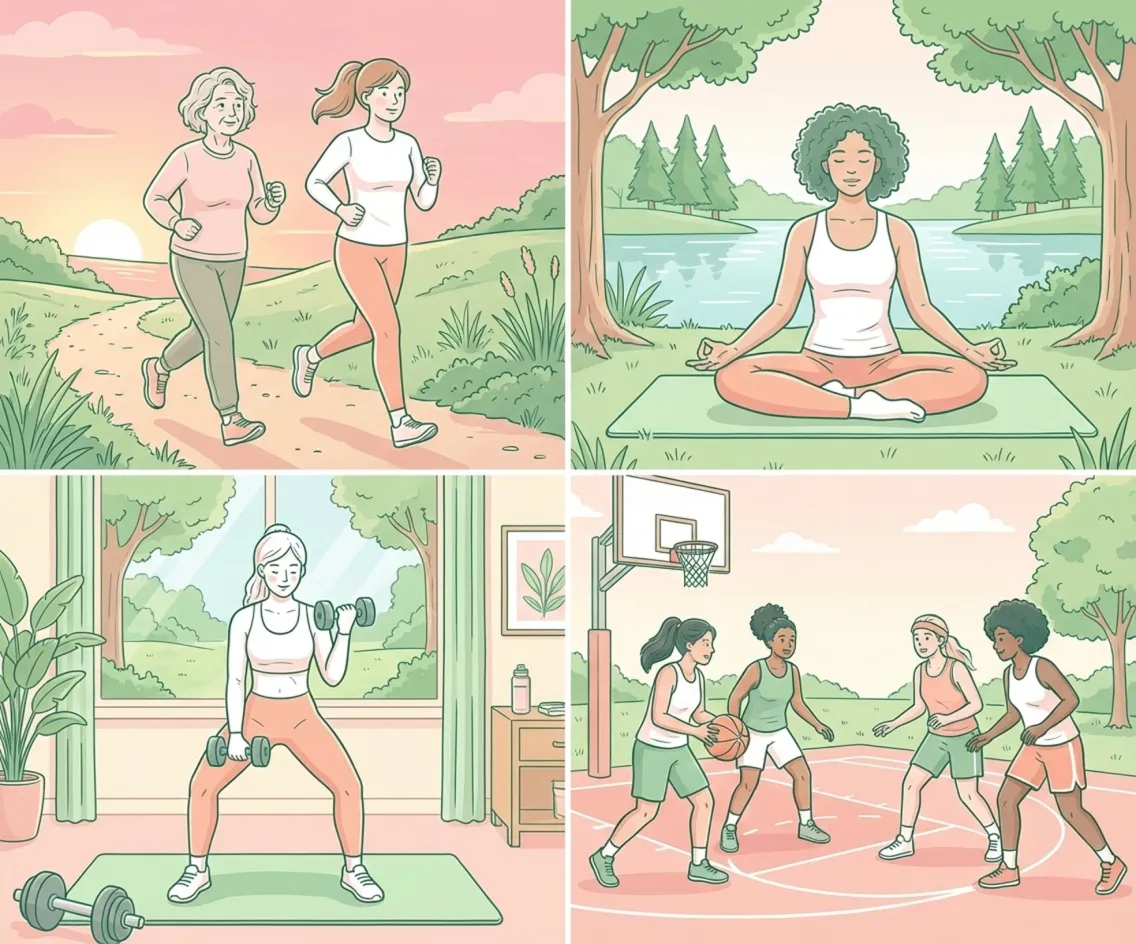
Engaging in regular physical activity is not just about keeping your body fit, it also has profound effects on mental well-being. Exercise releases endorphins, reduces stress, and can improve mood and focus, making it a powerful tool for women managing busy lives. Imagine editorial style sports images; women running at sunrise, practicing yoga in nature, or stretching after a workout, capturing the energy and balance that movement brings to both body and mind.
Movement as emotional regulation
Beyond diagnosable mental health conditions, physical activity serves as a practical tool for managing everyday emotional experiences. Many women discover that specific types of movement help process particular emotional states.
Processing anger and frustration
High-intensity movement—boxing, kickboxing, intense cycling, or vigorous running—provides healthy outlets for anger and frustration. The physical exertion channels intense emotions into productive activity rather than rumination or harmful expression.
Women often report that an intense workout helps them “burn off” frustration that might otherwise manifest as irritability or internalized stress. This isn’t suppressing emotion but rather metabolizing it through physical release.
Managing anxiety and overthinking
Rhythmic, repetitive movement helps quiet racing thoughts. Swimming laps, walking, or cycling creates a meditative state where the mind can settle. The focus required to coordinate breath and movement interrupts rumination cycles that perpetuate anxiety.
Many women find that movement outdoors amplifies these anxiety-reducing effects. The combination of physical activity, natural settings, and fresh air creates optimal conditions for nervous system regulation.
Lifting depression and low energy
When depression saps motivation and energy, movement feels nearly impossible. Yet physical activity remains one of the most effective interventions for depressive symptoms. The challenge lies in initiating movement when depression makes everything feel overwhelming.
Starting with very small, achievable movement goals helps overcome this barrier. A five-minute walk around the block requires less activation energy than a full workout but still creates neurochemical benefits. Gradually increasing duration and intensity as energy improves makes movement sustainable rather than another source of failure.
Supporting emotional processing
Some women use movement as a way to process emotions that feel difficult to articulate. The physical experience of running, dancing, or practicing yoga can access emotional material that remains inaccessible through thinking alone.
Movement creates space for emotions to move through the body rather than becoming stuck. This embodied approach to emotional health complements talk therapy and other psychological interventions.
Exercise and the menstrual cycle
Women’s mental health often fluctuates with hormonal changes across the menstrual cycle. Understanding how movement can support different cycle phases helps optimize exercise for mental wellbeing.
Follicular phase: building energy
During the follicular phase (roughly days 1-14 of the cycle), estrogen levels rise, often increasing energy and mood. This phase supports more intense workouts—strength training, high-intensity interval training, or challenging cardio sessions.
Women often feel mentally sharper and more motivated during this phase, making it an ideal time for progressive training or trying new movement practices.
Luteal phase: gentler movement
The luteal phase (roughly days 15-28) brings rising progesterone levels, which can increase fatigue, anxiety, or irritability for some women. Adjusting movement intensity during this phase supports rather than stresses the body.
Lower-intensity activities—walking, gentle yoga, swimming, or moderate strength training—often feel better during the luteal phase. This isn’t weakness; it’s working with natural hormonal rhythms.
Menstruation: honoring rest
During menstruation, some women feel energized and ready for normal activity, while others need significant rest. Both responses are valid, and honoring what feels right supports overall wellbeing.
Gentle movement like restorative yoga, walking, or light stretching can help ease menstrual discomfort while respecting the body’s need for lower intensity. There’s no requirement to maintain the same exercise routine throughout the entire cycle.
Movement and life transitions
Major life changes—pregnancy, postpartum, perimenopause, menopause—significantly impact both physical capability and mental health. Adapting movement practices during transitions supports psychological resilience.
Pregnancy: movement for mental stability
Regular exercise during pregnancy correlates with better mood, reduced anxiety, and lower risk of prenatal depression. Physical activity helps manage the psychological stress of major life transition while supporting physical health.
Safe pregnancy exercise includes walking, swimming, prenatal yoga, and modified strength training. The mental health benefits come from consistency and listening to your body rather than maintaining pre-pregnancy intensity.
Postpartum: gentle reentry
The postpartum period brings dramatic hormonal shifts, sleep deprivation, identity changes, and physical recovery—all of which affect mental health. Movement during this time requires patience and self-compassion.
Very gentle activity like short walks with the baby can provide mental health benefits without overtaxing a recovering body. Gradually rebuilding strength and endurance over months rather than weeks supports both physical healing and psychological adjustment.
Perimenopause and menopause: exercise as mood stabilizer
Hormonal fluctuations during perimenopause and menopause often trigger mood changes, anxiety, or depression. Regular exercise helps stabilize mood during this transition.
Strength training becomes particularly important during this phase, supporting bone density, metabolic health, and psychological resilience. Many women discover that consistent movement practice helps them navigate this transition with greater emotional stability.
Overcoming barriers to movement for mental health
Despite understanding that exercise supports mental health, many women struggle to maintain consistent movement practices. Common barriers include time constraints, energy depletion, body image concerns, and internalized pressure to exercise “correctly.”
Redefining what counts as exercise
Movement for mental health doesn’t require gym memberships, special equipment, or hour-long sessions. Any physical activity that elevates your heart rate and engages your body counts.
Dancing in your kitchen, playing actively with children, gardening, cleaning vigorously, or taking stairs instead of elevators all provide mental health benefits. Releasing rigid definitions of “real exercise” makes movement more accessible.
Starting smaller than feels necessary
When mental health challenges make everything feel overwhelming, the standard exercise recommendations—30 minutes daily, moderate intensity—seem impossible. Starting with one minute of movement, then two, then five builds sustainable habits.
A single minute of stretching, a brief walk to the mailbox, or dancing to one song creates neurochemical changes and establishes the pattern of movement. Progress comes through consistency, not intensity.
Addressing body image barriers
For women whose relationship with exercise has been complicated by diet culture, weight stigma, or body image struggles, separating movement from appearance goals feels essential for mental health.
Focusing on how movement makes you feel rather than how it changes your appearance shifts motivation from external to internal. Noticing improved sleep, better mood, reduced anxiety, or increased energy provides sustainable reasons to move.
Finding joyful movement
Exercise for mental health works best when you genuinely enjoy the activity. If running feels miserable, it won’t support your mental health no matter how many endorphins it theoretically releases.
Experimenting with different movement types—dancing, hiking, swimming, team sports, martial arts, cycling—helps identify activities that feel pleasurable rather than punishing. Joy and sustainability matter more than optimization.
Building a movement practice for mental wellbeing
Creating sustainable exercise habits requires realistic planning, self-compassion, and flexibility. Rigid all-or-nothing approaches often backfire, while gentle, adaptable practices endure.
Consistency over intensity
Regular moderate movement supports mental health more effectively than occasional intense workouts. Three 20-minute walks weekly provide more lasting benefit than one exhausting gym session followed by a week of inactivity.
Building movement into daily routines—walking during lunch breaks, stretching before bed, or cycling for transportation—creates consistency without requiring additional time allocation.
Listening to your body
Pushing through pain, exhaustion, or genuine need for rest undermines both physical and mental health. Learning to distinguish between productive challenge and harmful overexertion supports sustainable practice.
Some days call for vigorous movement; others require gentle stretching or complete rest. Both support overall wellbeing when chosen with honest self-awareness.
Combining movement with other mental health practices
Exercise works synergistically with other mental health interventions. Therapy, medication when appropriate, adequate sleep, social connection, and stress management techniques all complement the psychological benefits of physical activity.
Movement isn’t a replacement for professional mental health care when needed, but it’s a powerful adjunct intervention that enhances other treatments.
Tracking mood alongside movement
Paying attention to how different types of exercise affect your mental state helps refine your movement practice. Some women notice that morning workouts improve their entire day’s mood, while others find evening exercise helps them sleep better.
Noticing patterns—which activities lift depression, which reduce anxiety, which leave you feeling energized versus depleted—allows you to choose movement that genuinely serves your mental health.
Movement as self-care and empowerment
At its foundation, using physical activity to support mental health represents an act of self-care and body respect. Choosing to move because it helps you feel better emotionally honors your psychological needs as deserving of attention and care.
For many women, developing a movement practice based on mental health rather than appearance or performance represents a fundamental shift. Exercise becomes something you do for yourself rather than to yourself—a practice of care rather than control.
This reframing creates space for movement to be sustainable, pleasurable, and genuinely supportive of wellbeing across your lifetime. Bodies change, abilities shift, life circumstances evolve—but the relationship between movement and mental health remains constant.
Physical activity offers women a scientifically-validated, accessible tool for supporting mental health through every life stage and circumstance. Understanding how movement heals empowers you to choose activities that serve your psychological wellbeing while honoring your body’s wisdom and limits.