Menopause Screening Guide: Tests to Get in Your 40s–50s
Menopause is a gradual change, not a single date on the calendar. The right screenings help you protect bone strength, lower cancer risk, support heart health, and keep your energy steadier. This…
- Published
- Written by
- Women In Balance Team
- Reading time
- 5 minutes
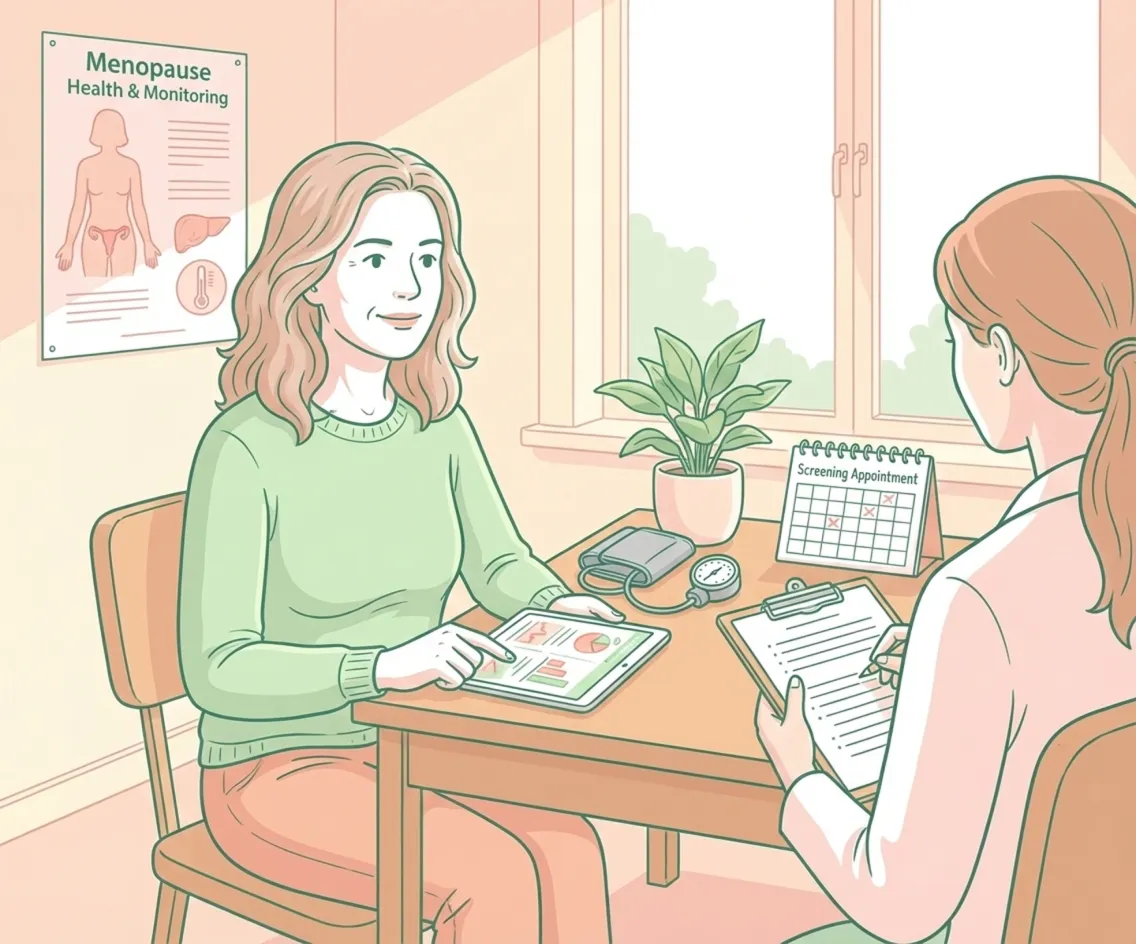
Menopause is a gradual change, not a single date on the calendar. The right screenings help you protect bone strength, lower cancer risk, support heart health, and keep your energy steadier. This guide is written for a US audience and is meant to be used with your clinician. We focus on tests that change care; mammograms, bone density, blood pressure, cholesterol, and blood sugar, and add thyroid or iron testing only when symptoms point that way.
What screening do you actually need during perimenopause?
Start with the basics you’d need at any age: cancer screening on schedule and routine adult vaccines. As cycles become irregular in the late 40s and early 50s, add checks that meaningfully affect your plan, bone density at the right time and simple labs that track heart and metabolic risk. Let your symptoms steer targeted tests like thyroid or iron. Hormone numbers can swing from week to week, so your story, history, and current medicines often guide care better than a large, one-time panel.
Bone health: when to screen for osteoporosis
Estrogen drops with age, and bones thin faster because of it. That’s why screening matters. The U.S. Preventive Services Task Force advises DXA bone density screening at 65, and sooner for postmenopausal women under 65 who have risk factors such as a prior fracture, low body weight, or long-term steroid use. If any of that sounds like you, and you’re in perimenopause, ask your clinician about earlier testing. Build protection now with two days of strength work each week, regular weight-bearing movement, enough calcium and vitamin D, and a few home safety tweaks, clear loose rugs, add a tub mat, and keep stair lights bright. If you want a quick refresher on hormone shifts by decade, our explainer on normal estradiol levels by age can help you prep questions and make sense of symptoms.
Breast and reproductive cancers: staying current
Keep up with mammograms through your 40s and 50s. For most at average risk, every two years from 40 to 74 is the standard, then you and your clinician choose what’s next. Found a new lump while getting dressed? Tender spot that won’t calm down, any discharge, or a change in the skin? That’s your cue to get seen sooner. Use that visit to review family history and whether earlier or extra imaging is a good idea. If you’re sorting normal late-perimenopause shifts from warning signs, our guide to signs perimenopause is ending can help, and you can also read the USPSTF’s breast cancer screening guidance for the full recommendations.
Metabolic and heart health: blood pressure, lipids, and glucose
Heart risk rises after menopause as body composition and cholesterol patterns change. Keep this simple and consistent. Check blood pressure at least once a year, more often if you see higher numbers at home. Get a fasting lipid panel every four to six years if risk is low, sooner if it’s not. Screen for diabetes with A1C or fasting glucose on a cadence set by your clinician and your past results. When numbers drift up, start with habits that move several markers at once: steady sleep, protein and fiber at most meals, and progressive strength training. If sleep is the weak link, our resource on what is core sleep explains the part of sleep that most affects recovery, mood, and metabolic health.
Thyroid, iron, and symptom-directed labs
Feeling wiped out, more hair in the drain, too warm at noon and chilled by dinner, mood a little jumpy—that can be perimenopause. It can also be thyroid or low iron. Instead of running a huge panel, start with what’s most likely. If thyroid is on your mind, ask for a TSH; if that’s off, your clinician will add a free T4. Heavy flow or fatigue that just isn’t letting up? Check iron with a complete blood count and ferritin. Pins-and-needles, memory slips, or a mostly plant-only diet—bring up B12. And if hot flashes, sleep issues, or vaginal/urinary changes are the real headache, talk through everyday fixes and nonhormonal options first, then whether menopausal hormone therapy fits your history.
Menopause screening timeline in your 40s and early 50s
Start the decade with a quick reset: mammogram booked, vaccines current, and up-to-date checks on blood pressure, cholesterol, and blood sugar. If flow is heavier or cycles are tightening up, bring up iron testing. As the 50s approach, circle back to the heart-health labs, choose a colon screening method you’ll follow through on, and discuss bone health—more urgent if you’ve got risk factors or hit menopause early. There isn’t a single “best” colon test; the
best one is the one you’ll do. Keep a simple reminder list—“BP check March,” “A1C September,” “DXA discuss at physical”—so the plan stays easy to execute.
Building your plan and finding efficient care
A good plan is clear and doable. Decide what each test will change. Group labs you can handle on the same day. If you live in the Bay Area and want to simplify the process, comprehensive options such as advanced health screening in SF can put baseline testing and a follow-up conversation under one roof. Whether you schedule everything at once or spread it out, finish each visit by agreeing on thresholds that trigger action. For example, know which LDL value would prompt a statin talk, or which DXA result would lead to medication alongside strength training and fall-risk work.
Conclusion: a practical menopause screening guide you can use
A practical menopause screening plan in your 40s and 50s sticks to what actually guides care—mammograms on time, bone density at the right point, and regular checks on blood pressure, cholesterol, and blood sugar. When symptoms hint at thyroid or low iron, check those specifically instead of ordering a big panel “just because.” This saves time, cuts back on unnecessary tests, and helps you protect bone strength, heart health, and everyday energy through the transition. Revisit the plan once a year, keep the language simple, and decide—up front—what you’ll do with each result.