Positive Ovulation Test: What It Means and What to Do Next
<p>A positive ovulation test means luteinizing hormone (LH) levels have surged, signaling ovulation will likely occur within 12 to 36 hours. To conceive, have intercourse within this window. Track…
- Published
- Written by
- Women In Balance Team
- Reading time
- 10 minutes
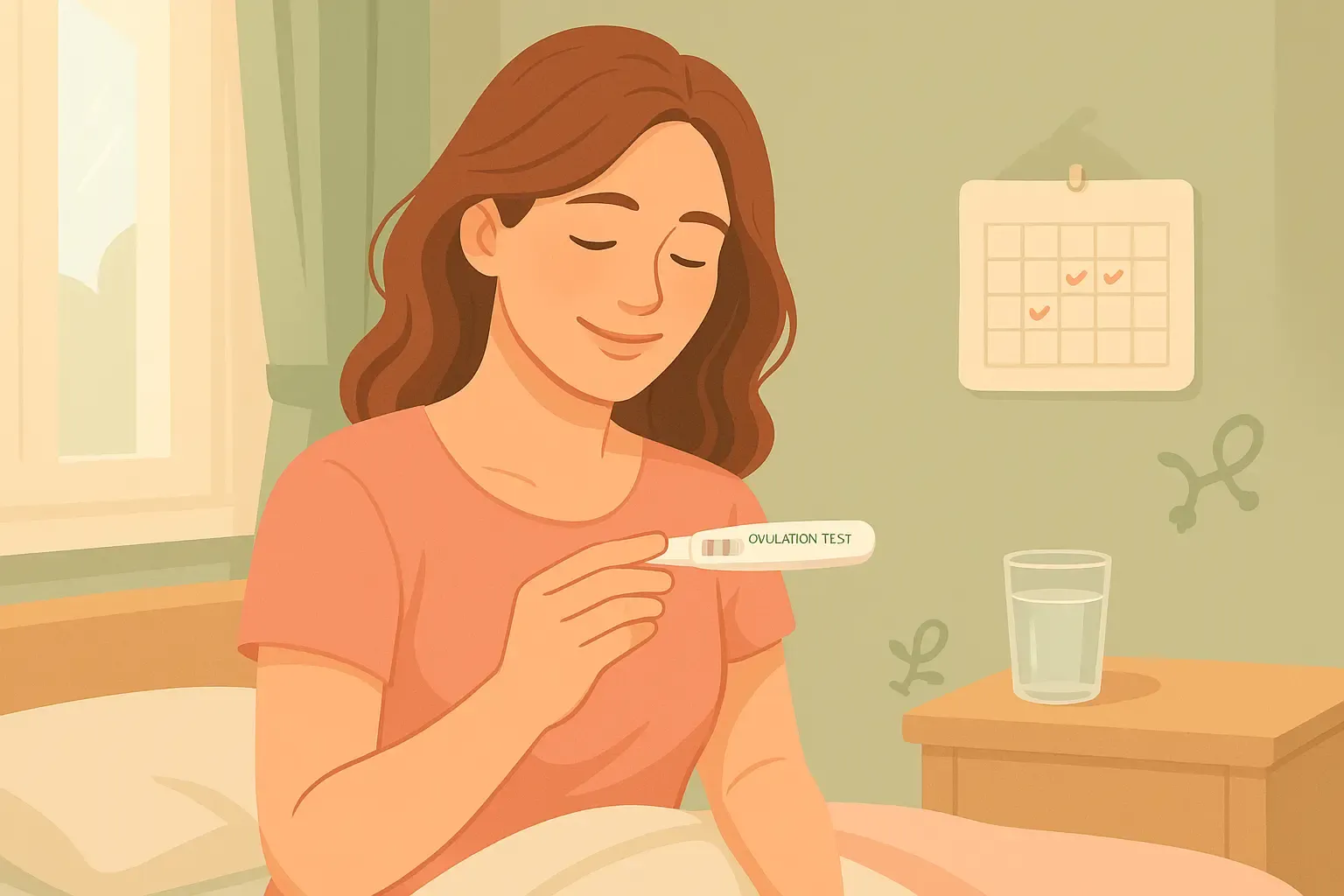
A positive ovulation test means luteinizing hormone (LH) levels have surged, signaling ovulation will likely occur within 12 to 36 hours. To conceive, have intercourse within this window. Track ovulation over multiple cycles to confirm patterns and improve timing for conception.
Key Takeaways
- A positive ovulation test indicates your LH surge has begun, and ovulation will likely occur within 12-36 hours
- Your most fertile window is the day of the positive test and the following 2-3 days
- Having intercourse during this timeframe gives you the highest chances of conception
Getting a positive ovulation test can be both exciting and nerve-wracking when you’re trying to conceive. This little test strip holds powerful information about your fertility, but knowing what to do next is crucial for maximizing your chances of pregnancy. Understanding how to interpret and act on a positive ovulation test can make the difference between guessing and strategically timing your conception efforts.
Ovulation predictor kits (OPKs) are designed to detect the surge in luteinizing hormone (LH) that occurs just before ovulation. When you see that positive result, your body is telling you that your most fertile days are here. The key is knowing exactly what this means and having a clear plan for what comes next.
What Is an Ovulation Test?
Ovulation predictor kits work by detecting luteinizing hormone (LH) in your urine. LH is one of the hormones produced by the pituitary gland and is ordinarily secreted at very low levels throughout your menstrual cycle. However, once a developing egg follicle reaches a certain size, usually around the midpoint of your cycle, LH secretion surges to really high levels.
This hormone surge is what triggers ovulation about 24 to 36 hours later. The LH surge is a rapid increase in luteinizing hormone levels around 24-48 hours before ovulation, making it a reliable indicator of a woman’s fertile window. Ovulation tests measure these LH levels in your urine to predict when ovulation will occur, giving you advance notice of your most fertile days.
Most ovulation tests work similarly to pregnancy tests. You either hold the test stick in your urine stream or dip it into a cup of collected urine. The test will show lines or symbols that indicate whether LH levels are high enough to be considered “surging.” Digital versions often display a smiley face or clear “positive” result when the surge is detected.
What Does a Positive Ovulation Test Mean?
A positive ovulation test means your LH levels are surging, and you should expect ovulation to happen anytime between the next 12 and 36 hours. This signals the opening of your fertile window, when intercourse is most likely to result in conception.
The positive result indicates that ovulation is likely to occur within 12-36 hours, making this the most fertile window in your menstrual cycle. Ovulation is the release of a mature egg from the ovary, and it signals the beginning of your fertile period. After the egg is released, it remains viable for about 12-24 hours, creating a relatively short window for fertilization.
Understanding this timing is crucial because conception occurs between 12 and 24 hours after ovulation. However, since sperm can survive in the female reproductive tract for up to five days, having intercourse before ovulation occurs can ensure sperm is waiting for the egg once it’s released, giving you the highest chance of conception.
What to Do After a Positive Ovulation Test
Once you get that positive ovulation test, it’s time to put your conception plan into action. The timing of your next steps can significantly impact your chances of getting pregnant.
When to have intercourse
The three days immediately after a positive test represent the best time to have intercourse to increase the probability of getting pregnant. Most experts recommend having sex two to three times over the next 24 to 48 hours after getting a positive result.
Your fertile window includes the day of ovulation and the 5 days prior, but your chances are highest during specific timeframes. Research shows that your odds are highest the day before you ovulate, with a 41% chance of conception. That chance drops to 20% on the day of ovulation and down to just 8% the day after ovulation.
However, timing intercourse perfectly isn’t the only factor. Studies show that two days before you ovulate, you have a 33% chance of conceiving, and three days before, it’s 27% on average. This is why having intercourse as soon as you get a positive test is important, even if ovulation hasn’t occurred yet.
Continue tracking your cycle
Some people continue testing to see how long the surge lasts and to better understand their individual patterns. The LH surge typically lasts about two days, and tracking this can help you understand your unique cycle. On average, the entire LH surge lasts about two days, but this can vary between individuals.
Continuing to test after a positive result can help you identify whether you have a gradual onset LH surge or a rapid onset surge. With a gradual onset, you may see multiple positive ovulation test results for more than one day before reaching your ultimate LH peak day. With a rapid onset surge that peaks quickly within as little as a few hours, you may only see one positive ovulation test despite multiple days of testing.
Monitor other fertility signs
While ovulation tests are highly effective, combining them with other fertility signs can provide more comprehensive information about your cycle. Cervical mucus changes around ovulation, becoming clearer, thinner, and stretchy like raw egg whites. This fertile-quality cervical mucus helps sperm survive and travel through the reproductive tract.
Basal body temperature (BBT) tracking can also provide additional context. Your temperature typically rises about 12 hours after ovulation, confirming that ovulation has occurred. While this doesn’t help with timing intercourse for the current cycle, it can help you understand your patterns for future cycles.
What If You Get Multiple Positive Results?
Getting multiple positive results is actually quite common and normal. The LH surge can last up to 48 hours, and it’s possible to experience multiple days of high LH levels. This doesn’t mean you’re ovulating multiple times; rather, it indicates that your body is maintaining the hormone surge needed to trigger ovulation.
Women who have multiple positive results have what’s called a gradual onset LH surge. With this type of surge, you may see multiple positive ovulation test results for more than one day before reaching your ultimate LH peak day. The last highest LH level is the true peak day that signals ovulation is about to occur.
If you’re seeing multiple positive results, continue testing until you see the test line begin to lighten again. The day when you see the darkest line is your most fertile day, and the last positive result of that cycle is your peak day. This pattern can help you better understand your individual cycle and optimize timing for future attempts.
Common Mistakes or Misunderstandings
Several common mistakes can reduce the effectiveness of ovulation testing, leading to missed opportunities or false results.
Using OPKs too early or too late in the cycle is one of the most frequent errors. If you start testing too late into your cycle, you may miss the LH surge entirely. For a typical 28-day cycle, you should start testing around cycle day 10-13. If you have longer cycles, adjust accordingly, starting testing about 17-18 days before your expected period.
Misinterpreting faint test lines as positives is another common issue. For most ovulation tests, the test line must be as dark as or darker than the control line to be considered positive. A faint line usually indicates that LH is present but not yet surging. Don’t assume a faint line means you’re ovulating.
Not timing intercourse properly with the fertile window can also reduce your chances. Some couples wait until after ovulation to have intercourse, but this significantly reduces the probability of conception since the egg only lives for 12-24 hours after release. The goal is to have sperm waiting for the egg, not the other way around.
Testing with diluted urine can also affect results. It’s recommended to hold your urine for at least 2-4 hours before testing and avoid excessive fluid intake before testing. The more concentrated your urine, the more likely the test will accurately detect the LH surge.
What If You Never Get a Positive Result?
If you’re consistently not getting positive results on ovulation tests, several factors could be at play. This doesn’t necessarily mean you’re not ovulating, but it may indicate that adjustments to your testing approach are needed.
Testing at the wrong time is the most common reason for missing positive results. If you have irregular cycles, it can be difficult to figure out when to start testing. Consider testing twice daily during your predicted fertile window, as you could have a rapid onset surge and be missing your peak.
Low LH levels or atypical LH patterns can also make detection difficult. Some women have shorter LH surges that may last only several hours, making them easy to miss with once-daily testing. Others may have multiple smaller surges throughout their cycle rather than one clear peak.
Irregular cycles can make ovulation prediction challenging. Women with conditions like PCOS may experience persistently high LH levels, making tests show positive results throughout their cycles, or they may not ovulate regularly. Similarly, women approaching menopause may have elevated LH levels that make test results unreliable.
If you’re consistently having trouble detecting ovulation with home tests, consider talking to a healthcare provider. They can run blood tests to check hormone levels and help you pinpoint your ovulation through medical monitoring. Some doctors may also recommend transvaginal ultrasounds to observe follicle development directly.
Understanding Your Chances of Success
Knowing your actual chances of conception after a positive ovulation test can help set realistic expectations. While a positive test indicates optimal timing, pregnancy isn’t guaranteed even with perfect timing.
Studies show that your chances of getting pregnant are highest when you have intercourse starting 5 days before ovulation and the day of ovulation. Even with perfect timing, conception typically occurs only 25% to 30% of the time for healthy couples. This percentage decreases as you reach age 35 and continues to decline with age.
The highest chances of conception occur within the first two to three days after a positive ovulation test. During this window, when the egg is released and ready for fertilization, intercourse significantly increases the likelihood of pregnancy. However, multiple factors beyond timing affect conception success, including egg quality, sperm health, and overall reproductive health.
For couples trying to conceive, it’s important to remember that it can take normal, healthy couples up to twelve months to become pregnant. Even with optimal timing using ovulation tests, there are many other factors that influence your ability to conceive. Studies show that it happens within a year for 85% of couples, so patience and consistency are key.
Maximizing Your Success with Ovulation Testing
To get the most out of ovulation testing, consistency and understanding your individual patterns are crucial. Start testing every day or every other day beginning around cycle day 10 for a 28-day cycle, adjusting earlier for shorter cycles or later for longer cycles.
When you get a positive result, have intercourse as soon as possible and continue for the next 2-3 days. Studies show that couples who have sex every other day during the fertile window have nearly the same conception rates as those who have sex daily, so don’t feel pressured to have intercourse every single day.
Keep track of your results over several cycles to identify your personal patterns. Some women consistently ovulate on the same cycle day, while others have more variation. Understanding your patterns can help you optimize timing and reduce the stress of trying to conceive.
Remember that ovulation tests are just one tool in your fertility toolkit. Combining them with awareness of other fertility signs, maintaining good overall health, and managing stress can all contribute to your success in achieving pregnancy.
Frequently Asked Questions
Can I ovulate without getting a positive ovulation test?
Yes, it’s possible to ovulate without getting a positive result on an ovulation test. This can happen if you have a very short LH surge that you miss with once-daily testing, if you test too late in your cycle, or if your LH levels don’t rise high enough to trigger a positive result on the test. Some women have rapid onset surges that peak quickly within a few hours, making them easy to miss. If you suspect you’re ovulating but not getting positive tests, try testing twice daily or consult with a healthcare provider for blood testing.
Should I keep testing after a positive result?
Yes, it’s often helpful to continue testing after a positive result for 2-3 days. This helps you identify your true peak day and understand whether you have a gradual or rapid onset LH surge. Continue testing until you see the test line begin to lighten again, which indicates that your LH surge is ending. This information can help you better understand your individual patterns and optimize timing for future cycles.