Redesigning Work for Women: Automation That Heals, Not Hurts
<p>Most of what’s labeled “productivity tech” simply replaces old stress with new pressure faster, sleeker, and harder to unplug from. And somehow, it’s still women who carry the hidden costs. The…
- Published
- Written by
- Women In Balance Team
- Reading time
- 5 minutes
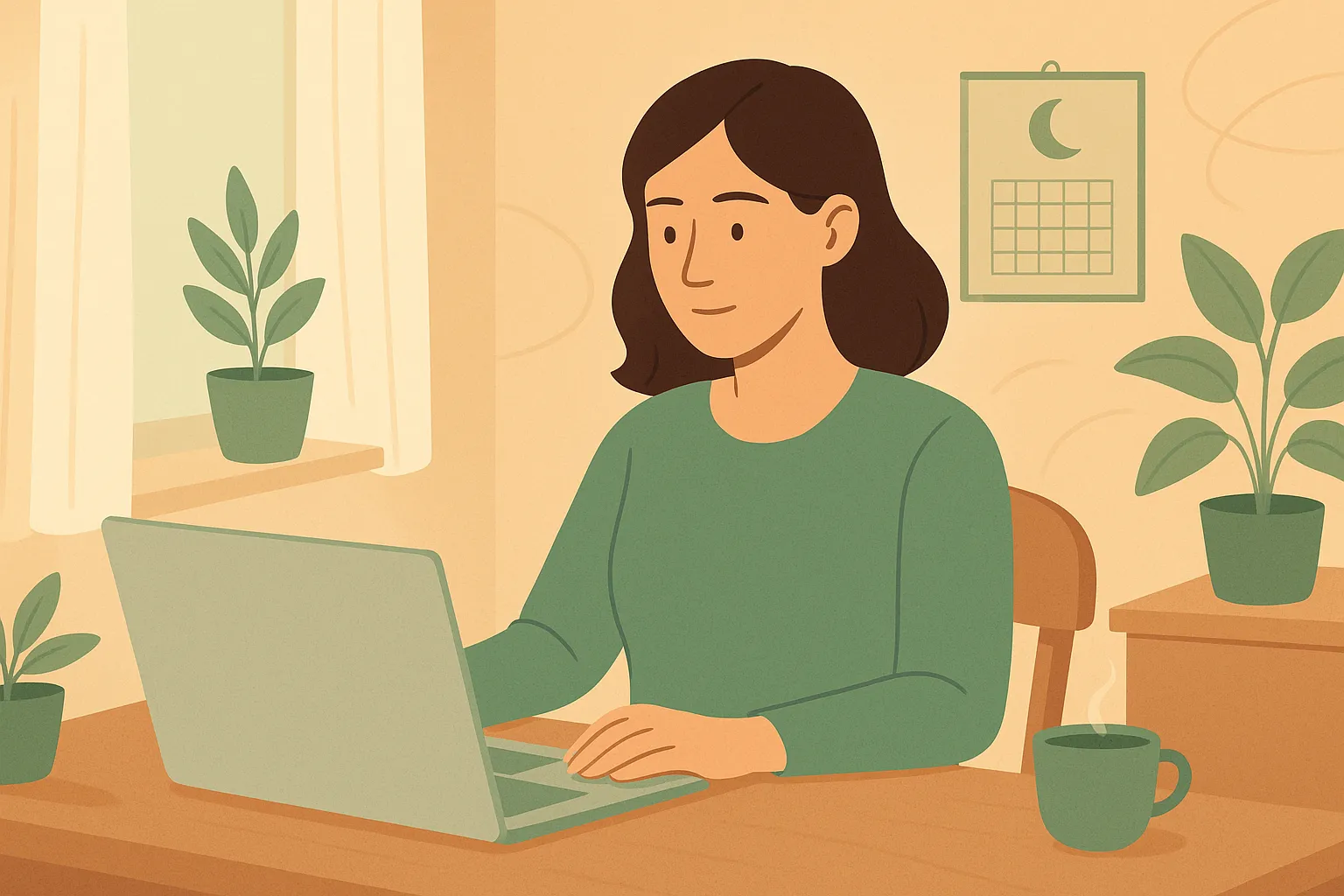
Most of what’s labeled “productivity tech” simply replaces old stress with new pressure faster, sleeker, and harder to unplug from. And somehow, it’s still women who carry the hidden costs. The double shift of caregiving, the quiet fatigue of cyclical energy dips, and the impossible expectations wrapped in polite calendar invites.
We were promised freedom. What we got was burnout with better Wi-Fi.
Why this matters now
Automation isn’t going away, and honestly, it shouldn’t. When it’s thoughtful, it can be life-changing. It can cut through the noise and give people their time (and health) back.
Consider an AI-powered dental receptionist. powered by a nuanced AI voice generator. At first glance, it appears to be a sophisticated system that answers calls, manages scheduling, and sends reminders. But zoom out. That’s hours reclaimed. That’s one less thing on someone’s plate, someone who might be juggling two kids, chronic cramps, and a lunch meeting in the same hour.
That’s automation that makes room.
Not just for tasks, but for humanity.
Redesigning for the whole woman
We don’t just need efficiency, we need empathy baked into our tools. Women’s bodies don’t move in straight lines. Neither should the systems they work in.
Hormonal fluctuations across a 28-day cycle influence everything from memory to mood, from pain tolerance to verbal fluency. Yet how many HR tools even account for that? How many project timelines consider luteal phase fatigue or ovulation spikes in creativity?
It’s not over-engineering. It’s just… real life.
And while we’re at it, it’s worth pointing out how much of modern work culture was designed by and for men, often men with a stay-at-home partner. The 9-to-5 grind, the “always on” mindset, the reward systems built around who can log the most hours? All optimized for a body and life path that’s linear.
Women’s lives? They’re curvier. More seasonal. And beautiful in that complexity.
Here’s what compassionate automation can do:
- Track cyclical patterns (with consent) to better plan high-focus or low-effort days
- Pre-surface mental health check-ins before deadlines pile up
- Auto-adjust task urgency based on known patterns of fatigue or stress
- Use predictive scheduling that buffers hormonal dips, not punishes them
And it’s not just for periods. Menopause, postpartum shifts, and fertility journeys, these phases deserve respect, not radio silence.
What burnout doesn’t always show
Burnout isn’t just collapse. Sometimes it’s the slow erosion of joy. The quiet dread of one more Zoom call. The brain fog. The resentment.
And it’s not always visible.
I remember a colleague, let’s call her Mara, who went from team MVP to barely-there. Quiet in meetings. Missing deadlines. We found out later she was caring for her mother, navigating perimenopause, and handling her teen’s depression. No one asked how she was. No tool offered her space. She left a few months later.
Automation can’t fix all that. But it can be noticed sooner. It can flag capacity, suggest breaks, and de-prioritize what can wait. It can be a soft buffer in a sharp world.
Let’s talk numbers (and what they don’t say)
Burnout rates among women are climbing. A Deloitte report found that nearly 53% of women feel more stressed this year than last, and 46% feel burned out regularly.¹
In another peer-reviewed study, menstrual pain was found to reduce productivity by as much as **33% during certain days of the month.**² That’s not minor. That’s a pattern employers ignore at their peril.
What about menopause? Hot flashes, brain fog, sleep disruption, these aren’t footnotes. They’re health realities that affect how women show up at work every single day.
We don’t need pity. We need infrastructure.
So what could a better system look like?
1. Automate low-reward labor
Think: expense reports, scheduling emails, follow-ups, rote data entry.
Replace with: smart automation platforms, natural language assistants, an AI voice generator for hands-free task management, voice-enabled recordkeeping.
Let women spend less time justifying their work and more time doing the work that matters.
2. Build for rhythms, not robots
Allow for variable pacing in projects (weekly check-ins > rigid deadlines).
Normalize calendar labels like “low energy” or “focus reset” instead of pretending everyone’s a machine.
3. Make wellness non-negotiable
Set up automation that encourages, not penalizes, off-days.
Offer options like async feedback, catch-up summaries, or emotion-aware nudges.
It’s not about coddling. It’s about honesty. We don’t power through everything the same way, every day.
4. Teach teams to see the full picture
Sometimes it’s not the tech, it’s the tone. Managers and coworkers need to be trained in cyclical wellness, too. Not in a preachy way. Just enough to recognize when automation should give someone space instead of more tasks.
What this looks like in real life
At a startup in Austin, a team rolled out a “flow-informed calendar.” Employees could tag weeks when they expected low energy or high mental load. Deadlines flexed. The result? Project speed actually improved.
Another company in Denmark created AI-assisted mood journaling for its remote team. The system would offer nudges, such as “Hey, want to reschedule that check-in?” if multiple red flags were detected. Turnover dropped 18% in six months.
These aren’t miracles. They’re just better questions built into smarter tools.
A cultural shift, one company at a time
In Japan, some companies allow menstrual leave without question. In Sweden, certain firms trialed six-hour workdays, not to reduce output, but to increase well-being.
And back in the U.S., major firms are experimenting with four-day workweeks, utilizing automation to fill customer service gaps while giving employees more breathing room.
These aren’t just gestures. They’re proofs-of-concept for a new era of labor: one that values output over endurance.
The quiet revolution is already underway
Companies that embed emotional intelligence into their platforms are seeing real returns. Lower attrition, higher satisfaction, stronger leadership pipelines.
Why? Because when employees feel safe to be human, they stick around.
And let’s be real, automation has always been about replacing what’s broken.
What’s broken now isn’t just the task list. It’s the assumption that everyone should work the same way.
Let’s fix that.
What you can do today
Whether you’re leading a team or just trying to keep your head above water, here are a few starting points:
- Audit your tech tools: Are they serving people or just tracking them?
- Introduce wellness-aware workflows: Buffer zones, pacing options, opt-ins (not pressure traps)
- Talk openly: If someone’s going through IVF or menopause, they shouldn’t have to pretend they’re “fine” just to keep things professional
If we want equity, it starts with honesty. And that starts with systems that support, not silence, the complexity of being a woman at work.
Final thought
The goal isn’t to automate humanity out of the picture.
It’s to design systems that honor the shape of real life, including all its unpredictability, softness, and strength.
That’s not a luxury. That’s the future of work.
Ready to lead that change?
Look at the tools you use. Ask what they’re really solving and who they’re built for.
Healing starts small. Sometimes with a question.
Sometimes, with an automated reply that buys someone an hour of peace.
Let’s build systems that breathe. That gives back time.
That lets people, especially women, feel seen.