8 Signs You Can’t Get Pregnant: Symptoms and What They Mean
Key Takeaways If you’re searching “signs you can’t get pregnant,” there’s a good chance you’ve been trying for a while — or you’re starting to wonder whether your body is signaling something off…
- Published
- Written by
- Women In Balance Team
- Reading time
- 8 minutes
Key Takeaways
- Signs that conceiving may be harder for you include irregular cycles, painful or heavy periods, hormonal imbalance symptoms, difficulty tracking ovulation, pain during sex, certain underlying medical conditions, and age. Most are signs of treatable underlying conditions — not permanent infertility.
- About 1 in 8 couples experience trouble conceiving, and roughly equal proportions trace to female factors, male factors, or combined or unexplained causes. Many women with the signs below still conceive, often with appropriate medical support.
- Standard medical guidance: see a healthcare provider or fertility specialist after 12 months of unprotected sex without conception, or after 6 months if you’re 35 or older. Earlier evaluation is reasonable if you have any of the signs below.
If you’re searching “signs you can’t get pregnant,” there’s a good chance you’ve been trying for a while — or you’re starting to wonder whether your body is signaling something off. That kind of worry is real and worth taking seriously, but it’s also worth reframing what you’re actually looking for.
Most signs you can’t get pregnant aren’t actually signs of permanent infertility. They’re signs of underlying conditions — irregular cycles, hormonal imbalances, endometriosis, thyroid disorders — that can affect fertility but are usually treatable. According to the CDC, about 1 in 8 couples experience some kind of difficulty conceiving, and many of those couples go on to have children, sometimes with medical help.
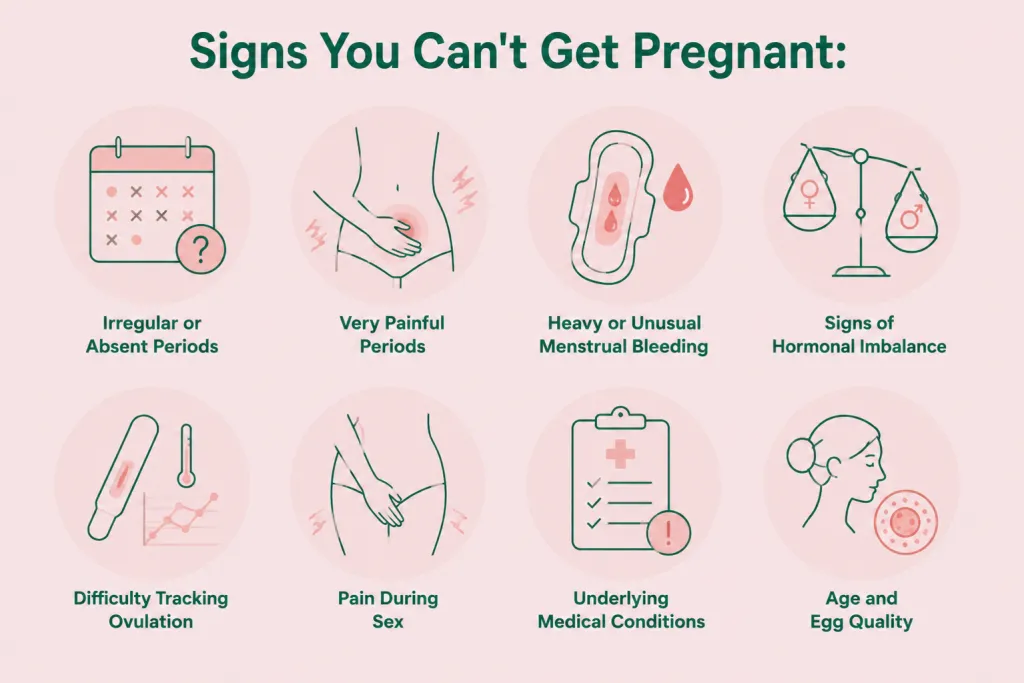
Below are the 8 most common signs worth investigating with a healthcare provider, what each one might mean, and when it’s time to schedule an evaluation. The goal isn’t to diagnose yourself — it’s to help you recognize patterns that deserve a real conversation with a fertility specialist.
8 Signs Worth Investigating With a Healthcare Provider
Each of the signs below can have multiple causes, and most are tied to treatable underlying conditions. Recognizing them is the first step toward an evaluation — not a self-diagnosis. Many women with these signs still conceive, with or without medical support.
1. Irregular or Absent Periods
Regular cycles are one of the most important signals of healthy ovulation. Cycles consistently outside the 21 to 35 day range, cycles that vary widely month to month, or frequently missed periods can signal an ovulatory issue.
Common underlying causes include PCOS (polycystic ovary syndrome — the most common ovulatory disorder, affecting 8 to 13% of women of reproductive age), thyroid disorders (both hyperthyroidism and hypothyroidism), hypothalamic amenorrhea (often from chronic stress, low body weight, or intense exercise), and perimenopause.
Worth knowing: irregular cycles do not mean you can’t get pregnant. Many women with PCOS or thyroid conditions conceive once the underlying issue is identified and treated. The articles on signs of a period coming late and types of abnormal menstruation cover what falls inside and outside normal range.
2. Very Painful Periods
Cramping severe enough to interfere with daily life — missing work or school, requiring stronger pain management than over-the-counter options, or pain that doesn’t respond to typical PMS measures — can signal something beyond standard period pain.
The most common underlying cause is endometriosis, which affects about 1 in 10 women of reproductive age and is one of the leading causes of female infertility. Endometriosis is also frequently undiagnosed, often for years. Other possibilities include adenomyosis, uterine fibroids, and pelvic inflammatory disease.
The reframe matters here: many women with endometriosis still conceive, including through medical treatment, surgical management, or fertility support. Diagnosis is the first step, and severe period pain is a real reason to push for one.
3. Heavy or Unusual Menstrual Bleeding
Soaking through a pad or tampon every hour, periods lasting longer than 7 days, bleeding between periods, or passing very large clots are all signs worth investigating. Heavy bleeding can indicate fibroids, polyps, hormonal imbalances, thyroid disorders, or bleeding disorders — and some of these conditions can affect fertility through their impact on the uterus or hormone balance.
Heavy bleeding is fertility-relevant because uterine conditions like fibroids or polyps can interfere with implantation, and underlying hormonal issues can disrupt ovulation. Most causes are treatable once identified.
4. Signs of Hormonal Imbalance
Visible signs of hormonal imbalance include persistent acne (especially along the jawline or chin), excess hair growth on the face, chest, or back (hirsutism), unexplained weight gain or difficulty losing weight, and thinning hair on the scalp.
The most common underlying condition is PCOS, characterized by elevated androgens, ovulatory dysfunction, and polycystic ovaries on ultrasound. Other possibilities include thyroid disorders and adrenal conditions. The connection between hormones and emotional health is also real — if you’ve noticed mood changes alongside these physical symptoms, the article on hormonal imbalance and anxiety covers that overlap.
Hormonal imbalances are highly treatable. Many women with PCOS conceive with lifestyle changes, ovulation induction medications like clomiphene or letrozole, or other forms of fertility support.
5. Difficulty Tracking Ovulation
If you’ve been trying to identify your fertile window and the usual signs aren’t showing up — no clear LH surge on ovulation tests, no fertile cervical mucus changes, no temperature shift in the luteal phase, or periods that don’t follow a predictable pattern — that can signal anovulation. Anovulation means cycles where no egg is released, even when a period seems to happen on schedule.
Common causes include PCOS, hypothalamic amenorrhea, thyroid disorders, perimenopause, and high chronic stress. The article on stress, cortisol, and your hormones covers the cortisol-fertility connection in more depth.
Anovulatory cycles are very treatable with medical support. The first step is confirming what’s happening — tools like a positive ovulation test and understanding how long after the LH surge ovulation actually happens can help you map your own cycle while you wait for an evaluation. The ovulation calculator is a starting point for tracking.
6. Pain During Sex
Deep pelvic pain during intercourse (medically called dyspareunia), pain that persists after intercourse, or painful sensations not relieved by lubrication or position changes are all signs worth investigating.
Common underlying causes include endometriosis, pelvic inflammatory disease (often from untreated chlamydia or gonorrhea), uterine fibroids, ovarian cysts, and vaginismus. Several of these can affect fertility — endometriosis and PID in particular are linked to tubal damage and reduced fertility.
Pain during sex is a medical symptom, not something to live with. Most underlying causes are treatable, and addressing them often improves fertility as a side benefit.
7. Underlying Medical Conditions
Some medical conditions are particularly relevant to fertility:
- Thyroid disorders (both hyperthyroidism and hypothyroidism)
- Autoimmune conditions (lupus, celiac disease, rheumatoid arthritis)
- Diabetes (both type 1 and type 2)
- History of pelvic inflammatory disease
- Prior abdominal or pelvic surgeries (including appendix removal that involved complications)
- History of cancer treatment, especially chemotherapy or pelvic radiation
These conditions can affect ovulation, implantation, or the body’s ability to support a pregnancy. Many women with these conditions still conceive — often with management of the underlying condition and sometimes with fertility support. Disclosure of full medical history is critical at a fertility evaluation. If you’re already managing a high-risk pregnancy or have a complex medical background, that context shapes the evaluation approach.
8. Age and Egg Quality
Fertility naturally declines with age, especially after 35. This is biology, not a personal failing. Monthly conception rates drop from roughly 25% in the early 30s to about 10% by age 40. Miscarriage rates rise. Egg quality and quantity both decline gradually.
Many women conceive successfully into their late 30s and early 40s. Age alone isn’t a verdict — but it does affect the recommended evaluation timeline. If you’re 35 or older, six months of trying is the standard threshold for evaluation rather than 12 months.
Blood tests for AMH (anti-Müllerian hormone) and FSH (follicle-stimulating hormone) can give a snapshot of ovarian reserve and are part of a standard fertility evaluation. Neither test predicts whether you’ll conceive — they help your provider understand where you are.
When to See a Fertility Specialist
Standard medical guidance, per the CDC:
- Under 35: see a provider after 12 months of unprotected sex without conception.
- 35 to 39: see a provider after 6 months.
- 40 or older: consider evaluation right away — don’t wait the full 6 months.
- Any age with any of the signs above: earlier evaluation is reasonable, especially with irregular periods, severe pain, known PCOS or endometriosis, or a history of pelvic surgery or infections.
Male factor accounts for roughly a third of fertility issues, so a fertility evaluation typically includes a semen analysis for the male partner alongside the female workup. A complete female evaluation usually covers ovulation tracking, hormone blood tests (FSH, AMH, thyroid, prolactin), a pelvic ultrasound, and sometimes a hysterosalpingogram (HSG) to check that the fallopian tubes are open.For women ready to take that next step, consulting an experienced IVF clinic provides personalized evaluation and treatment options tailored to each patient’s specific situation.
For a deeper authoritative reference on what fertility treatment typically involves, ACOG’s page on treating infertility is a useful starting point.
Taking Care of Your Mental Health Through This
Trying to conceive without success can be emotionally exhausting. Worry about fertility can affect sleep, mood, relationships, and how you feel about your own body. These feelings are normal, and they deserve support — not minimization.
A few things that can help: connect with others going through similar experiences in trying-to-conceive communities, consider speaking with a therapist who specializes in reproductive mental health, and give yourself permission to take breaks from cycle tracking when it starts feeling more stressful than useful. If you’re looking for support resources, mental health support resources is a starting point.
Conclusion
The signs above — irregular cycles, very painful or heavy periods, hormonal imbalance symptoms, ovulation tracking issues, pain during sex, certain underlying conditions, and age — are signs worth investigating, not verdicts. Most are tied to treatable underlying conditions, and many women with these signs still conceive.
If you’ve been trying for 12 months (or 6 months if you’re 35 or older), or if any of the signs above describe you, schedule an appointment with your healthcare provider or a fertility specialist. The first step toward an answer is the conversation.
Frequently Asked Questions
How do I know if I can’t get pregnant without seeing a doctor?
You can’t know for certain without a medical evaluation. Signs like irregular cycles, severe period pain, hormonal imbalance symptoms, or difficulty tracking ovulation can suggest fertility-relevant conditions, but only a healthcare provider can diagnose underlying causes through blood tests, ultrasound, and other workups.
Can you have signs of infertility and still get pregnant?
Yes. Most signs commonly described as “signs you can’t get pregnant” are actually signs of treatable underlying conditions like PCOS, thyroid disorders, or endometriosis. Many women with these signs conceive — sometimes after treatment of the underlying condition, sometimes with fertility support, and sometimes naturally.
How long should I try before seeing a fertility specialist?
Standard guidance: 12 months of unprotected sex without conception if you’re under 35, 6 months if you’re 35 to 39, and immediate evaluation if you’re 40 or older. Earlier evaluation makes sense at any age if you have known irregular cycles, severe pain, or other signs worth investigating.