When Menopause Affects Relationships: Navigating Intimacy & Trust
<p>Did you know that over half of post-menopausal women report a significantly lower sex drive, while many also cite that physical discomfort or mood shifts strain their closest relationships? This…
- Published
- Written by
- Women In Balance Team
- Reading time
- 4 minutes
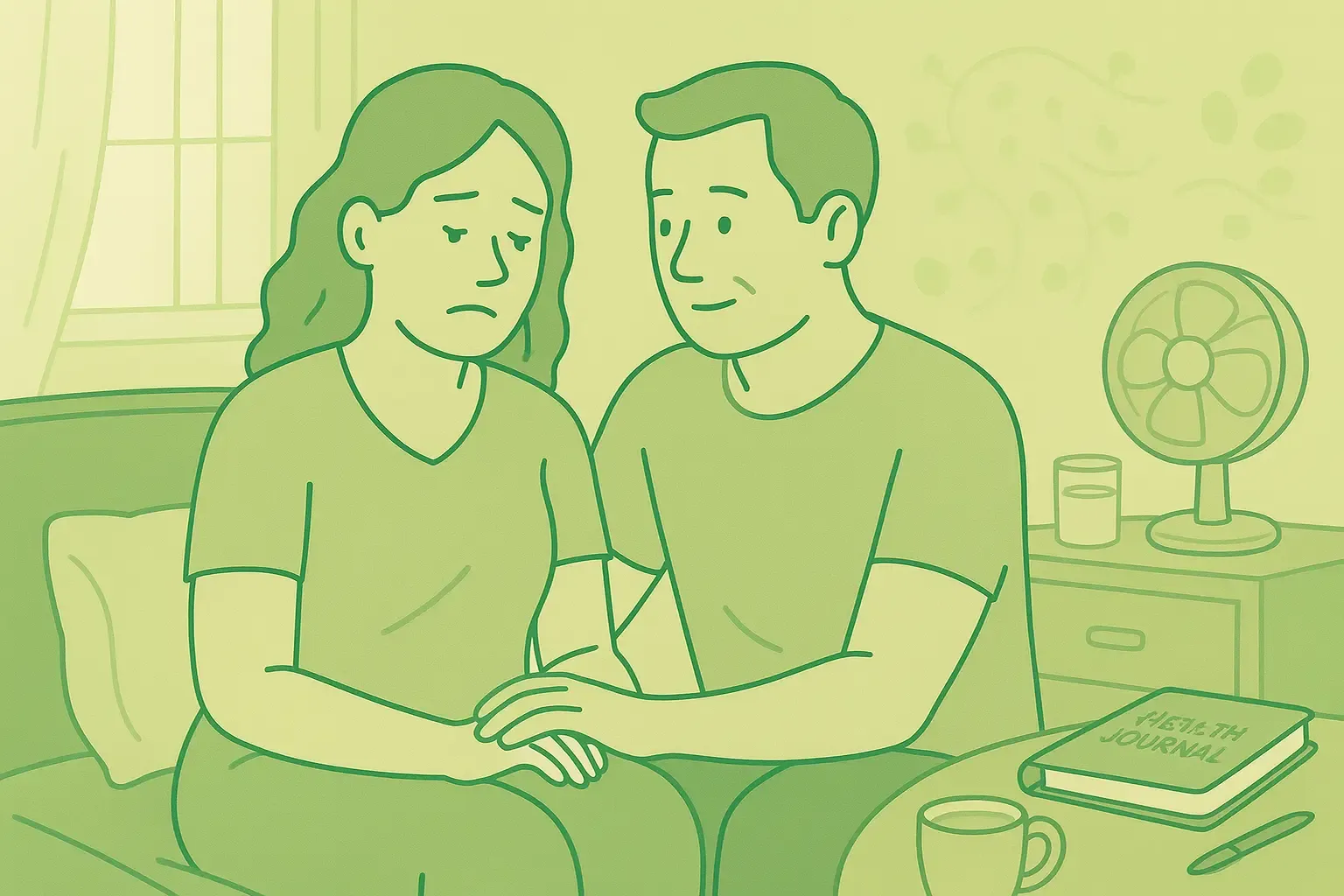
Did you know that over half of post-menopausal women report a significantly lower sex drive, while many also cite that physical discomfort or mood shifts strain their closest relationships?This isn’t rare or dramatic—it’s a normal part of change. But how you and your partner respond can make all the difference.
In this article, I’ll show you what many women face during menopause—hormonal changes, mood shifts, changes in intimacy—and how trust or distance can creep in. More importantly, I’ll offer concrete ways for both partners to work together so respect and closeness remain strong, even when things feel unfamiliar.
Physical & Hormonal Changes
You might wake up sweating, feel your mood shift, or notice that intimacy isn’t what it used to be.
- Hormones like estrogen drop, which may lead to vaginal dryness, discomfort during sex, fatigue.
- Sleep disruption becomes more common (night sweats, waking at odd hours). That exhausts both body and mind.
- You might sense changes in energy, shifts in memory or focus—many women report “brain fog.”
These changes don’t have to weaken your relationship—but if you avoid talking about them, distance can grow.
Emotional & Intimacy Shifts
You love your partner, but feel misunderstood. You want closeness, but something feels off.
- Mood swings, anxiety, or low moods may come out of nowhere. One day you feel fine, the next you feel discouraged or irritable.
- Libido may drop, or desire may change. Moments of intimacy that once felt natural might feel harder now.
- Body image shifts can make you feel less confident. You may hesitate to initiate touch, to share fears, or to be vulnerable.
When these shifts happen, miscommunication follows. Both partners may misread withdrawal as rejection. And that silence can open space for worry.
Distance and Trust Challenges
Distance doesn’t mean something is broken—but it can test trust.
Sometimes when intimacy drops, or emotional connection weakens, one or both partners may feel lonely, unseen, or unheard. This may bring up old insecurities. What if your partner seeks attention elsewhere emotionally? What if texting becomes more secretive? If you ever wonder how to know if your partner is cheating on you through text, it may reflect anxiety more than actual betrayal—but it’s a sign you both need to talk.
It’s not a given that cheating will happen. Many couples move through menopause without that kind of breach. What matters is how you both respond when distance grows: do you both show up? Do you try to understand, not blame?
How Women Can Navigate with Strength
You have agency. You have a voice. You can shape how this chapter unfolds.
- Speak openly: share what’s hard, what feels missing, what you wish for. Your partner may not know unless you say it.
- Seek medical help: treatments like hormone therapy, lubricants, or other interventions can reduce physical discomfort and help restore some things.
- Prioritise self-care: rest, nutrition, movement, mindfulness. When you feel better in your body, you carry more confidence and patience.
Role of the Partner & Mutual Work
This isn’t a solo journey. A healthy relationship depends on both people.
- Your partner can listen—not judge. Validate what you feel. Even small phrases like “I see this is hard” go far.
- Make intimacy about more than sex: emotional closeness, touch, affection, kindness, shared laughter.
- Adjust expectations: some days will be harder. Recognize that what “closeness” looks like might shift—and that’s okay.
Building Respect, Trust, and Growth
Here’s how couples can come through this time closer, not apart.
- Do regular check-ins: schedule moments to talk about how menopause affects you as a team, not as isolated individuals.
- Educate together: read or meet with a health professional. When both understand the hormone shifts, the emotional effects, the physical changes, it reduces misinterpretation.
- Celebrate what stays strong: trust, shared history, love, values. Lean on those.
- Seek outside support: counselling, support groups, or friends who understand. Sharing with others can reduce shame and normalize what you’re going through.
Menopause as a Shared Journey
Menopause brings change. It tests intimacy. It stretches trust. But it doesn’t have to erode love or respect. Instead, it can become a shared journey—a phase where you and your partner discover new ways to support each other.
Yes, there will be moments of frustration. Yes, you may feel misunderstood at times. But every challenge is also an opening. Couples who approach this transition with openness often discover a deeper kind of intimacy, one rooted in patience, empathy, and teamwork.
With honesty and mutual effort, menopause can become more than a medical milestone. It can be the moment when your relationship proves its resilience. Respect, trust, and compassion don’t fade with hormonal shifts—they strengthen when both people choose to nurture them daily.
You’re resilient. Your relationship can be too. Will you lean in, share your fears, ask for support, and hold trust as something you both actively build? That’s how relationships not only survive menopause—but thrive through it.