Are Skilled Trades Good for Women’s Mental Health?
<p>The issue is not whether women possess the capability to perform skilled trades labor. They possess it, and they perform it. The more pertinent issue is whether this form of employment provides…
- Published
- Written by
- Women In Balance Team
- Reading time
- 3 minutes
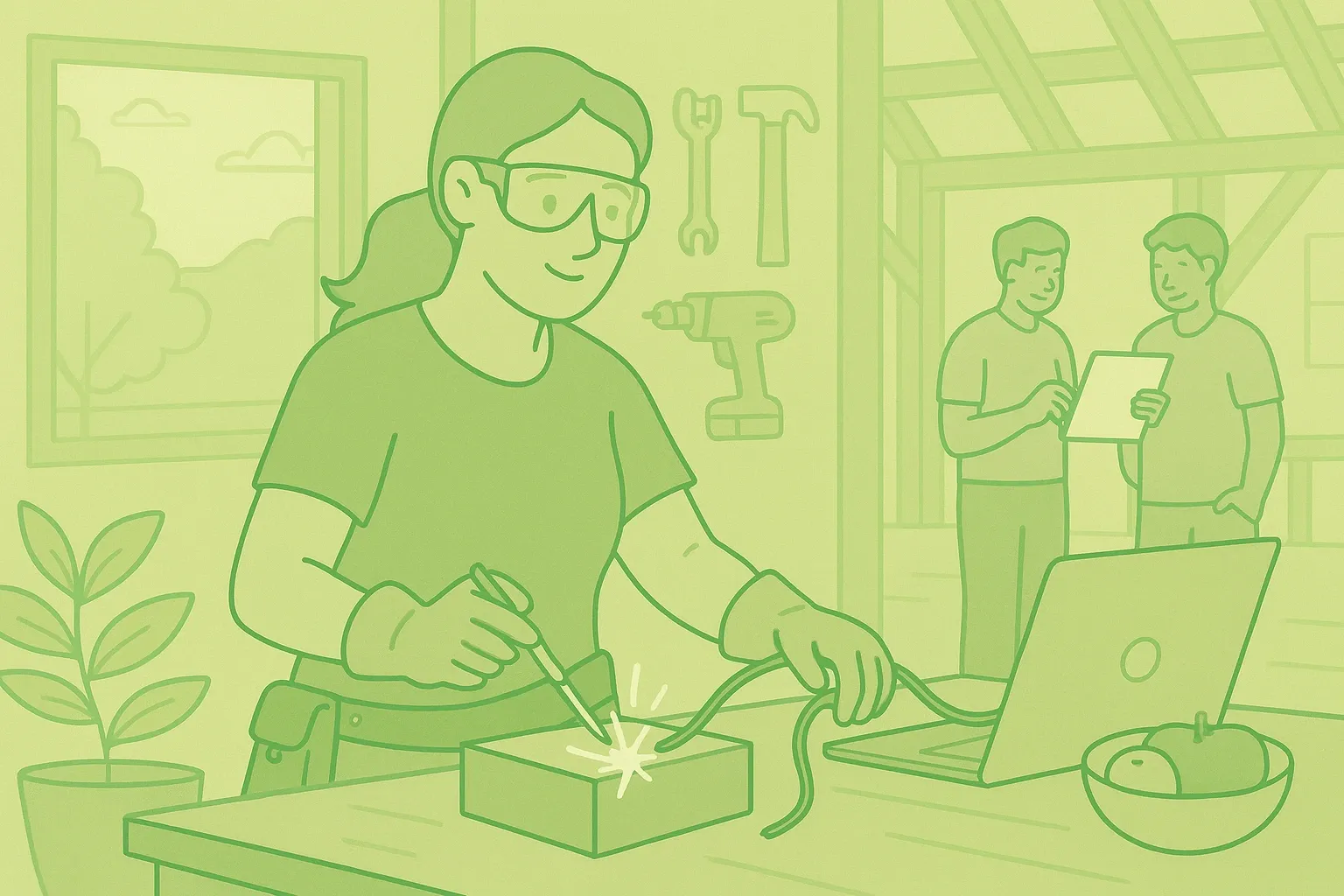
The issue is not whether women possess the capability to perform skilled trades labor. They possess it, and they perform it. The more pertinent issue is whether this form of employment provides mental wellness advantages that make it worthy of consideration, particularly in an economic environment where conventional career trajectories progressively fail to provide financial stability or individual satisfaction.
The response is complex. Skilled trades deliver substantial psychological benefits through expertise development, meaningful work, and interpersonal bonds. Yet, similar to any rigorous profession, they also introduce mental wellness obstacles that warrant candid evaluation before anyone pursues this direction.
The Mental Health Case for Hands-On Work
Working with your hands triggers something essential in human cognition. Studies repeatedly demonstrate that tactile work involving concrete, quantifiable advancement yields psychological advantages that office positions frequently cannot provide.
When you complete plumbing installations that operate correctly, establish electrical configurations that meet standards, or execute woodworking that alters an environment, you obtain instant confirmation that your efforts have significance.
This occurrence clarifies why numerous individuals gravitated toward gardening and residential projects during the initial pandemic restrictions. The brain reacts favorably to pursuits that merge physical involvement with apparent accomplishment. For women joining trades, this manifests as regular encounters with capability and skill acquisition that can considerably enhance confidence and offer protection against depressive states.
The construction setting can introduce psychological obstacles for women, encompassing workplace antagonism and absent support networks, though numerous tradeswomen indicate that the fulfillment of finishing intricate projects surpasses these hardships. The critical factor involves locating employers and union chapters that genuinely champion women instead of simply accepting their participation.
Economic Independence Reduces Financial Stress
Economic instability constitutes a significant contributor to anxiety and depression, especially for women who statistically receive lower compensation than their male peers in most industries. Trade professions provide strong earnings without necessitating four-year college credentials and the accompanying financial obligations. The U.S. Department of Education forecasts 68 percent more openings in trade positions during the upcoming years than qualified professionals available to occupy them, generating substantial potential for salary increases and employment stability.
For women considering trade school over conventional university routes, the economic considerations impact lasting psychological health significantly. Educational debt exceeding $37,000 on average for undergraduate degrees generates persistent pressure that continues for multiple decades, while trade training typically costs considerably less and prepares students for prompt employment.
Women who obtain reliable trades compensation without accumulating debt face diminished financial stress, enabling them to direct funds toward shelter, medical care, and other foundational elements that safeguard emotional wellness.
Mastery Builds Authentic Self-Efficacy
Acquiring mastery in a particular trade offers women tangible proof of their abilities, which studies link to enhanced mental well-being. In contrast to numerous contemporary professions where performance measures stay vague or subject to political influence, skilled trades deliver clear-cut outcomes.
An electrical installation either operates securely or it fails. A welded connection either maintains integrity or breaks. This straightforwardness enables women to develop authentic self-assurance rooted in verifiable skill rather than organizational recognition that might be shaped by gender prejudice.
The mentorship structure typical of trades training establishes systematic advancement from beginner to specialist, presenting distinct benchmarks that validate increasing competence.
As women progress through proficiency stages, they gather proof of their developing expertise and technical ability. This pathway differs markedly from numerous business settings where promotion standards lack transparency and professional growth seems random.
Social Connection Through Collaborative Work
Trade professions frequently require collective problem-solving and cooperative undertakings that forge interpersonal connections through mutual accomplishment. In contrast to solitary remote positions or adversarial corporate settings, trades environments demand that workers communicate effectively, synchronize activities, and depend on coworkers’ knowledge. These exchanges generate possibilities for substantial social engagement, which serves as a safeguard against depression and anxiety.
Nevertheless, women joining predominantly male trades might face social obstacles that complicate this advantage. Organizational atmosphere differs markedly by company and location, with certain workplaces embracing women warmly while others preserve unwelcoming practices.
Women contemplating trade professions should identify employers and labor organizations actively advancing gender inclusion, as encouraging workplace conditions determine whether social dimensions strengthen or compromise mental health.
Endnote
Skilled trades can absolutely benefit women’s mental health through meaningful work, financial security, and mastery-based confidence. The tactile nature of the work, combined with clear standards of success and pathways to middle-class stability, addresses several factors known to protect psychological wellbeing. However, the risks are real. Physical demands lead to chronic pain if ignored.