Early Pregnancy Discharge: Color, Texture, and What’s Normal
Key Takeaways You’ve noticed more discharge than usual on your underwear, and you’re trying to figure out what it means. Could it be a sign of early pregnancy? Or just a normal cycle thing? The…
- Published
- Written by
- Women In Balance Team
- Reading time
- 8 minutes
Key Takeaways
- Early pregnancy discharge — medically called leukorrhea — is one of the earliest signs of pregnancy. It’s typically thin, milky white or clear, and may noticeably increase in volume.
- Discharge alone is not a reliable sign of pregnancy. Similar discharge can appear mid-cycle around ovulation or before a period. Pair it with other symptoms and confirm with a pregnancy test.
- See a healthcare provider if discharge is yellow-green, gray, frothy, has a strong odor, causes itching, or comes with pelvic pain or fever — these can signal infection.
You’ve noticed more discharge than usual on your underwear, and you’re trying to figure out what it means. Could it be a sign of early pregnancy? Or just a normal cycle thing?
The honest answer: an increase in discharge is one of the most common early pregnancy signs, but it’s not conclusive on its own. Many women notice similar changes around ovulation or in the days before a period. What follows below covers what early pregnancy discharge typically looks like, the colors that are normal versus concerning, when discharge changes start in early pregnancy, and how it differs from the discharge that comes with PMS.
What Is Early Pregnancy Discharge?
Early pregnancy discharge is the increase in normal vaginal secretions that often appears in the first weeks of pregnancy. The medical term is leukorrhea — a thin, milky white, or creamy discharge driven by hormonal changes. Some women notice it within 1 to 2 weeks of conception, sometimes even before a missed period.
The cause comes down to two things: rising estrogen and increased blood flow to the cervix and vaginal tissues. As a 2025 study published in PMC notes, vaginal discharge is significantly influenced by estrogen and progesterone, with both hormones playing key roles in its production and consistency. In pregnancy, those hormones surge, and the cervix and vaginal walls produce more mucus as a result.
This isn’t a malfunction or a warning sign on its own — it’s a protective mechanism. The increase helps maintain the vagina’s healthy bacterial balance and supports the eventual formation of the mucus plug that protects the developing baby.
What Does Early Pregnancy Discharge Look Like?
Early pregnancy discharge is typically thin, milky white or clear, mild in odor, and noticeably increased in volume compared to your usual baseline. It’s often enough to need a panty liner where you didn’t before. Most women describe the texture as watery to mildly creamy — not thick, not chunky, not strong-smelling.
What “normal” looks like specifically:
- Color: milky white or clear. Sometimes faintly yellow when it dries on underwear.
- Texture: thin and watery, or mildly creamy. Smooth — not lumpy or stringy.
- Volume: increased compared to your personal baseline. Often a noticeable enough change that you start reaching for panty liners.
- Odor: mild or none. It should not have a strong, fishy, or unpleasant smell.
That said, this description sounds a lot like what some women experience around ovulation or in the days before a period — so it’s not unique to pregnancy. Knowing your own usual baseline matters more than the absolute description. The change from your normal pattern is what’s most informative, not the discharge itself.
Early Pregnancy Discharge by Color: What Each One Means
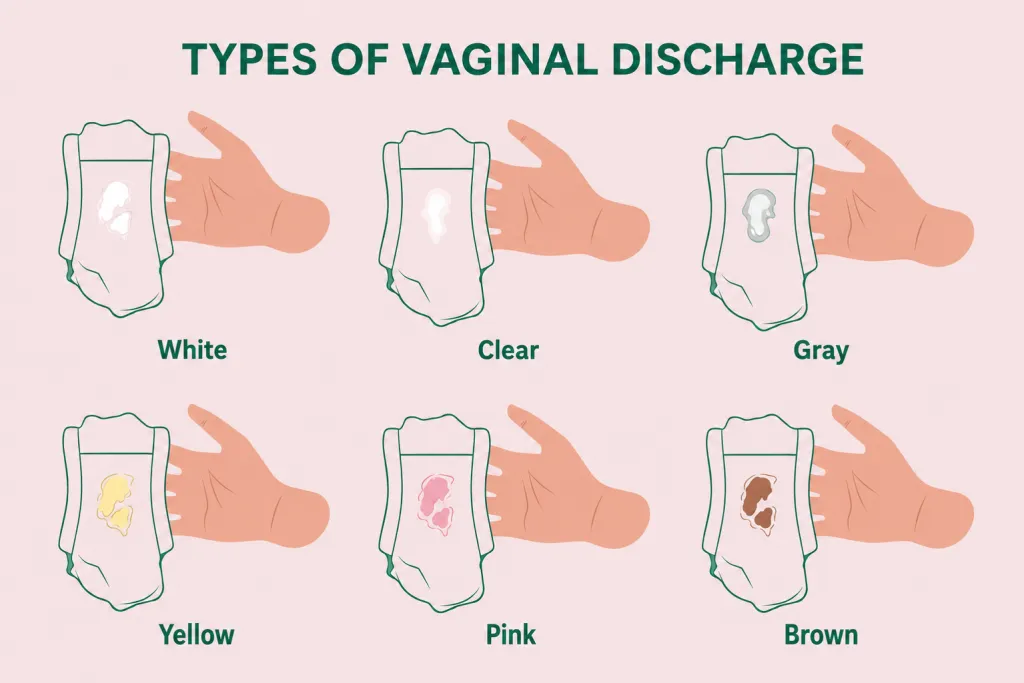
Color is one of the strongest day-to-day clues for whether discharge is normal or worth checking with a doctor. Here’s what each common color typically means in early pregnancy.
White Discharge in Early Pregnancy
This is the most common color associated with early pregnancy. Typically milky white, mild or no odor, thin to creamy in texture. It’s caused by the increased estrogen and cervical mucus production that comes with pregnancy.
One thing worth flagging: very thick, clumpy white discharge that resembles cottage cheese — especially when it comes with itching or burning — can signal a yeast infection. Yeast infections are common in pregnancy because hormonal changes can disrupt the vaginal pH, and they’re worth a doctor visit to confirm and treat.
Clear Discharge in Early Pregnancy
Clear or slightly cloudy discharge is also common. It’s typically thin, watery, and sometimes stretchy. Some women notice it around the same time they would have expected their period to start.
Stretchy clear discharge can also appear at ovulation, so on its own it’s not specific to pregnancy. Timing is what makes it informative — discharge that persists past your expected period is more suggestive than discharge mid-cycle.
Yellow Discharge in Early Pregnancy
Pale yellow can be a normal variation, particularly if discharge dries on your underwear and oxidizes a bit. That’s not usually a concern.
What is a concern: bright yellow, yellow-green, or frothy yellow discharge — especially when it’s accompanied by itching, burning, or a strong odor. These can signal bacterial vaginosis, trichomoniasis, or another infection that needs medical attention. Don’t try to self-diagnose color alone; if it looks notably different from your normal and there are other symptoms, see a healthcare provider.
Pink or Brown Discharge in Early Pregnancy
Light pink or rusty brown discharge in early pregnancy can sometimes be implantation bleeding — light spotting that occurs when a fertilized egg attaches to the uterine wall, typically 6 to 12 days after ovulation.
If you’re trying to figure out which one you’re seeing, implantation bleeding and a regular period differ noticeably in flow, color, and duration — implantation bleeding is much lighter and shorter. Mid-cycle spotting can also be confused with ovulation bleeding, which has its own distinct timing earlier in the cycle.
Bright red bleeding heavy enough to fill a pad is not typical of normal early pregnancy and warrants prompt medical attention.
Gray Discharge in Early Pregnancy
Gray, thin, or foamy discharge — especially with a fishy odor — typically signals bacterial vaginosis (BV). BV is common and treatable, but it’s worth treating in pregnancy because untreated BV has been associated with pregnancy complications. A doctor visit for diagnosis and treatment is the right next step.
When Does Early Pregnancy Discharge Start?
Most women who notice discharge changes describe them appearing about 1 to 2 weeks after conception. In calendar terms, that often coincides with the time of an expected or just-missed period.
Some women notice changes even earlier — within days of implantation, around 6 to 12 days past ovulation (DPO). 10 DPO is a particularly common day for early symptoms to start showing up.
One useful framing: discharge changes mid-cycle (around ovulation) are normal and not a pregnancy clue. Discharge changes that start after your expected ovulation window and persist past when your period would have arrived are more suggestive of pregnancy. Timing is the strongest clue, since the discharge itself can look very similar to mid-cycle or PMS-typical discharge.
Early Pregnancy Discharge vs PMS Discharge
In real time, the two can look very similar — and most women only know which one it was after they take a pregnancy test or see whether their period arrives. Still, there are a few patterns worth knowing.
| Early pregnancy discharge | PMS discharge | |
|---|---|---|
| Volume | Increased and persistent | Variable; often dries up just before the period starts |
| Texture | Thin to creamy, milky | Thicker or sticky in luteal phase, drier just before period |
| Color | White or clear | White, sometimes brown spotting just before period |
| Timing | Continues past the expected period | Tapers as the period arrives |
A deeper comparison of the two patterns lives in the article on discharge before period vs early pregnancy, which walks through the cycle-by-cycle differences in more detail.
The most reliable way to know is still a pregnancy test. If your period is overdue and you’ve been noticing more discharge than usual, why your period might be late covers the most common explanations — and what a positive pregnancy test looks like walks through what to expect when you do test. If a result is faint or unclear, the difference between a faint positive and an evaporation line can help you read it correctly.
Other Early Pregnancy Symptoms That Often Appear Alongside Discharge Changes
Discharge changes alone don’t confirm pregnancy. But when they appear alongside a few other early signs, they build a stronger overall picture:
- Missed or late period.
- Breast tenderness or sensitivity.
- Fatigue beyond what’s normal for you.
- Mild nausea, especially in the morning.
- Heightened sense of smell.
- Mild cramping — sometimes from implantation. The article on what implantation cramps feel like covers the typical sensations and timing.
- Light spotting — implantation bleeding usually appears 6 to 12 days after ovulation.
Even with all of these, only a pregnancy test confirms. Symptoms together are suggestive, not conclusive — it’s tempting to read every body signal as a sign in the two-week wait, but the test is the answer.
When to See a Doctor About Early Pregnancy Discharge
Most discharge changes in early pregnancy are normal and don’t require medical attention. That said, contact a healthcare provider if any of these apply:
- Discharge is yellow-green, gray, or unusually colored.
- Discharge is frothy, foamy, or thick and clumpy like cottage cheese.
- There’s a strong, unpleasant odor — especially fishy.
- You have itching, burning, redness, or swelling in the vulvovaginal area.
- Discharge changes come with pelvic pain, cramping, or fever.
- There’s bright red bleeding that’s more than light spotting.
- The discharge is watery and gushes — particularly in later pregnancy, since that can indicate amniotic fluid.
Bacterial vaginosis, yeast infections, and other vaginal conditions are common in pregnancy and easily treatable — but they should be treated rather than ignored. A useful complementary read on what’s typical versus what’s not is vaginal odor: normal vs. not so normal, which covers smell-specific signs.
Conclusion
Early pregnancy discharge is typically milky white or clear, mild in odor, and noticeably increased in volume — driven by rising estrogen and increased blood flow to the cervix. It’s a real and very common early pregnancy sign, but it’s not conclusive on its own. Pair it with other symptoms, and confirm with a pregnancy test.
If you suspect pregnancy, take a home test on or after the day your period was due. If discharge is concerning in color, smell, or texture — or comes with itching, pain, or fever — don’t wait. See a healthcare provider promptly. Tracking your cycle with a period calculator can also help you spot what’s normal for you across cycles.
Frequently Asked Questions
Is white discharge an early sign of pregnancy?
A noticeable increase in thin, milky white discharge with no strong odor can be one of the earliest signs of pregnancy, often appearing 1 to 2 weeks after conception. But it’s not unique to pregnancy — similar discharge can also appear around ovulation or before a period.
How early can pregnancy discharge start?
Most women who notice discharge changes describe them appearing 1 to 2 weeks after conception, sometimes before a missed period. Some notice changes within days of implantation (6 to 12 DPO), though many don’t notice anything different at all.
How can I tell the difference between early pregnancy discharge and ovulation discharge?
Ovulation discharge is typically clear and stretchy, resembling raw egg whites, and appears mid-cycle. Early pregnancy discharge is more often thin and milky white, increases over time, and persists past when your period would have been due. Timing is the most reliable distinguishing factor.